

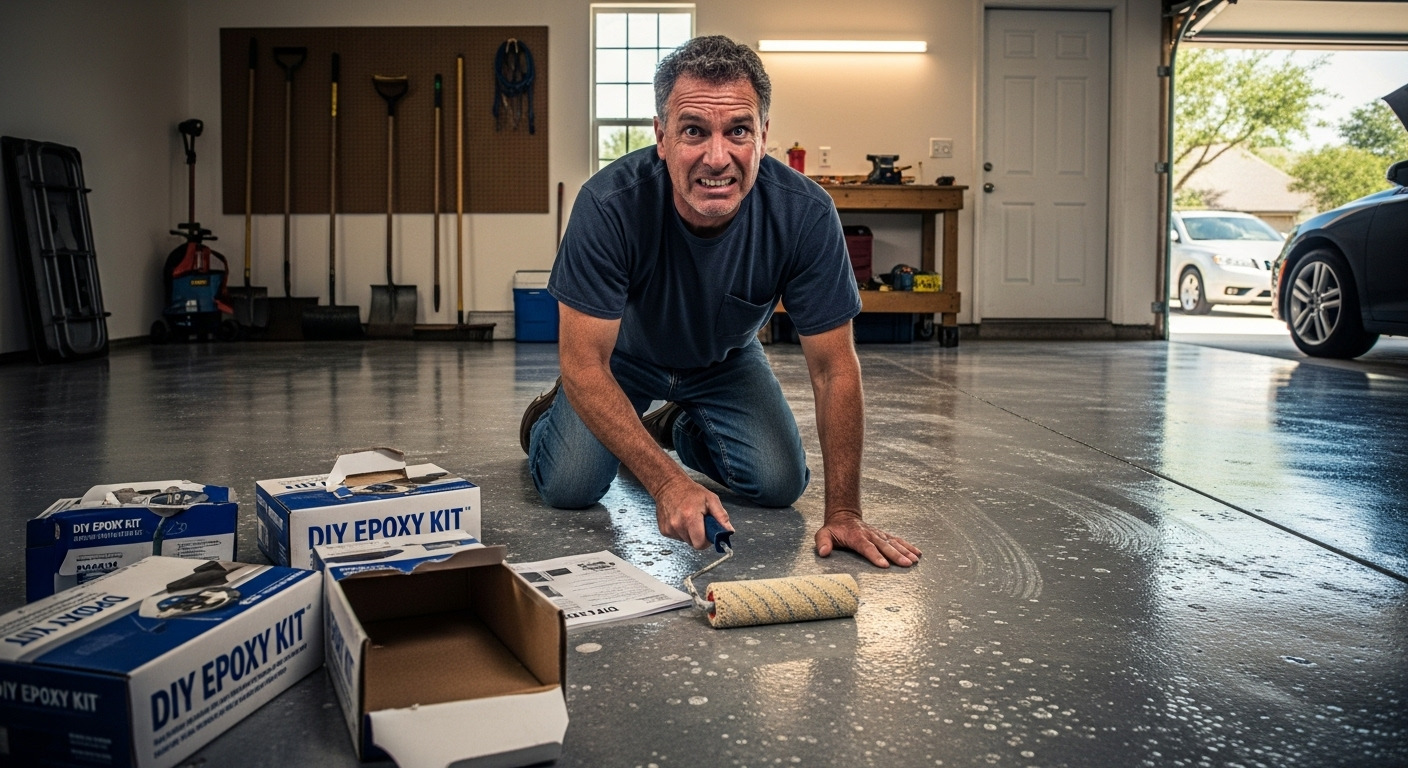
Did you know that up to 70% of DIY epoxy flooring failures are due to improper surface preparation? Investing in an epoxy garage floor can dramatically transform your space, offering unparalleled durability and aesthetics. However, many homeowners and even some inexperienced contractors fall victim to common pitfalls that lead to costly epoxy garage floor problems.
This comprehensive guide will highlight 8 crucial mistakes you must avoid when installing or choosing epoxy garage floor solutions in San Antonio, TX. You’ll learn how to prevent issues like peeling, bubbling, and premature wear, ensuring your investment stands the test of time against the unique challenges of the San Antonio climate. Ready to secure a flawless and long-lasting epoxy garage floor for your property? Keep reading to safeguard your investment!
Why Understanding Epoxy Garage Floor Problems is Crucial
An epoxy garage floor is a fantastic investment, known for its resilience and ability to withstand heavy traffic, chemical spills, and general wear and tear. But when installed incorrectly, what should be a durable surface can quickly become an unsightly mess plagued by epoxy garage floor problems. These issues aren’t just cosmetic; they can lead to safety hazards, costly repairs, and significant frustration. For homeowners and businesses in San Antonio, TX, where hot temperatures and occasional humidity add another layer of complexity, avoiding these mistakes is even more critical.
The Impact of Common Epoxy Flooring Failures
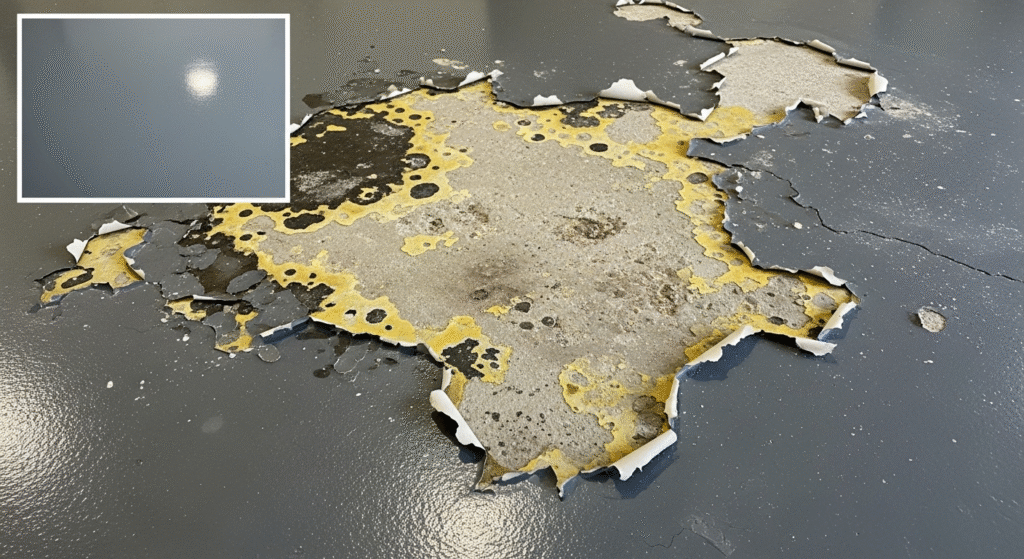
- Peeling/Delamination: The most common and frustrating issue, where the epoxy separates from the concrete.
- Bubbling/Blistering: Air or moisture trapped beneath the surface creates unsightly bubbles.
- Cracking: Despite epoxy’s strength, issues with the concrete below or improper curing can lead to cracks.
- Discoloration/Yellowing: Especially in areas exposed to UV light, some epoxies can lose their vibrant color.
- Poor Adhesion: The epoxy doesn’t bond properly, leading to weak spots and premature wear.
- Uneven Finish: Visible roller marks, thin spots, or an inconsistent sheen.
Understanding these potential epoxy garage floor problems is the first step toward preventing them. This guide will equip you with the knowledge to make informed decisions and ensure your garage floor in San Antonio, TX, is a success.
The 8 Mistakes You Must Avoid for Your Epoxy Garage Floor in San Antonio
Achieving a durable and beautiful epoxy garage floor requires meticulous attention to detail and a thorough understanding of the process. Here are 8 common mistakes you must avoid to prevent costly epoxy garage floor problems.
Mistake 1: Insufficient Concrete Preparation
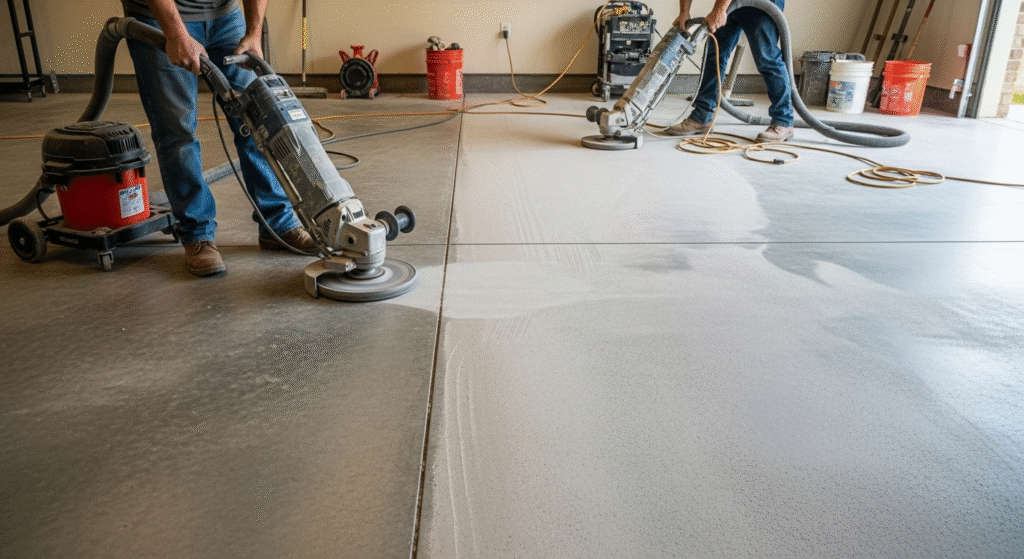
This is, by far, the most common reason for epoxy garage floor problems. Epoxy requires a clean, dry, and properly profiled concrete surface to adhere effectively.
Why is Poor Surface Prep the #1 Killer of Epoxy Floors?
- Contaminants: Oil, grease, sealers, paint, or old adhesives on the concrete surface will act as bond breakers, preventing the epoxy from sticking.
- Smooth Surface: Concrete that hasn’t been properly profiled (roughened) doesn’t provide enough “grip” for the epoxy to adhere to. Acid etching, while common in DIY kits, is often insufficient for proper profiling, especially for high-quality epoxy garage floor systems.
- Moisture: Even slight moisture in the concrete can cause the epoxy to bubble, blister, or delaminate. This is particularly crucial in humid climates like San Antonio, TX.
How to Avoid This Mistake:
- Thorough Cleaning: Degrease and clean the concrete thoroughly.
- Mechanical Grinding: For professional-grade epoxy garage floor installations, mechanical diamond grinding or shot blasting is essential. This opens the concrete’s pores and removes contaminants effectively.
- Moisture Testing: Always perform a moisture vapor transmission test. If moisture levels are too high, a moisture mitigation barrier must be applied. For homes in San Antonio, TX, this step is non-negotiable due to potential ground moisture.
Mistake 2: Ignoring Moisture Issues
Moisture is the silent killer of epoxy garage floor installations. San Antonio’s climate, with its warm temperatures and occasional humidity, makes this mistake particularly prevalent if ignored.
Why is Concrete Moisture Such a Big Deal for Epoxy?
Even if your concrete feels dry to the touch, it can still harbor moisture vapor that rises from the ground. When epoxy is applied over concrete with excessive moisture, the vapor gets trapped, leading to:
- Blistering/Bubbling: As the moisture tries to escape, it pushes up the epoxy, creating bubbles.
- Delamination: The bond between the epoxy and concrete is compromised, causing the coating to peel.
- Amine Blush: A waxy, oily film on the surface that can prevent subsequent coats from adhering.
How to Avoid This Mistake:
- Professional Moisture Testing: Use specialized tests like the calcium chloride test or a relative humidity probe to accurately measure moisture vapor transmission.
- Moisture Vapor Barrier: If moisture readings are high (which they often can be in San Antonio, TX), a moisture mitigation epoxy primer or a specialized vapor barrier system must be applied before the main epoxy coats. This adds a layer of protection against future epoxy garage floor problems.
Mistake 3: Improper Mixing of Epoxy Components
Epoxy is a two-part (or sometimes three-part) system consisting of a resin and a hardener. Their precise ratio and thorough mixing are crucial for the product to cure correctly.
What Happens if Epoxy Isn’t Mixed Correctly?
- Soft Spots: Areas where the epoxy doesn’t harden properly, remaining tacky or soft.
- Poor Adhesion: The chemical reaction is incomplete, leading to a weak bond and peeling.
- Uneven Cure: Parts of the floor may cure correctly, while others remain problematic.
- Reduced Durability: The floor won’t achieve its intended strength or chemical resistance, leading to early epoxy garage floor problems.
How to Avoid This Mistake:
- Follow Manufacturer Instructions: Always adhere strictly to the manufacturer’s recommended mix ratios and mixing times.
- Mechanical Mixing: Use a low-speed drill with a paddle mixer to ensure thorough blending. Hand mixing is almost never sufficient.
- “Box Mixing”: For two-part systems, pour the thoroughly mixed contents from one bucket into a second clean bucket and mix again. This ensures no unmixed material remains stuck to the sides or bottom of the first bucket.
Mistake 4: Applying Epoxy in Unsuitable Environmental Conditions
Temperature and humidity play a massive role in how epoxy cures. San Antonio’s hot summers and occasional high humidity present unique challenges.
Why Do Temperature and Humidity Matter So Much?
- Temperature Too Low: Epoxy may not cure properly, remaining soft or tacky.
- Temperature Too High: Epoxy can cure too quickly, leading to roller marks, poor leveling, and a shorter working time (pot life). This is a common issue in San Antonio, TX’s hot garages if not managed.
- High Humidity: Excessive humidity can cause amine blush (a greasy film) on the surface, affect curing, and lead to poor inter-coat adhesion or a hazy finish.
How to Avoid This Mistake:
- Check Manufacturer Guidelines: Always consult the epoxy manufacturer’s recommended temperature and humidity range for application.
- Monitor Conditions: Use a thermometer and hygrometer to continuously monitor garage conditions before and during application.
- Climate Control: In San Antonio, TX, this often means installing epoxy garage floor during cooler parts of the day, or using air conditioning or dehumidifiers to control the environment.
Mistake 5: Using Low-Quality or Incompatible Products
Not all epoxy products are created equal. Opting for cheap, thin, or incompatible materials is a shortcut to epoxy garage floor problems.
What’s the Difference Between Good and Bad Epoxy?
- Thin Coatings: Many DIY “epoxy paints” are thin, water-based coatings that offer minimal durability and peel easily, essentially just painting the concrete. True epoxy garage floor systems are much thicker (100% solids epoxy).
- Incompatible Layers: Using a primer, base coat, or topcoat from different manufacturers, or products not designed to work together, can lead to adhesion issues.
- Lack of UV Stability: Cheaper epoxies may yellow or chalk rapidly when exposed to sunlight, a common issue for garages with open doors in sunny San Antonio, TX.
How to Avoid This Mistake:
- Invest in Quality: Choose 100% solids epoxy systems for maximum durability and longevity.
- Use Compatible Systems: Stick to a complete system (primer, base coat, topcoat) from a reputable manufacturer.
- UV Protection: For garages exposed to sunlight, insist on a UV-stable topcoat (like polyaspartic or specific urethane topcoats) to prevent yellowing.
Rio Epoxy Flooring exclusively uses premium, high-quality products designed for long-term performance, specifically chosen to withstand the conditions in San Antonio, TX, ensuring you avoid these common epoxy garage floor problems.
Mistake 6: Skipping the Topcoat (or Using the Wrong One)
While the epoxy base coat provides color and much of the durability, the topcoat is essential for optimal performance and protection.
Why is the Topcoat So Important for Epoxy Garage Floors?
- Enhanced Durability: The topcoat adds an extra layer of protection against abrasions, impacts, and chemicals.
- UV Stability: A quality topcoat (especially polyaspartic) protects the underlying epoxy from UV degradation and yellowing.
- Slip Resistance: Anti-slip aggregates are typically broadcast into the topcoat layer.
- Gloss/Finish: The topcoat dictates the final sheen, whether high-gloss, satin, or matte.
How to Avoid This Mistake:
- Always Apply a Topcoat: Never skip this step for an epoxy garage floor.
- Choose the Right Topcoat: Select a topcoat appropriate for your garage’s use and exposure. For San Antonio, TX, UV-stable options are highly recommended for garages with sun exposure.
Mistake 7: Rushing the Process or Ignoring Cure Times
Patience is a virtue in epoxy flooring installation. Rushing any step can lead to significant epoxy garage floor problems.
What Happens if You Don’t Respect Curing Times?
- Premature Foot Traffic: Walking on partially cured epoxy can leave permanent indentations or compromise the bond.
- Driving Too Soon: Parking a vehicle on a floor that hasn’t fully cured can cause tire marks, delamination, or imprints.
- Applying Next Coat Too Early/Late: There’s an optimal recoat window between layers. Applying too early can trap solvents; applying too late can result in poor inter-coat adhesion.
How to Avoid This Mistake:
- Read Manufacturer Data Sheets: Understand the specific recoat windows, foot traffic times, and full cure times for your chosen epoxy system.
- Plan Ahead: Schedule your installation to allow adequate curing time, especially before returning vehicles to the garage.
- Trust Professionals: Experienced installers know these critical timelines and adhere to them strictly, preventing common epoxy garage floor problems.
Mistake 8: Attempting a DIY Installation Without Proper Knowledge or Tools
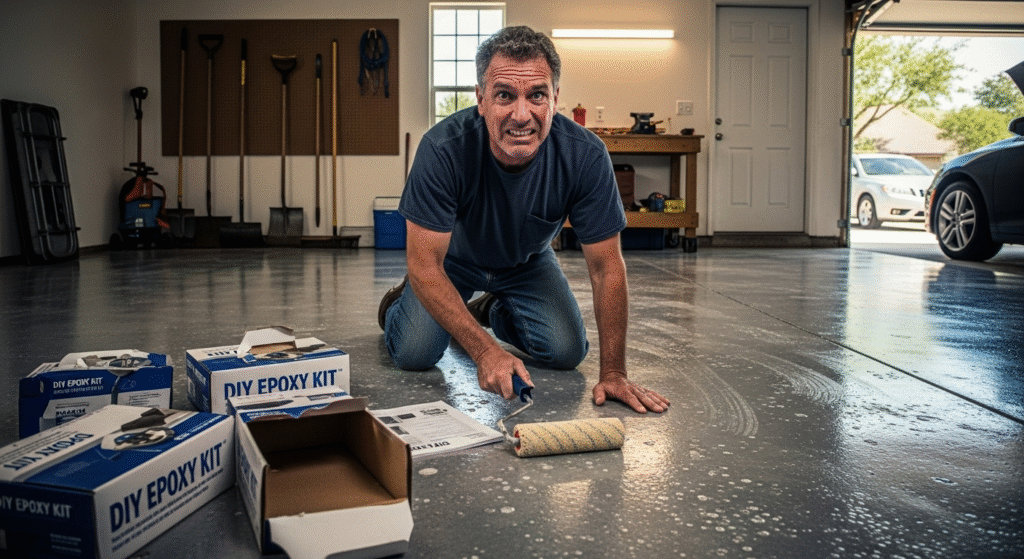
While DIY epoxy kits are marketed as easy solutions, attempting a professional-grade epoxy garage floor installation without the right knowledge, equipment, and experience is a common and costly mistake.
Why is DIY Epoxy Flooring Risky?
- Lack of Proper Prep Equipment: Homeowners rarely have access to industrial grinders or shot blasters needed for optimal concrete profiling.
- Inexperience with Mixing and Application: Achieving a uniform, bubble-free, and aesthetically pleasing finish requires skill and practice, especially with metallic or flake systems.
- Environmental Control: Controlling temperature and humidity in a garage, especially during San Antonio summers, requires specialized equipment and know-how.
- Rectifying Mistakes: If something goes wrong (e.g., bubbles, peeling, unevenness), fixing epoxy garage floor problems is much harder and more expensive than getting it right the first time.
“We tried to save money with a DIY kit, and it was a disaster. Bubbles, peeling, it looked awful. Rio Epoxy Flooring came in, fixed our mess, and now we have a floor that should have been there all along. Don’t waste your time or money on DIY,” advises Carlos M. from San Antonio on Google My Business.
Prevent Epoxy Garage Floor Problems: Trust the Experts in San Antonio, TX
Avoiding these 8 crucial mistakes is paramount to achieving a successful and long-lasting epoxy garage floor in your San Antonio, TX, home or business. While some of these issues might seem minor, they can lead to significant epoxy garage floor problems that compromise your investment.
The complexity of proper surface preparation, precise mixing, and controlled application highlights why professional installation is the best way to safeguard your investment. At Rio Epoxy Flooring, we have extensive experience installing high-quality epoxy garage floor systems throughout San Antonio, TX, and the wider Austin area, including communities like Rollingwood, Lakeway, and Georgetown.
We understand the unique climate challenges of Central Texas and apply best practices to ensure your epoxy garage floor performs flawlessly, resisting issues like moisture-related bubbling and UV-induced yellowing. Our commitment to using premium materials and employing highly skilled technicians means your project is in expert hands, preventing typical epoxy garage floor problems before they even start.
“Rio Epoxy Flooring did an outstanding job on our commercial garage. They knew exactly how to handle the heat and humidity here in San Antonio to ensure a perfect finish. No problems whatsoever!” says Lisa G. from Yelp. We provide comprehensive residential flooring solutions and commercial flooring solutions that stand the test of time.
Secure Your Flawless Epoxy Garage Floor in San Antonio
Understanding the common epoxy garage floor problems and the 8 mistakes you must avoid is key to ensuring the success and longevity of your investment. From improper surface preparation and ignored moisture issues to rushing the process or attempting DIY installations, these pitfalls can turn a dream floor into a nightmare. For homeowners and businesses in San Antonio, TX, recognizing these challenges, especially those related to our local climate, is crucial.
By choosing a professional and reputable installer like Rio Epoxy Flooring, you can confidently navigate the process, preventing these common issues and securing a stunning, durable, and long-lasting epoxy garage floor that enhances your property’s value and functionality for years to come. Don’t let avoidable mistakes lead to future headaches.
Ready to avoid common epoxy garage floor problems and get a flawless floor for your San Antonio property?
Don’t risk costly mistakes with your epoxy garage floor. Contact Rio Epoxy Flooring today for a free, no-obligation consultation! Our experts will ensure your installation is done right, the first time, protecting your investment. Visit our Contact Us page or call us directly at (737) 307-1888. Let us help you achieve the perfect epoxy garage floor in San Antonio, TX!