


Did you know that over 40% of homeowners regret their choice of garage floor coating within the first year? This is often due to a lack of understanding the fundamental differences between two popular options. When it comes to upgrading your garage in Austin, TX, the decision between garage floor paint vs epoxy is one of the most critical you’ll make.
This comprehensive guide will break down the 7 key differences every homeowner must know, covering everything from durability and cost to installation and aesthetics. You’ll learn why one of these solutions is a superior long-term investment for your Austin property and which one is likely to lead to future headaches. Ready to make the right choice for your garage? Keep reading to settle the great debate: garage floor paint vs epoxy!
What’s the Difference: Is Garage Floor Paint the Same as Epoxy?
Many people use the terms “garage floor paint” and “epoxy” interchangeably, but they are fundamentally different materials. Confusing them is the most common reason for disappointment and premature flooring failure. Understanding this distinction is the first step in making an informed decision for your Austin home.
Garage Floor Paint: A Cosmetic Cover-Up
Garage floor paint is essentially a heavy-duty paint, often a one-part latex or acrylic product designed to adhere to concrete. It’s a quick and inexpensive way to change the color of your floor.
- Composition: It’s a single-component product that sits on the surface of the concrete, similar to wall paint.
- Durability: It offers minimal protection against heavy impacts, hot tires, chemicals, or abrasions. It’s prone to chipping, peeling, and flaking under typical garage conditions.
- Best For: Very low-traffic areas or spaces where aesthetics are the only concern and durability is not a factor. It’s more of a cosmetic solution than a protective coating.
Epoxy Garage Floors: A High-Performance System
An epoxy garage floor is a multi-part coating system made of a resin and a hardener. When these components are mixed and applied, they undergo a chemical reaction, creating a hard, plastic-like material that bonds directly to the concrete.
- Composition: It’s a thermosetting resin that penetrates the concrete and creates a durable, thick, and long-lasting surface.
- Durability: It provides exceptional resistance to impacts, chemicals, hot tires (known as “hot tire pickup”), and abrasions. It’s designed for heavy-duty use.
- Best For: Residential garages, commercial garages, workshops, and industrial spaces where a high-performance, durable, and protective floor is needed.
At Rio Epoxy Flooring, we specialize in high-quality epoxy flooring for Austin, TX homes and businesses. Our expertise ensures you get a professional-grade finish that lasts.
The 7 Key Differences: Garage Floor Paint vs Epoxy
To make the right choice for your Austin property, let’s break down the key differences between garage floor paint vs epoxy.
1. Durability and Longevity: Which One Lasts Longer?
This is the most significant difference between the two options and the primary reason why many homeowners regret choosing paint.
- Garage Floor Paint: Typically lasts 1-3 years before it starts to show signs of chipping, peeling, and wear. It is not designed to withstand the weight of vehicles or the impact of dropped tools.
- Epoxy: A professionally installed epoxy garage floor can last 15-20 years or more with proper care. Its durability is a direct result of its strong chemical bond and thickness, making it a true investment.
Verdict: Epoxy is the clear winner for durability and longevity. For homes in Austin, TX, where a durable solution is needed to withstand hot weather and daily use, epoxy is the superior choice.
2. Resistance to Hot Tires: Will It Peel?
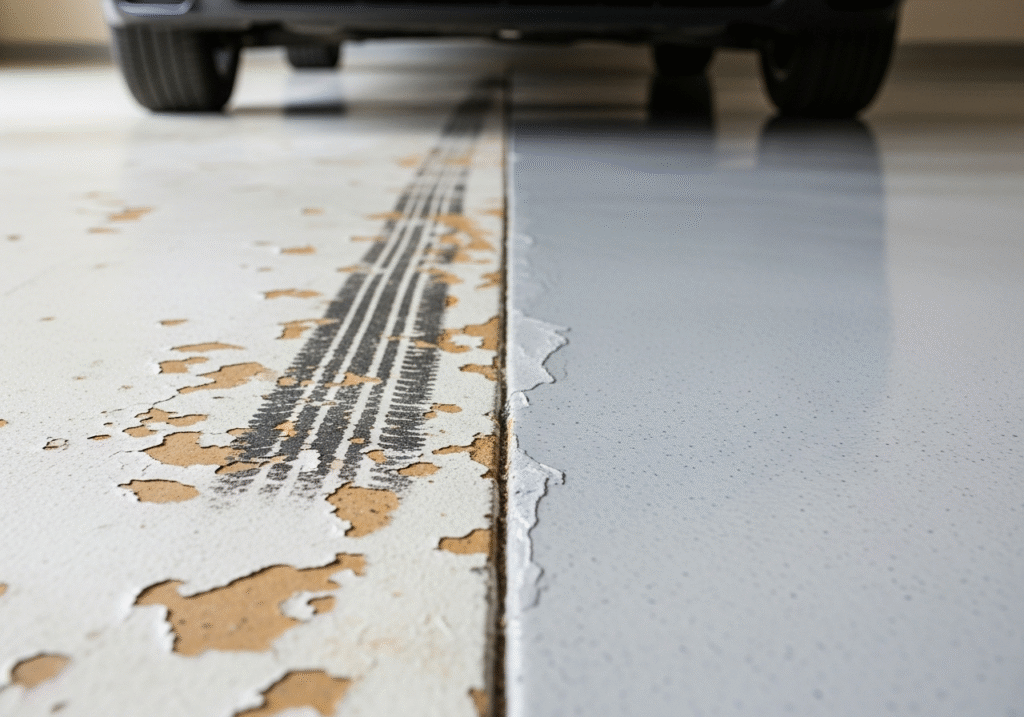
Hot tire pickup is a common phenomenon where the hot rubber of a vehicle’s tires softens a floor coating and causes it to peel away when the car is driven off.
- Garage Floor Paint: Prone to hot tire pickup, especially in the intense Texas heat. It will likely peel and lift over time, creating an unsightly and frustrating mess.
- Epoxy: A high-quality epoxy garage floor is engineered to resist hot tire pickup. The chemical bond and thickness of the material prevent it from softening under heat, ensuring it stays firmly attached to the concrete.
Verdict: Epoxy is far more resistant to hot tire pickup, making it the only viable choice for an active garage.
3. Surface Preparation: How Important is It?
Surface preparation is the most critical step for any floor coating, but the requirements differ between paint and epoxy.
- Garage Floor Paint: While it requires a clean surface, it can often be applied to a smooth or acid-etched floor. This simpler prep process is often a major factor in its lower price point, but it’s also a reason for its lack of adhesion.
- Epoxy: A professional epoxy garage floor installation requires meticulous surface preparation, including mechanical diamond grinding to open the concrete’s pores and remove all contaminants. This creates a rough profile that is essential for a strong chemical bond.
Verdict: Proper preparation is vital for both, but epoxy’s rigorous requirements result in a far superior, longer-lasting bond.
4. Cost and Value: Is the Investment Worth It?
The initial cost is a key consideration for homeowners, but it’s important to look at the long-term value.
- Garage Floor Paint: The initial cost is significantly lower, making it an attractive “quick fix.” However, its lack of durability means it will need to be redone frequently, leading to higher long-term costs.
- Epoxy: The initial cost of a professional epoxy garage floor is higher, but its longevity (15+ years) and durability make it a far more cost-effective long-term investment. It also adds tangible value and curb appeal to your Austin home.
Verdict: For long-term value and ROI, epoxy is the clear winner. A single professional epoxy installation can outlast multiple paint jobs.
5. Aesthetics and Finishes: What Look Can I Achieve?
Both options offer a way to brighten and finish your garage, but the quality of the finish is vastly different.
- Garage Floor Paint: Offers a solid color, but the finish is thin and lacks the depth and gloss of epoxy. It can look like a simple painted surface, and it’s prone to showing roller marks.
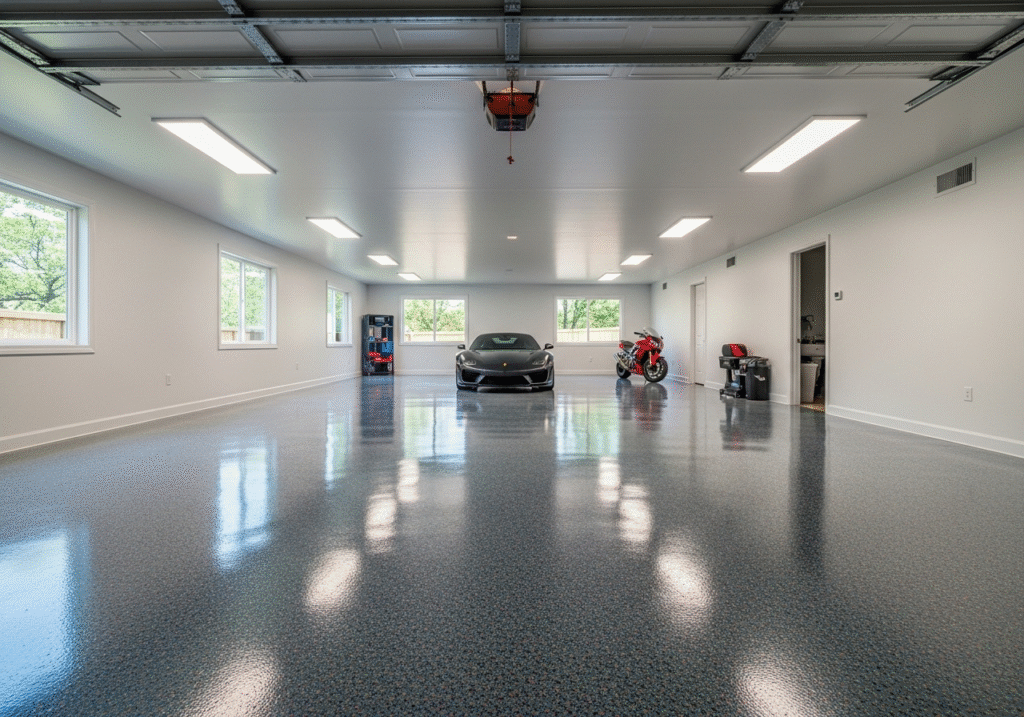
- Epoxy: Offers a thick, high-gloss finish that reflects light beautifully, making the space appear larger and brighter. It can be customized with decorative flakes or stunning metallic pigments, turning your garage floor into a work of art.
Verdict: For a truly premium, high-end, and customizable finish, epoxy is the superior choice. It’s what can make a garage in Austin feel like a luxury extension of your home.
6. Chemical and Stain Resistance: Will Spills Leave a Mark?
Garages are prone to spills from oil, gasoline, antifreeze, and other automotive fluids.
- Garage Floor Paint: Offers minimal resistance to chemical spills. These fluids will likely stain or even corrode the paint, leaving permanent marks and damaging the concrete underneath.
- Epoxy: The chemical composition of epoxy makes it highly resistant to a wide range of chemicals and stains. Spills sit on the surface and can be wiped up easily, making it an ideal protective barrier.
Verdict: Epoxy is the only reliable option for a garage that needs to withstand chemical spills.
7. Installation and Curing: How Long is My Garage Out of Commission?
The installation process for each is different and impacts how long your garage will be unusable.
- Garage Floor Paint: A single-day job. The paint may be dry in a day, but the surface will remain vulnerable to damage for much longer.
- Epoxy: A professional epoxy garage floor installation typically takes 2-3 days, followed by a curing period of 3-7 days before it can be used for vehicle traffic. This longer process, however, is what ensures its durability and long life.
Verdict: Paint has a shorter installation time, but epoxy’s longer process is a necessary investment for a floor that will last decades, a crucial point when considering garage floor paint vs epoxy.
The Verdict: Garage Floor Paint vs Epoxy
When comparing garage floor paint vs epoxy, the verdict is clear: epoxy is the superior choice for nearly every functional and aesthetic metric. While paint may offer a lower initial cost, its lack of durability, resistance to chemicals, and long-term value make it a poor investment for any active garage in Austin, TX.
- Choose Paint if: You need a very temporary, low-cost cosmetic solution for a space with no vehicle traffic and no risk of spills or impacts.
- Choose Epoxy if: You want a long-lasting, durable, protective, and beautiful floor that can withstand the demands of a real garage, adds value to your home, and requires minimal maintenance.
For homeowners in Austin, TX, the decision is simple. Investing in a professional epoxy garage floor installation is an investment in your property’s longevity, beauty, and value.
Ready to Upgrade Your Garage with a Lasting Solution?
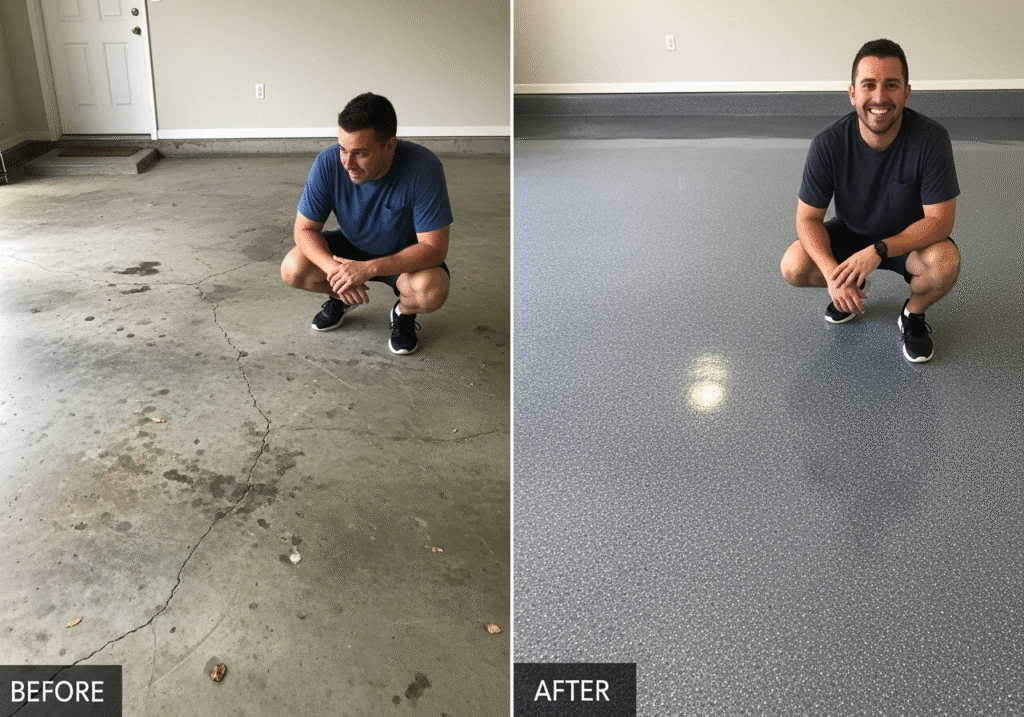
Don’t let the choice between garage floor paint vs epoxy lead to disappointment. Trust the experts at Rio Epoxy Flooring to provide a flawless, long-lasting solution that’s perfect for your Austin home. Our team specializes in professional epoxy flooring installations that are built to last, giving you peace of mind and a stunning result.
Contact us today for a free consultation and personalized quote. Visit our Contact Us page or call us directly at (737) 307-1888. Let us show you why our professional epoxy garage floor solutions are the smartest choice for your Austin property!