

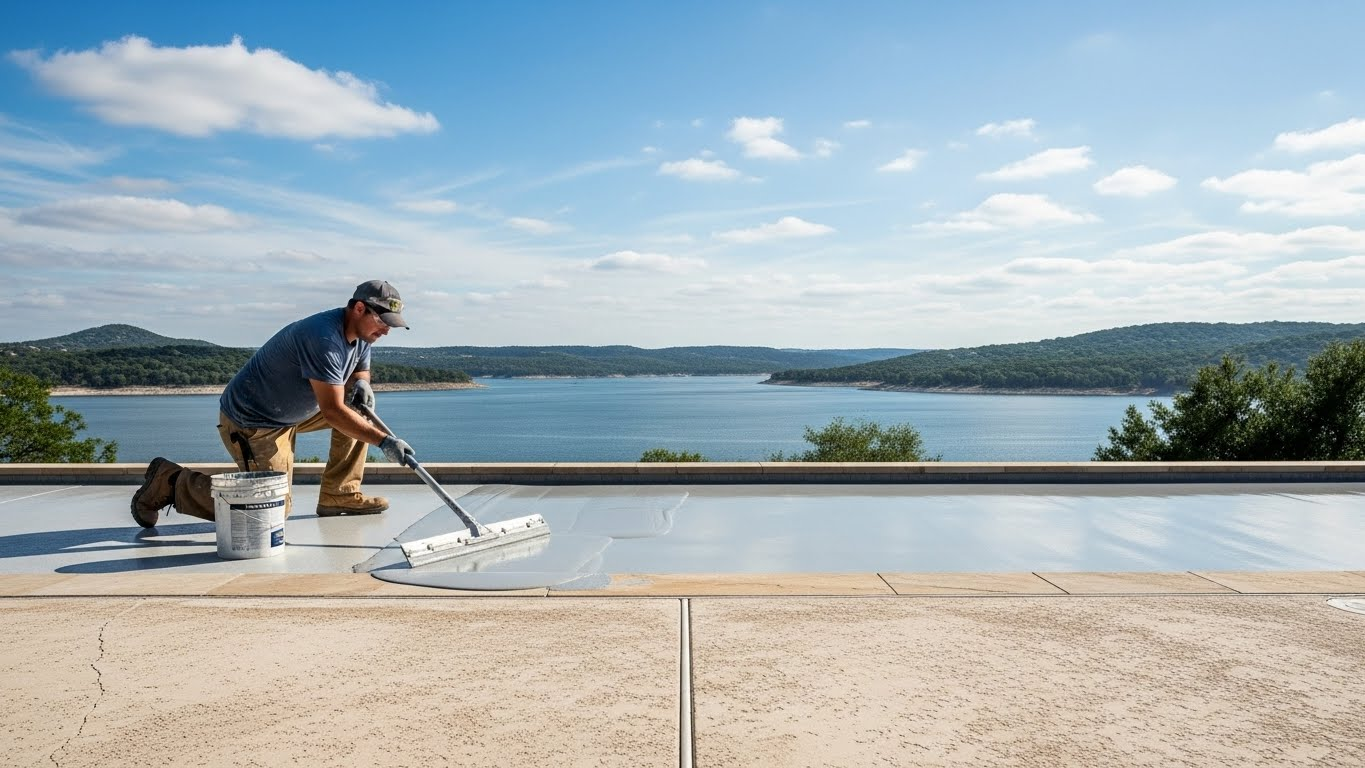
Is your Lakeway pool deck showing cracks, discoloration, or becoming dangerously slippery? You’re not alone. Over 73% of Lakeway homeowners with pools over 10 years old report significant pool deck deterioration due to Texas’s harsh climate conditions. Ignoring these warning signs can lead to costly structural damage, safety hazards, and decreased property value.
This comprehensive guide reveals the eight critical signs that indicate you need pool deck resurfacing Lakeway Texas, along with expert solutions, cost considerations, and contractor selection tips specific to the Lakeway area. Whether your pool overlooks Lake Travis or sits in one of Lakeway’s prestigious neighborhoods, understanding these warning signs will help you protect your investment and maintain a safe, beautiful outdoor space. Continue reading to discover how to identify problems early and choose the right resurfacing solution for your Lakeway pool deck.
What is Pool Deck Resurfacing?
Pool deck resurfacing is the process of applying new material over existing concrete pool decks to restore appearance, improve safety, and extend lifespan. Unlike complete replacement, resurfacing preserves the existing structure while addressing surface-level damage and aesthetic concerns.
In Lakeway Texas, pool deck resurfacing has become increasingly popular due to the area’s unique climate challenges. The combination of intense summer heat, occasional freezing temperatures, and proximity to Lake Travis creates conditions that accelerate pool deck deterioration. Rio Epoxy Flooring specializes in advanced resurfacing solutions designed specifically for Lakeway’s environmental conditions.
Common Resurfacing Materials for Lakeway Pool Decks
Epoxy Coatings: High-performance epoxy systems create seamless, waterproof surfaces that resist Texas heat and UV exposure. These coatings bond molecularly to concrete, providing superior durability and longevity.
Acrylic Overlays: Decorative acrylic systems offer texture and color options while providing excellent slip resistance, crucial for Lakeway’s pool safety requirements.
Stamped Concrete Overlays: These overlays replicate natural stone, brick, or tile patterns while addressing underlying concrete issues common in Lakeway’s expansive clay soil conditions.
Cool Deck Systems: Specially formulated to remain cooler underfoot during Lakeway’s scorching summers, these systems combine comfort with durability.
Sign 1: Visible Cracks and Structural Damage
Cracks represent the most obvious indicator that your Lakeway pool deck needs professional attention. Texas’s expansive clay soil, combined with temperature fluctuations, creates unique challenges that accelerate crack formation.
Types of Cracks and Their Severity
Hairline Cracks (Less than 1/8 inch): While seemingly minor, these cracks allow water penetration that leads to more serious damage. In Lakeway’s freeze-thaw cycles, water expands when frozen, widening cracks progressively.
Structural Cracks (Greater than 1/4 inch): These indicate serious foundation issues requiring immediate attention. Lakeway’s soil movement often causes these larger cracks, particularly in properties near Lake Travis where soil moisture content varies significantly.
Spiderweb Cracking: Multiple interconnected cracks suggest widespread concrete deterioration, often caused by improper installation or inadequate reinforcement during original construction.
Why Cracks Worsen in Lakeway
Lakeway’s unique geography creates specific challenges for pool decks:
- Soil Movement: Expansive clay soil expands when wet and contracts when dry, creating constant pressure on concrete structures
- Temperature Extremes: Summer temperatures exceeding 100°F followed by occasional winter freezes stress concrete beyond typical limits
- Water Table Fluctuations: Proximity to Lake Travis affects groundwater levels, impacting soil stability beneath pool decks
Rio Epoxy Flooring customer Jennifer M. from Lakeway reports: “We noticed small cracks around our pool deck that quickly became safety hazards. Rio’s team assessed the damage, explained the soil issues specific to our Lake Travis property, and provided a comprehensive resurfacing solution that’s held up perfectly for three years.”
Sign 2: Surface Discoloration and Staining
Discoloration transforms beautiful Lakeway pool decks into eyesores while indicating deeper problems. Understanding the causes helps determine whether pool deck resurfacing Lakeway Texas is necessary or if simple cleaning suffices.
Common Discoloration Types
Rust Stains: Iron-rich groundwater common in Lakeway creates orange-brown stains that penetrate concrete pores. These stains resist standard cleaning methods and indicate water infiltration issues.
Algae and Mildew Growth: Lakeway’s humidity, especially near Lake Travis, promotes biological growth in concrete pores. Green or black discoloration indicates moisture retention that compromises concrete integrity.
Chemical Staining: Pool chemicals, particularly chlorine, cause yellowing or bleaching of concrete surfaces. Improper chemical balance accelerates this deterioration.
UV Damage: Texas’s intense sunlight breaks down concrete sealers and causes fading, leaving surfaces vulnerable to further damage.
When Discoloration Indicates Serious Problems
Surface staining becomes critical when:
- Stains penetrate deeply and resist professional cleaning
- Discoloration accompanies surface roughness or flaking
- Biological growth returns quickly after cleaning
- Multiple stain types appear simultaneously
Professional pool deck resurfacing Lakeway Texas addresses both aesthetic concerns and underlying moisture issues. Residential epoxy flooring solutions from Rio Epoxy Flooring include moisture mitigation systems that prevent future staining while restoring appearance.
Sign 3: Slippery or Unsafe Surface Texture
Safety concerns rank among the most critical reasons for pool deck resurfacing Lakeway Texas. Worn surfaces become dangerously slippery when wet, creating liability issues and endangering family members and guests.
Understanding Slip Resistance Degradation
Original pool deck surfaces include texture for slip resistance, but Lakeway’s conditions accelerate texture loss:
Wear Patterns: High-traffic areas around pool entries, diving boards, and stairs wear smooth first, creating inconsistent traction across the deck surface.
Chemical Erosion: Pool chemicals and cleaning products gradually dissolve concrete surface texture, particularly in areas where water pools or splashes frequently.
Freeze-Thaw Damage: While rare in Lakeway, occasional freezing temperatures cause surface spalling that removes textured layers.
Measuring Slip Resistance
Professional contractors use coefficient of friction (COF) testing to measure slip resistance objectively. Safe pool decks should maintain:
- Dry COF: 0.60 or higher
- Wet COF: 0.50 or higher
When measurements fall below these thresholds, pool deck resurfacing Lakeway Texas becomes essential for safety compliance and liability protection.
Slip-Resistant Resurfacing Options
Modern resurfacing systems offer superior slip resistance:
Broadcast Aggregate Systems: Decorative aggregates broadcast into epoxy or acrylic coatings create permanent texture that won’t wear away.
Textured Overlays: Stamped or troweled overlays incorporate texture throughout the material thickness rather than just the surface.
Cool Deck Textures: Specialized systems combine slip resistance with heat-reflective properties, addressing both safety and comfort in Lakeway’s climate.
Sign 4: Pooling Water and Drainage Issues
Proper drainage protects pool deck integrity and prevents safety hazards. When water pools on your Lakeway deck surface, it indicates slope problems that require professional pool deck resurfacing Lakeway Texas intervention.
Why Drainage Matters in Lakeway
Soil Settlement: Lakeway’s expansive clay soil settles unevenly over time, creating low spots where water accumulates. Properties near Lake Travis experience more pronounced settlement due to varying moisture content.
Structural Integrity: Standing water penetrates concrete pores, causing freeze-thaw damage, reinforcement corrosion, and accelerated deterioration.
Safety Hazards: Pooled water creates slip hazards and attracts mosquitoes, particularly problematic in Lakeway’s humid climate.
Aesthetic Concerns: Water staining and algae growth in pooling areas detract from property appearance and value.
Identifying Drainage Problems
Look for these indicators:
- Water remains on deck surfaces 24+ hours after rain
- Visible low spots or depressions in deck surface
- Water staining or discoloration in specific areas
- Algae growth concentrated in certain locations
- Water flowing toward house foundation rather than away
Resurfacing Solutions for Drainage
Professional pool deck resurfacing Lakeway Texas addresses drainage through:
Slope Correction: Self-leveling overlays correct improper slopes, directing water away from pool and structures.
Drainage Integration: Modern systems incorporate channel drains or French drains to manage water effectively.
Waterproofing: Advanced coatings create impermeable barriers that prevent water infiltration while maintaining proper drainage.
Sign 5: Spalling and Surface Flaking
Spalling occurs when concrete surfaces flake, peel, or chip away, exposing aggregate beneath. This condition indicates serious deterioration requiring immediate pool deck resurfacing Lakeway Texas attention.
Causes of Spalling in Lakeway
Freeze-Thaw Cycles: Water trapped in concrete pores expands when frozen, creating internal pressure that breaks surface layers. While Lakeway experiences fewer freeze-thaw cycles than northern climates, occasional winter freezes cause significant damage.
Salt Damage: De-icing salts used during rare winter weather events penetrate concrete and cause chemical reactions that deteriorate surface layers.
Poor Initial Installation: Inadequate concrete finishing, improper curing, or substandard materials lead to premature spalling, particularly common in older Lakeway properties.
Chemical Exposure: Pool chemicals, particularly when improperly balanced, attack concrete surfaces and cause deterioration over time.
Progression of Spalling Damage
Spalling typically progresses through stages:
- Initial Surface Roughness: Barely noticeable texture changes
- Small Flakes: Dime-sized pieces detach from surface
- Large Sections: Quarter-sized or larger areas peel away
- Exposed Aggregate: Underlying stones become visible and loose
- Structural Compromise: Reinforcement exposure and serious integrity issues
Why Immediate Action Matters
Delaying pool deck resurfacing Lakeway Texas when spalling appears leads to:
- Accelerated damage progression
- Higher repair costs as damage spreads
- Safety hazards from loose concrete pieces
- Potential structural failure requiring complete replacement
Rio Epoxy Flooring’s pool resurfacing services include comprehensive spalling repair before applying new surface systems, ensuring long-lasting results for Lakeway homeowners.
Sign 6: Age and Wear Beyond Normal Expectations
Even well-maintained pool decks have finite lifespans. Understanding typical longevity helps Lakeway homeowners plan for pool deck resurfacing Lakeway Texas before problems become emergencies.
Expected Lifespan of Pool Decks in Lakeway
Standard Concrete: Unsealed concrete pool decks in Lakeway typically last 10-15 years before requiring resurfacing, shorter than national averages due to Texas climate stress.
Sealed Concrete: Properly sealed decks extend lifespan to 15-20 years, though Lakeway’s UV exposure requires resealing every 2-3 years.
Previously Resurfaced Decks: Quality resurfacing systems last 10-15 years, depending on material selection and maintenance practices.
Factors Affecting Lakeway Pool Deck Longevity
Climate Stress: Lakeway’s temperature extremes, intense UV exposure, and humidity accelerate deterioration compared to moderate climates.
Usage Intensity: Heavily used pools experience faster wear, particularly in high-traffic areas around entries and seating areas.
Maintenance Quality: Regular cleaning, sealing, and minor repairs significantly extend deck lifespan.
Original Construction Quality: Properly installed decks with adequate reinforcement and appropriate concrete mixes outlast substandard installations.
Proactive Resurfacing Benefits
Scheduling pool deck resurfacing Lakeway Texas before critical failure offers advantages:
- Lower costs compared to emergency repairs
- Ability to plan around family schedules and events
- Opportunity to upgrade aesthetics and functionality
- Prevention of safety hazards and liability issues
Cost Comparison: Proactive vs. Reactive Resurfacing
| Timing | Average Cost | Additional Factors |
|---|---|---|
| Proactive (before failure) | $6-12 per sq ft | Scheduled timing, design options |
| Reactive (after failure) | $10-18 per sq ft | Rush fees, structural repairs, limited scheduling |
| Complete Replacement | $15-30 per sq ft | Demolition, disposal, extended timeline |
Sign 7: Outdated Appearance and Design
While functionality matters most, aesthetics significantly impact property value and enjoyment. Outdated pool deck designs indicate it’s time for pool deck resurfacing Lakeway Texas to modernize your outdoor space.
Current Lakeway Pool Deck Trends
Natural Stone Aesthetics: Stamped and textured overlays replicating travertine, flagstone, or slate dominate Lakeway’s luxury pool market, complementing Lake Travis views.
Cool Deck Technology: Heat-reflective surfaces that remain comfortable barefoot during Texas summers have become standard expectations for quality Lakeway pools.
Integrated Lighting: Modern resurfacing projects incorporate LED lighting systems for safety and ambiance, popular for Lakeway’s evening entertainment culture.
Seamless Indoor-Outdoor Transitions: Contemporary designs extend interior flooring aesthetics to pool areas, creating cohesive living spaces that maximize Lakeway’s outdoor lifestyle opportunities.
Property Value Impact
Real estate professionals serving Lakeway consistently report that updated pool decks:
- Increase property values by 5-10%
- Reduce time on market by 15-20%
- Attract higher-quality buyers
- Justify premium pricing in competitive markets
Lakeway’s proximity to Lake Travis and Austin makes property presentation critical. Outdated pool decks create negative first impressions that affect overall property perception.
Modernization Through Resurfacing
Pool deck resurfacing Lakeway Texas offers cost-effective modernization:
Color Updates: Modern color palettes complement current architectural trends and landscape designs popular in Lakeway neighborhoods.
Texture Improvements: Contemporary textures provide better slip resistance while creating more sophisticated appearances than older finishes.
Pattern Integration: Decorative patterns, borders, and custom designs personalize spaces and distinguish properties in Lakeway’s competitive market.
Functional Enhancements: Resurfacing projects can incorporate seating walls, planters, and other features that increase usability and value.
Sign 8: Increased Maintenance Requirements
When your Lakeway pool deck demands constant attention, cleaning, and repairs, it’s signaling that pool deck resurfacing Lakeway Texas has become necessary rather than optional.
Escalating Maintenance Indicators
Frequent Sealing Needs: Quality concrete sealers should last 2-3 years in Lakeway’s climate. If you’re resealing annually or more frequently, the concrete surface has deteriorated beyond what sealing can protect.
Persistent Staining: Stains that return quickly after cleaning indicate porous concrete that’s lost its protective surface layer and requires resurfacing rather than continued cleaning efforts.
Constant Crack Repairs: New cracks appearing shortly after repairs suggest underlying structural issues that surface treatments can’t address adequately.
Algae and Mildew Recurrence: Biological growth that returns within weeks of cleaning indicates moisture retention problems requiring comprehensive resurfacing solutions.
Time and Cost Analysis
Calculate your annual pool deck maintenance investment:
Typical Annual Maintenance Costs:
- Professional cleaning: $200-400
- Sealing: $300-600
- Minor crack repairs: $150-300
- Stain removal: $100-250
- Total: $750-1,550 annually
When annual maintenance exceeds $1,000, pool deck resurfacing Lakeway Texas becomes financially justified. Quality resurfacing eliminates most maintenance requirements for 10-15 years, providing superior long-term value.
Maintenance Reduction Through Resurfacing
Modern resurfacing systems dramatically reduce maintenance:
Sealed Surfaces: Epoxy and acrylic coatings create non-porous surfaces that resist staining, biological growth, and chemical damage.
Crack Elimination: Flexible overlay systems accommodate minor substrate movement without cracking, eliminating ongoing crack repair needs.
Easy Cleaning: Smooth, sealed surfaces clean with simple hosing or light mopping, eliminating need for pressure washing and harsh chemicals.
UV Protection: Advanced coatings resist fading and degradation from Lakeway’s intense sunlight, maintaining appearance without frequent resealing.
Choosing Pool Deck Resurfacing Materials for Lakeway
Selecting appropriate materials for pool deck resurfacing Lakeway Texas requires understanding local climate challenges and performance requirements specific to the area.
Material Performance in Lakeway Climate
Epoxy Systems: Superior choice for Lakeway conditions due to:
- Excellent UV resistance for Texas sunlight exposure
- Temperature stability from -20°F to 140°F
- Waterproof properties protecting against Lake Travis humidity
- Chemical resistance to pool maintenance products
- Customizable slip resistance and aesthetics
Rio Epoxy Flooring’s specialized epoxy flooring solutions are formulated specifically for Lakeway’s environmental conditions.
Acrylic Overlays: Effective for Lakeway applications offering:
- Breathability preventing moisture trapping
- Flexibility accommodating soil movement
- Decorative options matching Lakeway architectural styles
- Cost-effectiveness for budget-conscious projects
Stamped Concrete Overlays: Popular in Lakeway for:
- Natural stone aesthetics complementing Lake Travis settings
- Durability under Texas climate stress
- Customization matching existing hardscapes
- Value enhancement for luxury properties
Cool Deck Systems: Essential consideration for Lakeway due to:
- Heat reflection keeping surfaces 30% cooler
- Comfort during summer months
- Safety improvement reducing burn risks
- Energy efficiency reducing cooling needs for adjacent spaces
Material Selection Factors
Budget Considerations:
- Basic acrylic: $6-8 per square foot
- Mid-range stamped overlay: $8-12 per square foot
- Premium epoxy system: $10-15 per square foot
- Luxury custom design: $15-25 per square foot
Longevity Expectations:
- Acrylic overlays: 7-10 years
- Stamped concrete: 10-15 years
- Epoxy systems: 15-20 years
- Cool deck: 10-12 years
Maintenance Requirements:
- Epoxy: Minimal, occasional cleaning
- Acrylic: Moderate, periodic resealing
- Stamped: Moderate, sealing every 2-3 years
- Cool deck: Low to moderate, depends on system
Selecting a Pool Deck Resurfacing Contractor in Lakeway
Contractor selection critically impacts pool deck resurfacing Lakeway Texas project success. Lakeway’s unique conditions require specialized expertise and local experience.
Essential Contractor Qualifications
Lakeway-Specific Experience: Prioritize contractors with extensive Lakeway project portfolios who understand local soil conditions, climate challenges, and architectural styles. Rio Epoxy Flooring’s experience throughout the Austin area includes numerous Lakeway projects addressing the community’s specific needs.
Licensing and Insurance: Verify current Texas contractor licensing and comprehensive liability insurance. This protection proves essential if issues arise during or after installation.
Material Expertise: Seek contractors specializing in multiple resurfacing systems who can recommend optimal solutions rather than pushing single products regardless of suitability.
References and Portfolio: Request recent Lakeway project photos and customer references. Review Google My Business and Yelp profiles for authentic customer feedback.
Questions to Ask Potential Contractors
- How many pool deck resurfacing projects have you completed in Lakeway specifically?
- What resurfacing system do you recommend for my deck’s condition and why?
- How do you address Lakeway’s soil movement and climate challenges?
- What warranty coverage do you provide on materials and workmanship?
- Can you provide references from recent Lakeway projects I can contact?
- How do you handle unexpected substrate issues discovered during preparation?
- What is your typical project timeline and how do you manage weather delays?
Red Flags to Avoid
- Extremely low bids suggesting shortcuts or inferior materials
- Pressure tactics or limited-time offers
- Inability to provide local references or project portfolio
- Lack of written contracts or warranty documentation
- Requests for full payment before work completion
- No physical business address or established local presence
- Unwillingness to explain material choices or installation processes
Evaluating Proposals
Compare contractor proposals systematically:
Scope of Work: Ensure proposals include surface preparation, crack repair, moisture mitigation, material specifications, and cleanup.
Material Quality: Verify specific product names and manufacturers rather than generic descriptions.
Timeline: Realistic schedules account for Lakeway weather patterns and proper curing times.
Warranty Terms: Comprehensive warranties cover both materials and workmanship for minimum 5-10 years.
Payment Schedule: Reasonable schedules tie payments to project milestones rather than requiring large upfront deposits.
Cost Considerations for Lakeway Pool Deck Resurfacing
Understanding investment requirements helps Lakeway homeowners budget appropriately for pool deck resurfacing Lakeway Texas projects and evaluate contractor proposals effectively.
Pricing Factors Specific to Lakeway
Property Location: Lakeway properties near Lake Travis or in gated communities may incur additional access fees or HOA compliance costs.
Deck Size and Configuration: Typical Lakeway pool decks range from 500-1,500 square feet. Complex shapes, multiple levels, or integrated features increase costs.
Existing Condition: Extensive damage requiring structural repairs, crack remediation, or moisture mitigation adds to base resurfacing costs.
Material Selection: Premium materials and custom designs command higher prices but deliver superior longevity and aesthetics appropriate for Lakeway’s luxury market.
Site Access: Properties with limited access for equipment or material delivery may incur additional labor costs.
Detailed Cost Breakdown
Surface Preparation:
- Cleaning and degreasing: $0.50-1.00 per sq ft
- Crack repair: $2-5 per linear foot
- Grinding or shot blasting: $1-2 per sq ft
- Moisture mitigation: $2-4 per sq ft
Resurfacing Application:
- Basic acrylic overlay: $4-6 per sq ft
- Decorative stamped system: $6-10 per sq ft
- Premium epoxy coating: $8-12 per sq ft
- Custom design work: $12-20 per sq ft
Additional Features:
- Integrated lighting: $500-2,000
- Decorative borders: $5-15 per linear foot
- Seating walls or planters: $1,000-5,000
- Drainage improvements: $500-3,000
Sample Project Costs
Small Pool Deck (500 sq ft):
- Basic resurfacing: $3,000-4,000
- Mid-range decorative: $4,500-6,500
- Premium custom: $6,500-10,000
Medium Pool Deck (800 sq ft):
- Basic resurfacing: $4,800-6,400
- Mid-range decorative: $7,200-10,400
- Premium custom: $10,400-16,000
Large Pool Deck (1,200 sq ft):
- Basic resurfacing: $7,200-9,600
- Mid-range decorative: $10,800-15,600
- Premium custom: $15,600-24,000
Financing Options
Rio Epoxy Flooring understands that pool deck resurfacing Lakeway Texas represents significant investment. Their flexible financing programs make professional resurfacing accessible with monthly payment options tailored to your budget.
Return on Investment
Quality pool deck resurfacing delivers measurable returns:
Property Value Increase: Lakeway real estate professionals report 5-10% value increases from updated pool areas, translating to $25,000-50,000 for median-priced properties.
Maintenance Savings: Eliminating annual maintenance costs of $750-1,550 provides $7,500-15,500 savings over 10-year resurfacing lifespan.
Energy Efficiency: Cool deck systems reduce adjacent cooling costs by 10-15%, saving $200-400 annually.
Liability Protection: Preventing slip-and-fall accidents avoids potential medical costs and legal expenses that can reach tens of thousands of dollars.
Common Mistakes to Avoid
Lakeway homeowners sometimes encounter problems with pool deck resurfacing projects due to avoidable mistakes. Learning from others’ experiences ensures successful results.
DIY Resurfacing Pitfalls
While DIY products exist, professional pool deck resurfacing Lakeway Texas delivers superior results:
Inadequate Surface Preparation: Proper preparation requires specialized equipment including pressure washers, grinders, and shot blasters. Inadequate preparation causes adhesion failures and premature coating failure.
Climate Control Challenges: Lakeway’s temperature and humidity fluctuations critically impact resurfacing material curing. Professional contractors monitor conditions and adjust application timing accordingly.
Product Selection Errors: Retail products often lack durability and performance characteristics necessary for Lakeway’s demanding climate conditions.
Skill Requirements: Achieving uniform texture, proper slope, and professional appearance requires experience and technique that DIY applications rarely match.
Timing and Scheduling Errors
Seasonal Considerations: Optimal pool deck resurfacing Lakeway Texas timing:
- Best: Spring (March-May) and Fall (September-November)
- Acceptable: Winter (December-February) with temperature monitoring
- Challenging: Summer (June-August) due to extreme heat
Event Planning: Schedule resurfacing well before planned events, allowing adequate curing time and buffer for weather delays.
Pool Season Conflicts: Plan projects during off-season to avoid disrupting prime swimming months, particularly important for Lakeway’s extended pool season.
Material Selection Mistakes
Lowest Bid Trap: Choosing contractors based solely on price often results in inferior materials, rushed installation, and premature failure.
Aesthetic Over Function: Prioritizing appearance without considering slip resistance, heat reflection, and durability leads to safety issues and disappointment.
Ignoring Climate Requirements: Materials suitable for moderate climates may fail quickly in Lakeway’s extreme conditions without proper formulation.
Contractor Selection Errors
Insufficient Vetting: Failing to verify licensing, insurance, references, and local experience increases risk of poor results and liability issues.
Verbal Agreements: Proceeding without detailed written contracts leaves homeowners vulnerable to disputes and misunderstandings.
Payment Mistakes: Paying large deposits or full amounts before completion removes contractor motivation and leaves homeowners without recourse if problems arise.
Real Lakeway Customer Success Stories
Case Study 1: Lake Travis View Property
Robert and Susan K. owned a stunning Lakeway property overlooking Lake Travis with a 15-year-old pool deck showing severe deterioration.
Challenge: Extensive cracking from soil movement, severe discoloration, and outdated appearance that detracted from the property’s premium location and views.
Solution: Rio Epoxy Flooring recommended a premium epoxy system with natural stone texture in earth tones complementing the Lake Travis setting. The project included comprehensive crack repair, moisture mitigation, and integrated LED lighting.
Results: “The transformation exceeded our expectations. The new deck perfectly complements our Lake Travis views and has held up beautifully for four years despite heavy use. Rio’s team understood Lakeway’s unique challenges and delivered a solution that addresses both aesthetics and durability.” – Robert K., Lakeway
Investment: $18,500 for 1,100 square feet including all repairs and lighting integration.
Case Study 2: Lakeway Family Pool
The Martinez family needed safe, durable pool deck resurfacing Lakeway Texas for their active family’s heavily-used pool area.
Challenge: Slippery surface creating safety concerns with three young children, persistent staining, and pooling water in multiple areas.
Solution: Textured acrylic overlay system with enhanced slip resistance, proper slope correction for drainage, and cool deck technology for comfort during Lakeway summers.
Results: “Safety was our primary concern, and Rio delivered exactly what we needed. The new surface provides excellent traction even when wet, stays cooler for bare feet, and looks beautiful. Our kids play safely, and we have peace of mind.” – Martinez Family, Lakeway
Investment: $9,200 for 650 square feet including drainage corrections and enhanced texture.
Case Study 3: Lakeway Luxury Estate
Michael T. required showroom-quality pool deck resurfacing for his luxury Lakeway estate featuring extensive outdoor entertainment areas.
Challenge: Outdated appearance inconsistent with recently renovated home, multiple elevation changes, and integration with existing travertine patios.
Solution: Custom stamped concrete overlay replicating travertine to match existing hardscapes, seamless transitions between levels, and integrated seating walls with decorative borders.
Results: “The result is absolutely stunning. Guests consistently comment on the pool area, and the seamless integration with our existing travertine creates a cohesive outdoor living space. Rio’s attention to detail and craftsmanship is evident in every aspect.” – Michael T., Lakeway
Investment: $32,000 for 1,800 square feet including custom stamping, multiple levels, and integrated features.
Maintenance After Pool Deck Resurfacing
Proper maintenance maximizes your pool deck resurfacing Lakeway Texas investment and ensures long-term performance.
Immediate Post-Installation Care
Curing Period:
- Avoid foot traffic for 24-48 hours
- No furniture or equipment for 72 hours
- No vehicle traffic for 7 days
- Full cure requiring maximum chemical resistance takes 7-14 days
Initial Cleaning:
- Clean only with water for first week
- Avoid chemical cleaners during initial cure period
- Remove debris gently without scrubbing
Long-Term Maintenance Schedule
Daily:
- Remove leaves, debris, and standing water
- Rinse spills immediately to prevent staining
- Check for drainage issues after rain
Weekly:
- Sweep or blow debris from surface
- Hose down deck to remove dirt and chemicals
- Inspect for damage or wear patterns
Monthly:
- Deep clean with pH-neutral cleaner
- Check caulking and expansion joints
- Remove any algae or mildew growth promptly
Annually:
- Professional inspection and maintenance
- Reapply sealer if recommended by contractor
- Address minor damage before it spreads
Lakeway-Specific Maintenance Considerations
Summer Heat:
- Rinse deck during extreme heat to prevent thermal stress
- Monitor for expansion joint issues
- Maintain proper pool chemistry to prevent chemical damage
Occasional Freezes:
- Remove standing water before freezing temperatures
- Avoid using metal shovels or sharp implements for ice removal
- Check for freeze-thaw damage after winter weather events
Lake Travis Humidity:
- Monitor for biological growth more frequently
- Ensure proper drainage to prevent moisture accumulation
- Address algae or mildew immediately
Pool Chemical Management:
- Maintain proper water chemistry to minimize splash damage
- Rinse deck after adding chemicals
- Avoid spilling concentrated chemicals on deck surface
Frequently Asked Questions
How long does pool deck resurfacing take in Lakeway Texas?
Most pool deck resurfacing Lakeway Texas projects complete in 3-5 days, depending on deck size, condition, and material selection. Surface preparation typically requires 1-2 days, application takes 1-2 days, and curing requires 1-2 days before light use. Weather conditions may extend timelines, particularly during Lakeway’s summer heat or winter cold snaps.
What’s the best time of year for pool deck resurfacing in Lakeway?
Spring (March-May) and fall (September-November) offer optimal conditions for pool deck resurfacing Lakeway Texas. These seasons provide moderate temperatures and lower humidity that facilitate proper curing. Winter projects are possible with temperature monitoring, while summer installations require early morning scheduling to avoid extreme heat.
How much does pool deck resurfacing cost in Lakeway?
Pool deck resurfacing Lakeway Texas typically costs $6-15 per square foot, depending on material selection, existing condition, and design complexity. Basic acrylic overlays start around $6-8 per square foot, while premium epoxy systems with custom designs range from $12-15 per square foot. Additional costs for extensive repairs or integrated features increase total investment.
Can pool deck resurfacing fix drainage problems?
Yes, professional pool deck resurfacing Lakeway Texas addresses drainage issues through slope correction, self-leveling overlays, and integrated drainage systems. Contractors assess existing drainage patterns and incorporate solutions that direct water away from pool and structures while preventing pooling on deck surfaces.
How long will resurfaced pool decks last in Lakeway?
Quality pool deck resurfacing Lakeway Texas installations typically last 10-15 years with proper maintenance, though premium epoxy systems can exceed 15-20 years. Longevity depends on material selection, installation quality, maintenance practices, and exposure to Lakeway’s climate stress factors including UV radiation, temperature extremes, and soil movement.
Do I need permits for pool deck resurfacing in Lakeway?
Most pool deck resurfacing Lakeway Texas projects don’t require permits since they’re considered maintenance rather than new construction. However, projects involving structural changes, drainage modifications, or significant elevation changes may require permits. Check with Lakeway’s building department and review HOA requirements before beginning work.
Conclusion
Recognizing the eight critical signs that indicate you need pool deck resurfacing Lakeway Texas protects your investment, ensures family safety, and maintains property value. Visible cracks, surface discoloration, slippery textures, drainage issues, spalling damage, age-related wear, outdated appearance, and increased maintenance requirements all signal that professional resurfacing has become necessary.
Lakeway’s unique climate challenges, expansive clay soil, and proximity to Lake Travis create conditions that accelerate pool deck deterioration compared to moderate climates. Understanding these local factors helps homeowners make informed decisions about timing, material selection, and contractor choice for pool deck resurfacing projects.
Quality resurfacing delivers measurable returns through increased property values, reduced maintenance costs, enhanced safety, and improved aesthetics. By choosing experienced contractors like Rio Epoxy Flooring who understand Lakeway’s specific challenges, homeowners ensure successful projects that provide lasting value and performance.
Don’t wait until minor issues become major problems requiring expensive repairs or complete replacement. Address warning signs proactively to maximize your investment and enjoy your Lakeway pool area for years to come.
Ready to transform your Lakeway pool deck with professional resurfacing? Contact Rio Epoxy Flooring today for a free consultation and detailed quote. Their experienced team will assess your deck’s condition, recommend optimal solutions for Lakeway’s climate, and deliver results that exceed expectations.
Contact Rio Epoxy Flooring: 823 Congress Ave. Austin, TX 78701 Phone: (737) 307-1888 Email: contact@rioepoxyflooring.
Visit their contact page or call today to schedule your free consultation. Discover why Lakeway homeowners trust Rio Epoxy Flooring for superior pool deck resurfacing that combines durability, safety, and stunning aesthetics.
For more information about resurfacing options and other services, explore their complete range of residential solutions and service offerings throughout the greater Austin area including Lakeway.