

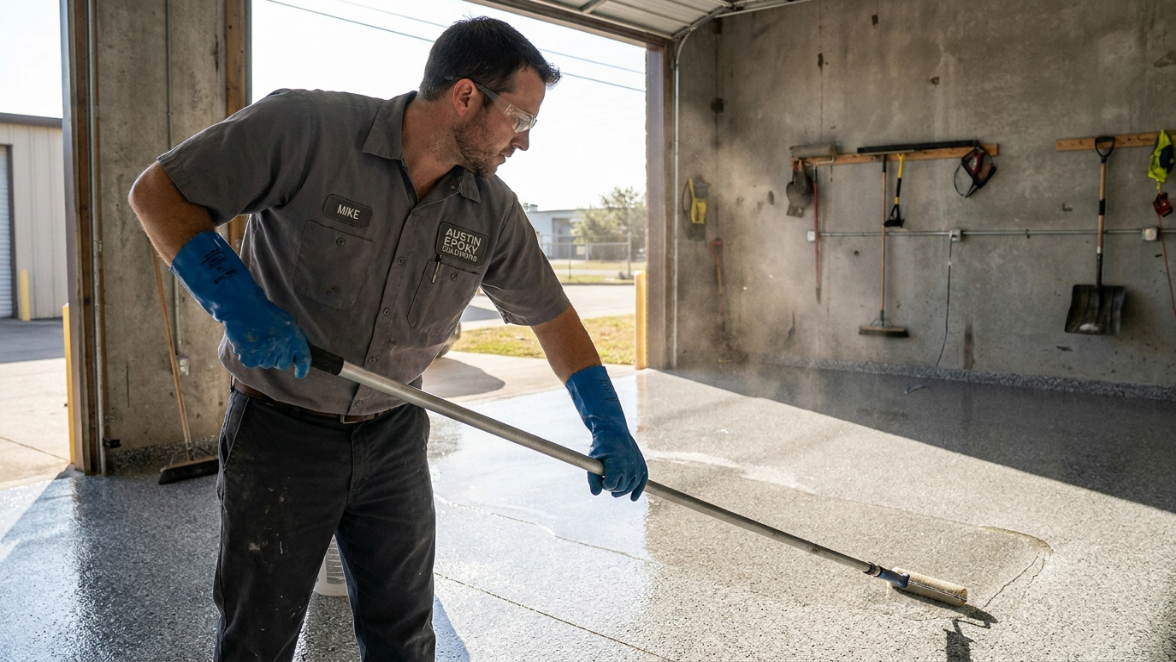
Is your epoxy floor ready to survive another brutal Texas summer? Contact Rio Epoxy Flooring today for a free consultation and keep your floors looking flawless all year long.
Did you know that surface temperatures in Texas can exceed 150°F on a concrete slab during peak summer months? If you have an epoxy floor in your garage, commercial space, or home, that kind of heat is not something to ignore.
Knowing how to maintain epoxy floors Texas heat care guide style — meaning with a strategy built around the local climate — is the difference between a floor that lasts 20 years and one that peels, yellows, or cracks after just a few seasons.
In this complete care guide, you will find everything you need to protect your investment, from daily cleaning habits to seasonal inspections. Continue reading to discover how to keep your epoxy floor performing and looking great no matter how hot it gets in Central Texas.
What Are Epoxy Floors and Why Are They Popular in Texas?
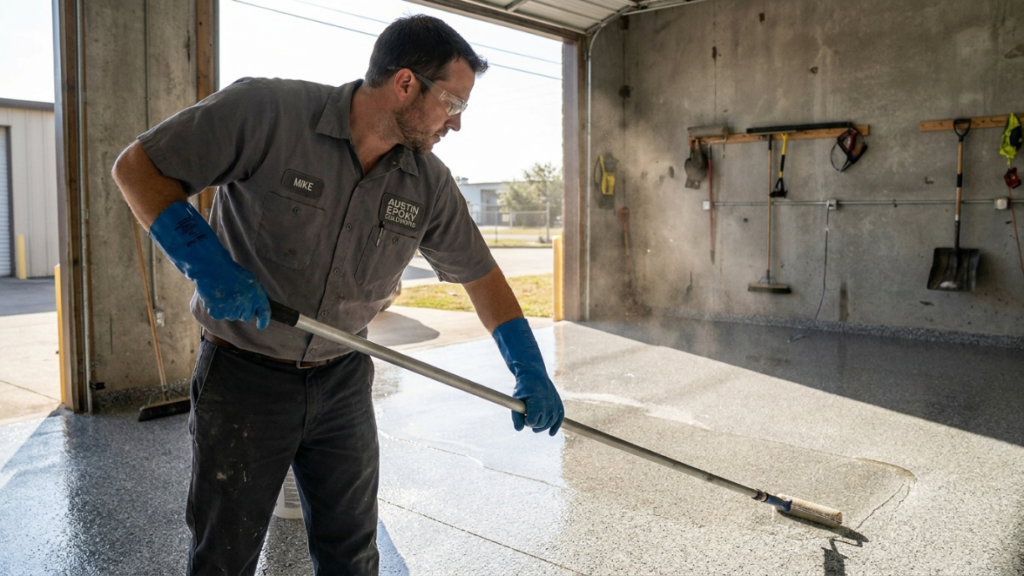
Epoxy flooring is a surface coating system made from a combination of resin and hardener that bonds chemically to concrete, creating a hard, smooth, and highly durable finish. It is widely used in garages, warehouses, commercial kitchens, showrooms, and residential spaces across Austin and surrounding areas.
Texas homeowners and business owners choose epoxy for several reasons: it resists oil, chemicals, and moisture; it reflects light, making spaces feel brighter; and it handles heavy foot and vehicle traffic with ease. At Rio Epoxy Flooring, we install epoxy systems designed specifically for the Texas climate, using formulations that resist UV exposure and thermal cycling.
Understanding how to maintain epoxy floors Texas heat care guide principles begin with knowing what your floor is made of and how it responds to environmental stress. Heat, humidity, and UV rays are the three biggest enemies of epoxy in Texas, and each one requires a specific maintenance strategy.
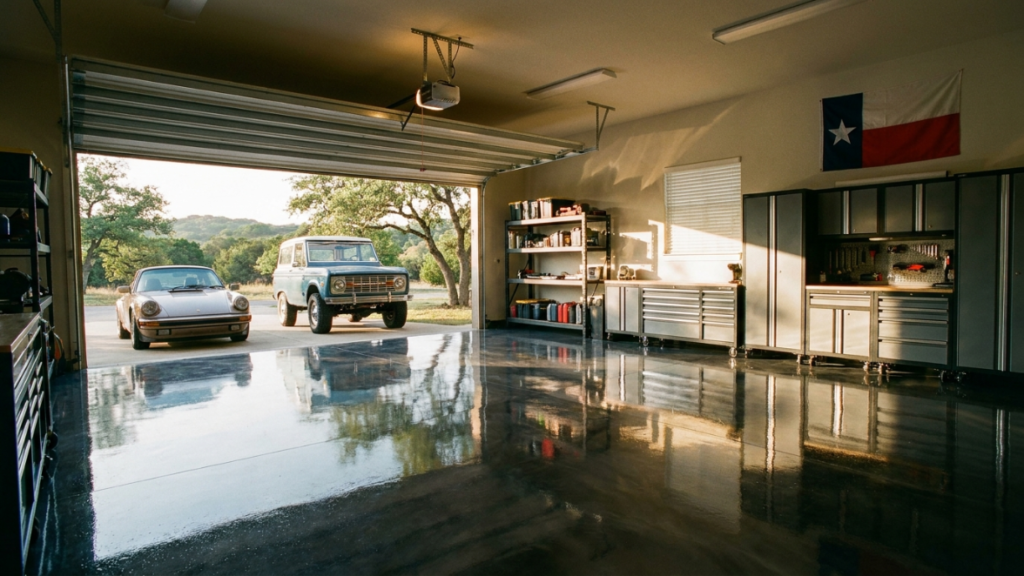
How Does Texas Heat Affect Epoxy Floors?
Thermal Expansion and Contraction
Concrete expands in heat and contracts when it cools. In Texas, where temperatures can swing 40°F between a summer night and midday, this cycle happens repeatedly. Epoxy bonds tightly to concrete, so when the slab moves, the coating moves with it. A properly installed epoxy floor handles this well, but a floor installed over a poorly prepped slab or with low-quality materials will develop micro-cracks over time.
Learning how to maintain epoxy floors Texas heat care guide basics means monitoring expansion joints and cracks annually and sealing any new gaps before moisture gets underneath.
UV Degradation
Standard epoxy resins are not UV-stable. Direct sunlight causes a chemical reaction called photodegradation, which yellows the surface and dulls the finish over time. This is especially problematic for outdoor-facing garages and pool decks. At Rio Epoxy Flooring, we apply polyaspartic or polyurea topcoats over epoxy base coats specifically to counter this issue in Austin’s sun-intense environment.
Moisture and Humidity
After a Texas rain, humidity spikes rapidly. If moisture vapor pushes up through concrete and finds a weak bond in the epoxy layer, it causes bubbling or delamination. This is why proper surface preparation — including moisture testing before installation — is non-negotiable.
How to Maintain Epoxy Floors: Texas Heat Care Guide for Daily Routines
Consistent daily habits are the foundation of any how to maintain epoxy floors Texas heat care guide. The good news is that epoxy is one of the lowest-maintenance flooring options available. A few simple habits will keep it in excellent condition.
Daily Sweeping or Dust Mopping
Dust, grit, and fine debris act like sandpaper underfoot. In Texas garages, this often means a mix of sand, pollen, and tire debris. Sweep or dust mop your epoxy floor daily or after each use. Micro-abrasions build up over time and dull the surface finish, so this is the single most impactful daily habit you can develop.
Immediate Spill Cleanup
Epoxy is chemical-resistant, but not impervious. Oil, gasoline, battery acid, and pool chemicals should be wiped up immediately rather than left to sit. The longer a chemical sits on the surface, the more likely it is to penetrate any micro-cracks or surface imperfections. Keep a roll of paper towels or an absorbent cloth near your garage or workspace.
Avoid Dragging Heavy Objects
Dragging a toolbox, equipment, or furniture across an epoxy floor creates scratches that dull the topcoat. Use furniture pads, dollies, or lifting techniques instead. This simple habit alone can double the lifespan of your floor’s finish.
Weekly and Monthly Maintenance: The Core of Any Epoxy Heat Care Guide
Weekly Damp Mopping
Once a week, mop your epoxy floor with warm water and a few drops of a pH-neutral cleaner. Avoid bleach, ammonia-based products, or acidic cleaners, as these degrade the epoxy topcoat over time. A microfiber mop head is ideal because it picks up fine particles without scratching the surface.
This is a key step in any how to maintain epoxy floors Texas heat care guide because heat accelerates the breakdown of cleaning chemical residue left on the floor. Rinse thoroughly after mopping to prevent residue buildup.
Monthly Deep Inspection
Once a month, walk the entire floor and look for:
- New cracks or chips near joints or edges
- Bubbling or lifting areas (signs of moisture intrusion)
- Yellowing near windows or garage doors (UV damage)
- Dull patches where the topcoat has worn thin
Early detection means a small repair instead of a full recoat. If you spot anything concerning, reach out to our team for a professional assessment.
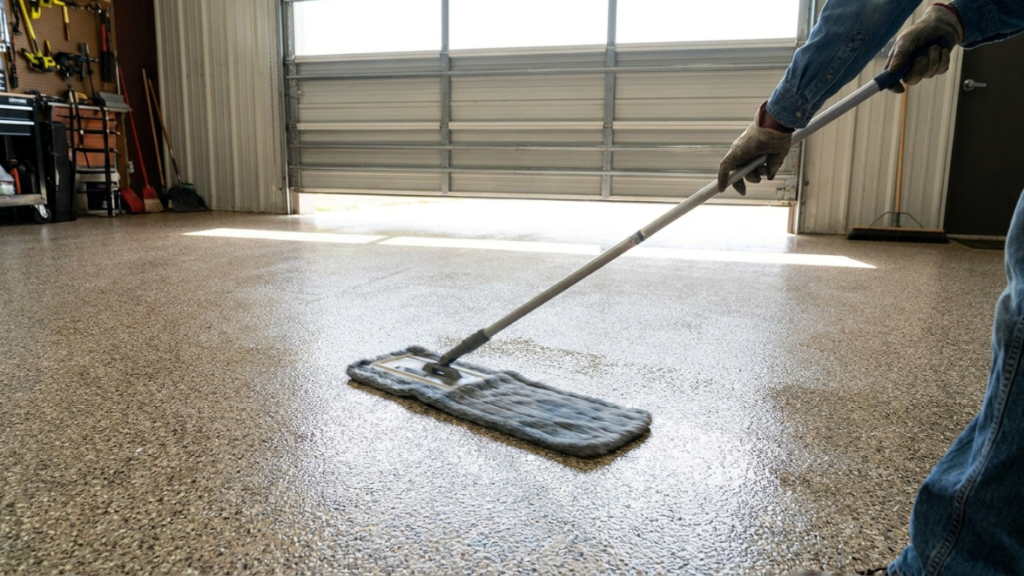
Seasonal Maintenance: How to Maintain Epoxy Floors Through Texas Summers
Summer is the most demanding season for epoxy floors in Texas. Temperatures in Austin regularly climb above 100°F from June through September, and the thermal stress on your floor is at its peak. This section is the heart of any practical how to maintain epoxy floors Texas heat care guide.
Pre-Summer Inspection (March–April)
Before summer arrives, do a thorough inspection of your entire floor. Reseal any expansion joints, touch up chips or cracks with a compatible epoxy filler, and apply a fresh coat of UV-resistant polyurea topcoat if the surface looks dull or faded. This is also the right time to clean out your garage or shop space and address any drainage issues that might allow standing water after summer storms.
Homeowners in Lakeway, Leander, and Dripping Springs often contact us in March and April for exactly this type of pre-season maintenance check.
Protecting Your Floor During Peak Heat (June–September)
During peak summer months, follow these additional steps as part of your how to maintain epoxy floors Texas heat care guide routine:
- Use floor mats at entry points to reduce grit and hot debris tracked in from outside.
- Avoid parking a hot vehicle directly on an unventilated garage floor for extended periods. Let the engine cool before pulling fully into the garage.
- Keep the space ventilated — proper airflow reduces surface temperature and slows UV degradation near windows.
- Clean spills faster than usual — summer heat causes liquids to evaporate and leave concentrated residue more quickly.
Post-Summer Recoat Assessment (October–November)
After the Texas summer, reassess your topcoat. If it has yellowed noticeably, feel rough to the touch, or lost its sheen, a recoat may be needed. A polyaspartic or polyurea topcoat recoat every three to five years is a smart investment that resets your floor’s appearance and protection level. At Rio Epoxy Flooring, we offer recoat services across Austin and Central Texas.
How to Maintain Epoxy Garage Floors in Texas Heat
Garage floors have unique challenges compared to interior spaces. They face direct tire contact, oil drips, extreme temperature swings, and exposure to outdoor elements every single day. A dedicated how to maintain epoxy floors Texas heat care guide for garages should include:
Tire Mark Prevention and Removal
Hot tires — especially performance tires made with certain plasticizers — can react chemically with standard epoxy and leave permanent yellow or brown marks. This is known as “hot tire pickup.” The solution is a polyurea or polyaspartic topcoat, which resists this reaction. If marks appear, clean them immediately with a degreaser diluted in warm water.
If you are installing a new garage epoxy floor in Texas, always request a topcoat rated for hot tire resistance. It is a detail that makes a significant long-term difference.
Anti-Slip Maintenance
Many Texas garage floors include anti-slip additives like aluminum oxide or shark grip in the topcoat. Over time, heavy traffic and cleaning can reduce their effectiveness. When doing your annual assessment, test the grip of your floor when it is damp. If it feels slippery, a fresh anti-slip topcoat or broadcast layer may be needed.
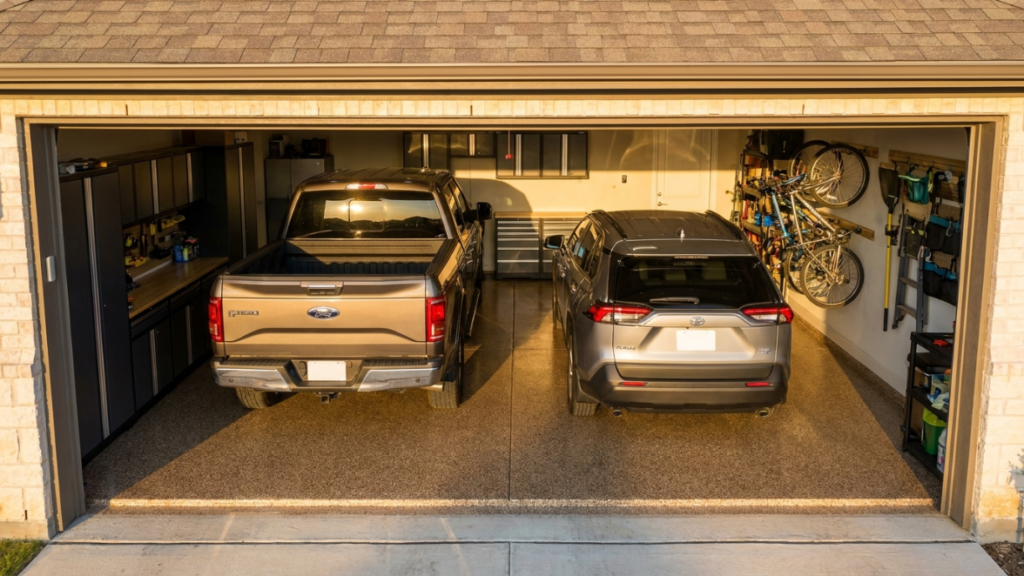
Common Mistakes to Avoid: What Damages Epoxy Floors in Texas Heat
Even well-intentioned homeowners make mistakes that shorten the life of their epoxy floors. This section of the how to maintain epoxy floors Texas heat care guide covers the most common errors we see in the field.
Using the Wrong Cleaners
Bleach, muriatic acid, and citrus-based degreasers are the most damaging cleaners used on epoxy floors. Bleach dulls the finish and weakens the chemical bond over time. Muriatic acid etches the surface. Always use pH-neutral, epoxy-safe cleaners. When in doubt, plain warm water is better than a harsh chemical.
Ignoring Small Cracks
A hairline crack today becomes a delaminating section tomorrow. Texas heat causes your slab to expand and contract more aggressively than in cooler climates, which means cracks that seem cosmetic can quickly become structural issues for the coating. The how to maintain epoxy floors Texas heat care guide rule is simple: repair small cracks before the next summer season, without exception.
Skipping the Pre-Installation Moisture Test
This mistake happens before the floor is even installed, but its consequences show up during maintenance. Concrete in Texas — especially near the Hill Country and near the Colorado River in Austin — can have high moisture vapor emission rates. If the slab was not tested and properly sealed before epoxy installation, bubbling and delamination are almost inevitable. Always work with a professional installer like Rio Epoxy Flooring who includes moisture testing as part of the process.
Pressure Washing Without Care
Pressure washing can be done on epoxy floors, but using too high a pressure setting or holding the nozzle too close chips and lifts the topcoat. If you pressure wash your garage floor, use a wide fan tip at no more than 1,500 PSI and keep the nozzle at least 12 inches from the surface.
Real Customer Stories: Epoxy Floor Care in Austin and Central Texas
Sarah, a homeowner in West Lake Hills, had her garage floor coated by Rio Epoxy Flooring in 2022. After two Texas summers, she reported: “I was worried about the heat, but following the care tips they gave me, the floor still looks brand new. The monthly inspection idea really helped — I caught a small crack near the expansion joint before it became a problem.”
Marcus, owner of a commercial auto shop in Round Rock, shared on our Google Business profile: “Rio Epoxy did our shop floor two years ago. Heavy trucks, oil spills, and 100-degree summers — the floor handles everything. Following their care guide made a huge difference.”
You can also read more verified reviews on our Yelp page and explore our work on YouTube.
These are not isolated cases. Across Georgetown, Killeen, Temple, and Barton Creek, we see the same pattern: customers who follow a consistent how to maintain epoxy floors Texas heat care guide get significantly more years out of their floors than those who do not.
Want a professional assessment of your current epoxy floor? Schedule your free inspection with Rio Epoxy Flooring. We serve Austin, Rollingwood, Lost Creek, Sunset Valley, Kempner and all surrounding areas. We also offer flexible financing options to make your project easier.
Epoxy Floor Maintenance Comparison: DIY vs Professional Care
| Task | DIY | Professional |
|---|---|---|
| Daily sweeping | Yes | Not required |
| Weekly mopping | Yes | Not required |
| Crack repair | Small hairlines only | Required for structural cracks |
| Topcoat recoat | Not recommended | Every 3–5 years |
| UV topcoat upgrade | Not recommended | On installation or recoat |
| Moisture testing | Not possible | Required before installation |
| Hot tire coating | Not applicable | Specified at installation |
How Long Do Epoxy Floors Last in Texas With Proper Maintenance?
The principles of this how to maintain epoxy floors Texas heat care guide apply beyond garage and commercial floors. Epoxy coatings are also used on pool decks and custom countertops, and both require Texas heat-specific care. Just as you would follow a how to maintain epoxy floors Texas heat care guide for your garage, the same seasonal mindset applies to every epoxy surface in your home.
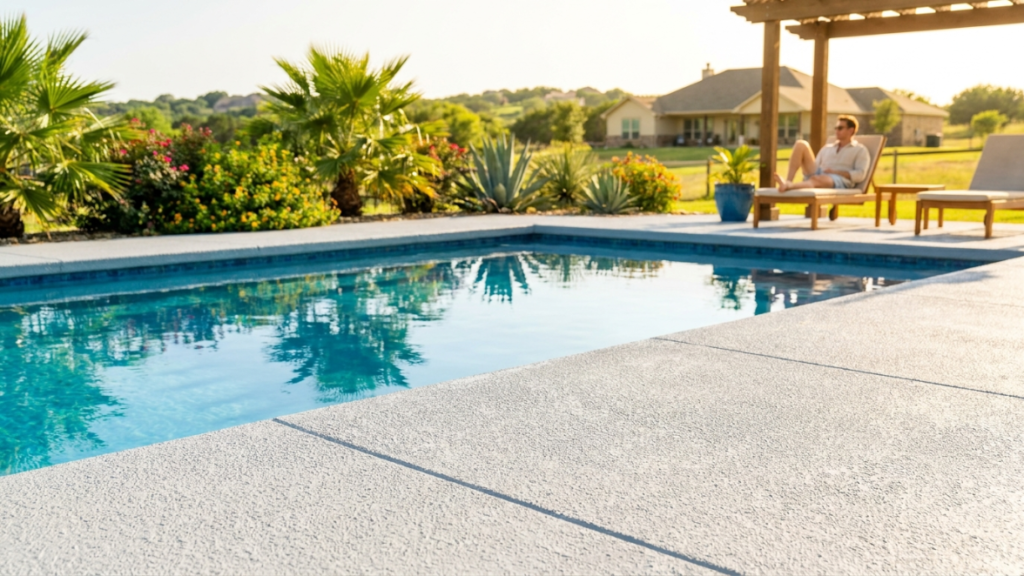
Pool deck epoxy faces constant UV exposure, chlorine splash, and foot traffic from wet shoes. Rinse the surface weekly with fresh water to remove chlorine residue, and inspect the surface at the start of each swim season for lifting or bubbling. Apply a UV-resistant sealer annually before summer begins.
Epoxy countertops in Texas kitchens and outdoor cooking areas face heat from appliances, direct sunlight in outdoor settings, and chemical exposure from cleaning products. Use trivets under hot cookware, avoid harsh degreasers, and wipe surfaces dry after cleaning to prevent water spotting.
Epoxy Pool Decks and Countertops: Extending the Care Guide to Other Surfaces
FAQ: How to Maintain Epoxy Floors — Texas Heat Care Guide Questions
Q1: How often should I recoat my epoxy floor in Texas? In Texas, we recommend reassessing your topcoat every two to three years and scheduling a full professional recoat every three to five years. The intense UV exposure and thermal cycling accelerate surface wear compared to cooler climates. Following a how to maintain epoxy floors Texas heat care guide can extend the interval between recoats significantly.
Q2: Can epoxy floors handle Texas summer heat without cracking? Yes, a professionally installed epoxy floor with a proper polyurea or polyaspartic topcoat handles Texas summer heat well. The key is quality installation on a properly prepped slab and a consistent how to maintain epoxy floors Texas heat care guide routine that includes seasonal inspections.
Q3: What is the best cleaner for epoxy floors in hot climates? A pH-neutral floor cleaner diluted in warm water is the best choice. In Texas, heat causes cleaning residue to dry faster and leave deposits, so always rinse thoroughly after mopping. Avoid bleach, citrus-based cleaners, and ammonia products. This is one of the most important steps in any how to maintain epoxy floors Texas heat care guide.
Q4: Will hot tires damage my epoxy garage floor in Texas? Standard epoxy topcoats can be damaged by hot tires. A polyurea or polyaspartic topcoat specifically rated for hot tire resistance eliminates this problem. If you are concerned about this, contact Rio Epoxy Flooring to discuss an upgrade — it is a detail covered in every solid how to maintain epoxy floors Texas heat care guide.
Q5: Does Rio Epoxy Flooring offer maintenance services in areas outside Austin? Yes. We serve a wide area across Central Texas, including Round Rock, Georgetown, Leander, Dripping Springs, and many more. See our full areas served page for the complete list.
Conclusion: Your Epoxy Floor Deserves a Texas-Proof Maintenance Plan
Following a structured how to maintain epoxy floors Texas heat care guide is the single most effective way to protect your flooring investment in one of the country’s most demanding climates. From daily sweeping to pre-summer inspections, from avoiding the wrong cleaners to scheduling professional recoats every few years, each step adds years of life and beauty to your floor.
The combination of Central Texas heat, UV radiation, and humidity cycling creates conditions that will quickly degrade a neglected floor — but a well-maintained epoxy floor not only survives these conditions, it thrives. That is the promise of quality installation paired with consistent care, and it is exactly what this how to maintain epoxy floors Texas heat care guide was designed to help you achieve.
At Rio Epoxy Flooring, we install and maintain epoxy systems built for Texas. Our team understands the local climate, the soil conditions, and the performance demands that Austin-area homeowners and businesses face every day. Whether you are looking for a residential solution, a commercial floor, or have questions about our full services, we are here to help.
Have more questions? Visit our Epoxy Flooring FAQs page or connect with us on LinkedIn.
Ready to protect your floors this summer? Contact Rio Epoxy Flooring today for a free consultation. 823 Congress Ave. Austin, TX 78701 | (737) 307-1888 | contact@rioepoxyflooring.com | Mon–Sat: 8am–5pm Request Your Free Quote
Rio Epoxy Flooring 823 Congress Ave. Austin, TX 78701 Phone: (737) 307-1888 Email: contact@rioepoxyflooring.com Hours: Monday–Saturday, 8:00am–5:00pm