


Choose Epoxy Basement Floor Colors That Make the Space Feel Finished
The best epoxy basement floor colors match the room’s light, purpose, and cleaning needs. Start with these simple choices:
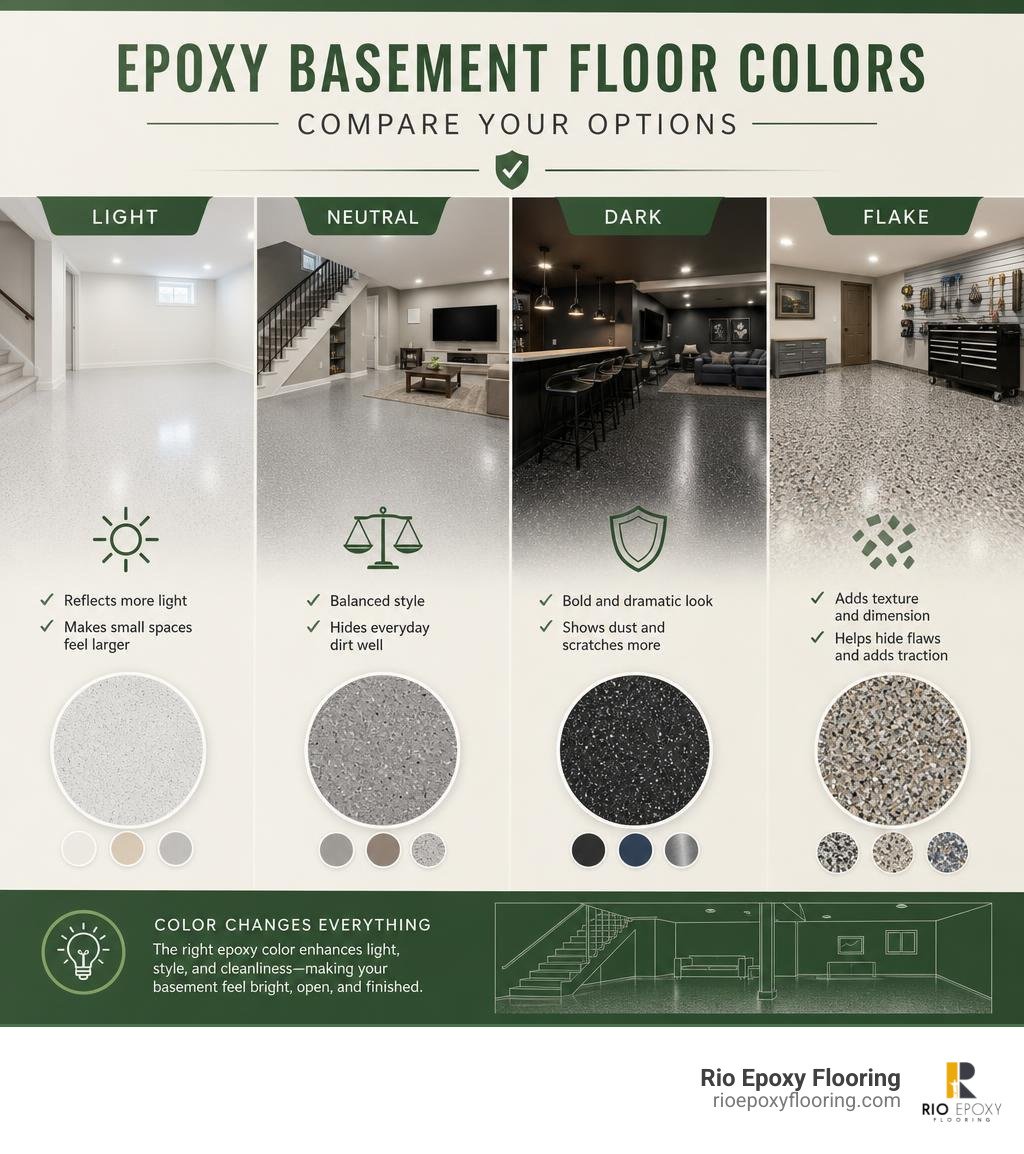
- Choose light gray, soft beige, or white to reflect more light and make a small or low-ceiling basement feel larger.
- Choose medium gray or multi-color flake blends for the best balance of style and day-to-day dirt concealment.
- Choose tan and warm earth tones for family rooms, guest spaces, and basements with wood furniture.
- Choose dark charcoal, blue, or metallic finishes for a bold home theater, bar, or modern industrial look, but plan for more visible dust and scratches.
Color is not just decoration. It changes how bright, open, and clean the basement feels. A full-broadcast flake floor also adds texture, helps disguise minor concrete flaws, and can provide better traction than a smooth high-gloss finish.
I am Roger Aguiar, an Austin-based digital marketing professional with more than seven years of experience helping local businesses connect homeowners with practical renovation solutions, including epoxy basement floor colors. In this guide, I will help you compare shades and finishes so you can choose a floor that looks premium and works for daily life.
Trending Epoxy Basement Floor Colors for Modern Living Spaces
Basements have evolved far beyond dark laundry rooms and cobweb-laden storage nooks. In 2026, lower levels serve as versatile extensions of the home—housing game rooms, home gyms, wet bars, private suites, and custom home theaters. Choosing the right coating system transforms porous, dusty concrete into a seamless, high-performance architectural element.

When selecting among various basement floor design options, the color palette establishes the mood, works alongside your ambient lighting, and determines how easy the room is to maintain. Below are the leading color trends redefining modern basements.
Classic Neutral Grays and Modern Epoxy Basement Floor Colors
Neutral gray remains an undisputed favorite for finished basements across the country. Tones like slate gray, cloud gray, and cool light concrete tones offer clean, balanced aesthetic foundations that complement almost any interior decor style.
- Slate Gray: A sophisticated, mid-tone gray that balances light absorption with excellent hiding power. It brings an urban, loft-style look to modern living rooms and hobby zones.
- Cloud Gray: A pale, airy gray with high light reflectance. It prevents sub-grade rooms from feeling boxed-in while remaining cooler and more forgiving than pure stark white.
- Charcoal Gray: A moody, industrial tone that pairs beautifully with exposed brick, matte black iron hardware, and warm LED track lighting.
Because grays are neutral, they give you the flexibility to swap furniture, repaint drywall, and adjust rugs over the years without worrying about your floor clashing.
Warm Earth Tones and Cozy Tan Satin
If cool modern aesthetics feel too clinical, warm earth tones deliver rich, welcoming comfort. Shades such as tan satin, sand, warm beige, and caramel help lower levels feel like natural extensions of upper-floor hardwood and carpeted areas.
These hues pair naturally with wood baseboards, leather sofas, craft tables, and rustic stone accent walls. Tan satin finishes diffuse harsh downlighting, providing a soft glow that makes family rooms and guest suites feel grounded and comfortable.
Dramatic Metallic Bahia Green, Ocean Blues, and Jet Black
For show-stopping, one-of-a-kind floors, metallic epoxy systems use pearlescent mica powder pigments suspended in 100% solids resin. During installation, installers manipulate the wet resin using rollers, squeegees, or solvent spritzing to create three-dimensional swirling patterns reminiscent of polished marble, molten metal, or flowing water.
- Bahia Green and Deep Emerald: Evokes exotic natural stone such as Brazilian granite or jade, adding organic luxury to home bars and game rooms. Two-component specialty systems like Bahia Green and Jet Black resin blends create deep, layered contrast.
- Ocean Blues and Deep Cobalt: Ideal for luxury lounges, pool table areas, and home spas, bringing depth and dynamic light movement.
- Jet Black and Charcoal Swirl: High-gloss black marble effects provide dramatic flair for upscale entertainment spaces.
Homeowners exploring bold, artistic palettes often find inspiration in specialized metallic epoxy flooring ideas to create customized statement rooms.
Bright Alabaster White and Terrazzo Looks
White epoxy floors provide maximum light reflectance, making them a powerful choice for windowless or low-ceiling basements. A seamless alabaster or pearl white finish bounces overhead lighting across the floor, significantly brightening dark corners.
For a mid-century or contemporary European aesthetic, faux terrazzo finishes combine an off-white or soft gray base coat with fine micro-flake blends. This gives you the high-end appearance of poured Italian terrazzo tile at a fraction of the weight, installation time, and cost, while hiding dust much better than solid, high-gloss white.
Custom Multi-Flake Blends and Textured Epoxy Basement Floor Colors
Flake (or color chip) systems are among the most popular and durable coating styles for residential concrete. Formulated from durable, pigmented vinyl chips, these blends are broadcast across a wet base coat to create multidimensional patterns that look like natural granite or quartz.
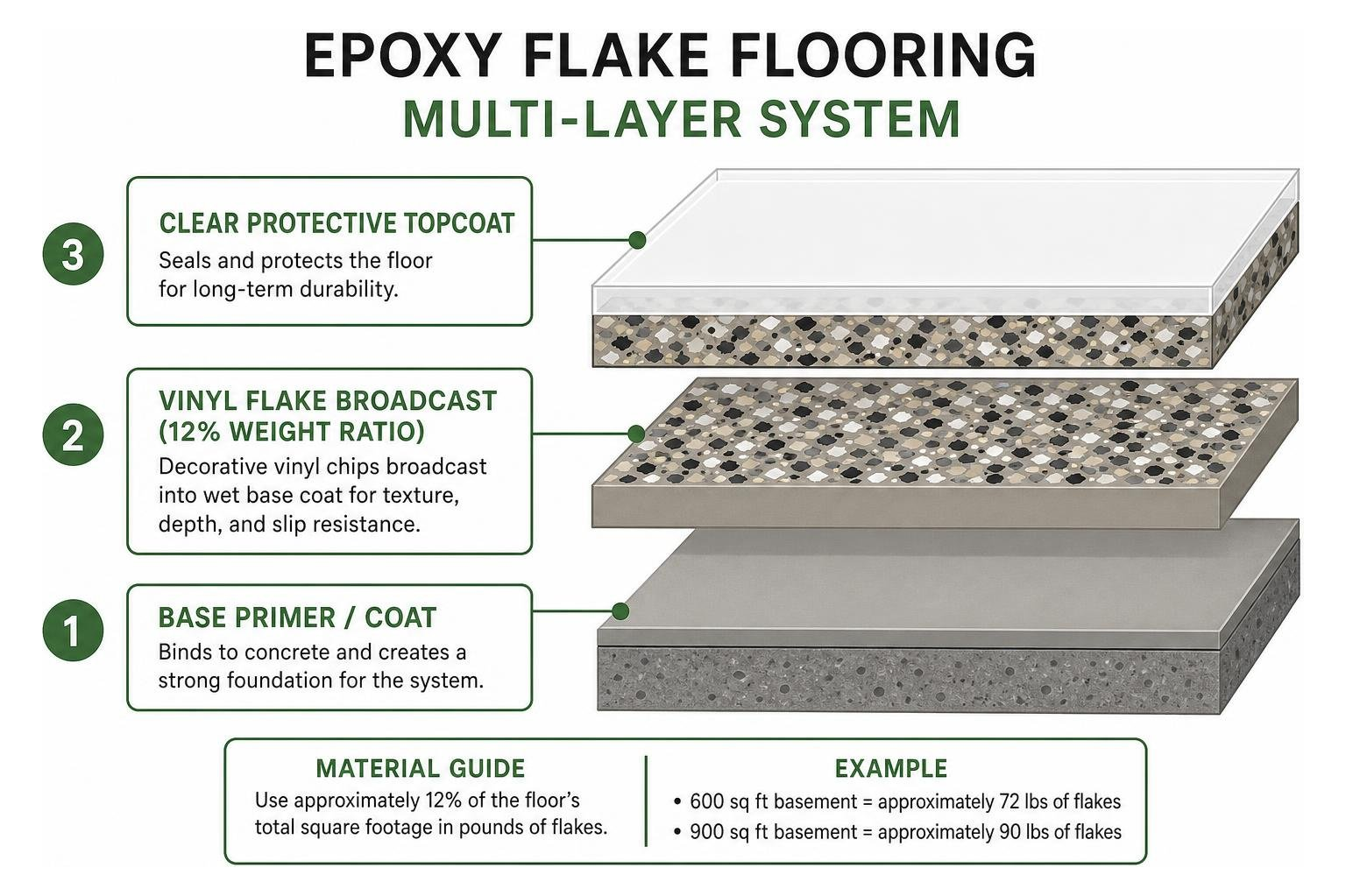
A full-broadcast flake floor uses a dense distribution formula: plan for approximately 12% of the floor’s total square footage in pounds of flakes. For example:
- A 600 sq ft basement requires approximately 72 lbs of decorative flakes.
- A 900 sq ft basement requires approximately 90 lbs of decorative flakes.
Popular multi-flake blends include combinations like Domino (black, white, and gray chips on a medium gray base), Cabin Fever (brown, tan, and cream chips on a warm tan base), and Blue Granite (slate, denim, and white chips). Beyond aesthetics, the vinyl chips add physical thickness (often reaching 9–10 mils dry film thickness) and provide natural orange-peel texture for built-in slip resistance.
Light vs. Dark Shades: Ambiance, Maintenance, and Perceived Size
Color selection fundamentally influences visual dimensions, ambient brightness, and cleaning demands. Understanding these trade-offs ensures your new floor matches your daily routine.
| Floor Tone | Visual Impact & Perceived Size | Light Reflectance | Dirt & Dust Concealment | Best Suited For |
|---|---|---|---|---|
| Light Tones (White, Soft Gray, Tan) | Expands space; makes low ceilings feel higher | High (Reflects up to 80% of ambient light) | Shows dark dirt, pet hair, and tracked mud quickly | Small footprints, windowless basements, home gyms, laundry suites |
| Medium Tones (Slate, Driftwood, Flake Blends) | Balances openness with visual warmth | Moderate (Balanced, glare-free light dispersion) | Superior (Camouflages dust, crumbs, dings, and lint) | Multi-purpose family living rooms, playrooms, high-traffic corridors |
| Dark Tones (Charcoal, Jet Black, Deep Blue) | Creates cozy, intimate, theater-style rooms | Low (Absorbs light; requires intentional accent lighting) | Shows white drywall dust, pet dander, and fine micro-scratches | Dedicated home theaters, gaming dens, wine cellars, wet bars |
Light tones act like visual mirrors, bouncing daylight from egress windows and recessed fixtures across the room. Conversely, dark tones absorb light, giving rooms a moody, cinematic feel that works well for viewing screens but demands regular dry-mopping to manage visible dust.
How to Select the Right Palette and Finish for Your Concrete
To choose the perfect floor coating palette, consider three key design factors:
- Ceiling Height and Natural Light: If your basement ceilings sit below 8 feet, stick to lighter tones (soft grays, creams, or beige) with a satin or semi-gloss sheen to avoid a cramped feeling.
- Room Function and Traffic: For high-activity zones where kids and pets play, multi-color flake blends hide daily scuffs and lint between cleanings. For formal lounges, smooth metallic finishes provide stunning visual appeal.
- Subsurface Moisture and Humidity: Basements sit below grade, making moisture control critical before applying any coating. Testing your slab for vapor emissions helps prevent coating failure. Addressing underlying basement moisture considerations ensures your color stays securely bonded to the concrete.

Surface Preparation and Priming Requirements
A long-lasting finish depends on proper surface preparation. Applying resin directly onto unprepared, smooth concrete leads to premature chipping and peeling, regardless of product quality.
- Concrete Curing Window: Fresh concrete slabs must cure for a minimum of 28 days before installing an epoxy or moisture mitigation system.
- Mechanical Diamond Grinding: Slabs must be mechanically ground to achieve an open concrete surface profile (CSP 2–3), removing efflorescence, curing compounds, and old paint.
- Moisture-Vapor Primers: Applying a dedicated two-component epoxy moisture barrier primer seals the concrete pores, preventing moisture vapor from causing bubbles or pinholes in your color coat.
For a complete breakdown of preparation techniques, explore our comprehensive general epoxy flooring guide.
Clear Topcoats and Longevity Factors
The color layer provides aesthetic character, but the clear topcoat protects your investment over time. While basic DIY water-based systems—such as those following standard EpoxyShield technical specifications—provide accessible entry points with 150–200 sq.ft./gal coverage and 16-hour pot life, professional builds use high-solids polyaspartic and urethane topcoats.
Polyaspartic clear coats are non-yellowing and 100% UV stable. While basements have limited direct sunlight, basement egress windows and bright artificial LED lighting can still degrade standard aromatic epoxies over long periods. A high-grade topcoat resists yellowing, repels household chemicals, and delivers an expected lifespan of 10 to 20+ years. Maintaining this protective layer is simple—following standard, proper epoxy maintenance practices keeps the surface shining for decades.
Frequently Asked Questions About Basement Epoxy Coatings
What are the best epoxy floor colors for hiding dirt and imperfections?
Multi-color flake blends on medium gray or tan base coats hide dust, pet hair, tracked-in soil, and substrate unevenness best. The random mosaic pattern visually breaks up the surface, making light scratches, dust motes, and minor concrete dips virtually invisible between weekly cleanings.
Does the epoxy color affect floor longevity or fade over time?
The color pigment itself does not dictate how long the coating lasts; performance depends on the chemical resin formula, mechanical surface profile, and topcoat chemistry.
However, lower-grade, non-UV-stable epoxy base coats in white or light gray can develop an amber hue over years of exposure to artificial lighting or sunlight. Sealing your color base with an aliphatic polyaspartic or polyurethane clear coat prevents yellowing and keeps the color true for decades.
How much do custom colored epoxy and flake finishes cost per square foot?
Material costs vary depending on the system:
- Flake Materials: Standalone vinyl flake chips range from $39.00 to $110.00 per package depending on pigment density, metallic flecks, and volume.
- DIY Kits: Complete multi-stage material packages start around $1,054 for up to 600 sq ft, scaling up for larger layouts.
- Turnkey Professional Installation: Fully prepped, industrial-grade applications (including diamond grinding, vapor barrier priming, custom multi-tone metallic or full flake broadcast, and polyaspartic topcoats) typically range from $5.00 to $12.00 per square foot depending on concrete condition and finish complexity.
Conclusion
Choosing the right floor color turns an unfinished, underutilized basement into a bright, welcoming, and high-performance living area. Whether you prefer the clean simplicity of cloud gray, the cozy warmth of tan satin, the dramatic artistry of Bahia Green metallic resin, or the resilient texture of a full-broadcast vinyl flake blend, matching your color choice to your lighting and lifestyle ensures long-term satisfaction.
At Rio Epoxy Flooring, we specialize in high-durability floor transformations across Austin, Texas. Our low-VOC, UV-resistant, eco-friendly systems cure quickly for fast 48-hour turnarounds, and we back our work with a lifetime warranty.
Explore our favorite design ideas in our gallery of 10 stunning epoxy floor colors to transform your basement, and contact our local team today to select the perfect palette for your home.