

Choose an Eco Friendly Garage Floor That Lasts
An eco friendly garage floor should reduce waste or indoor chemical exposure without giving up the stain resistance, traction, and durability your garage needs. The strongest options are:
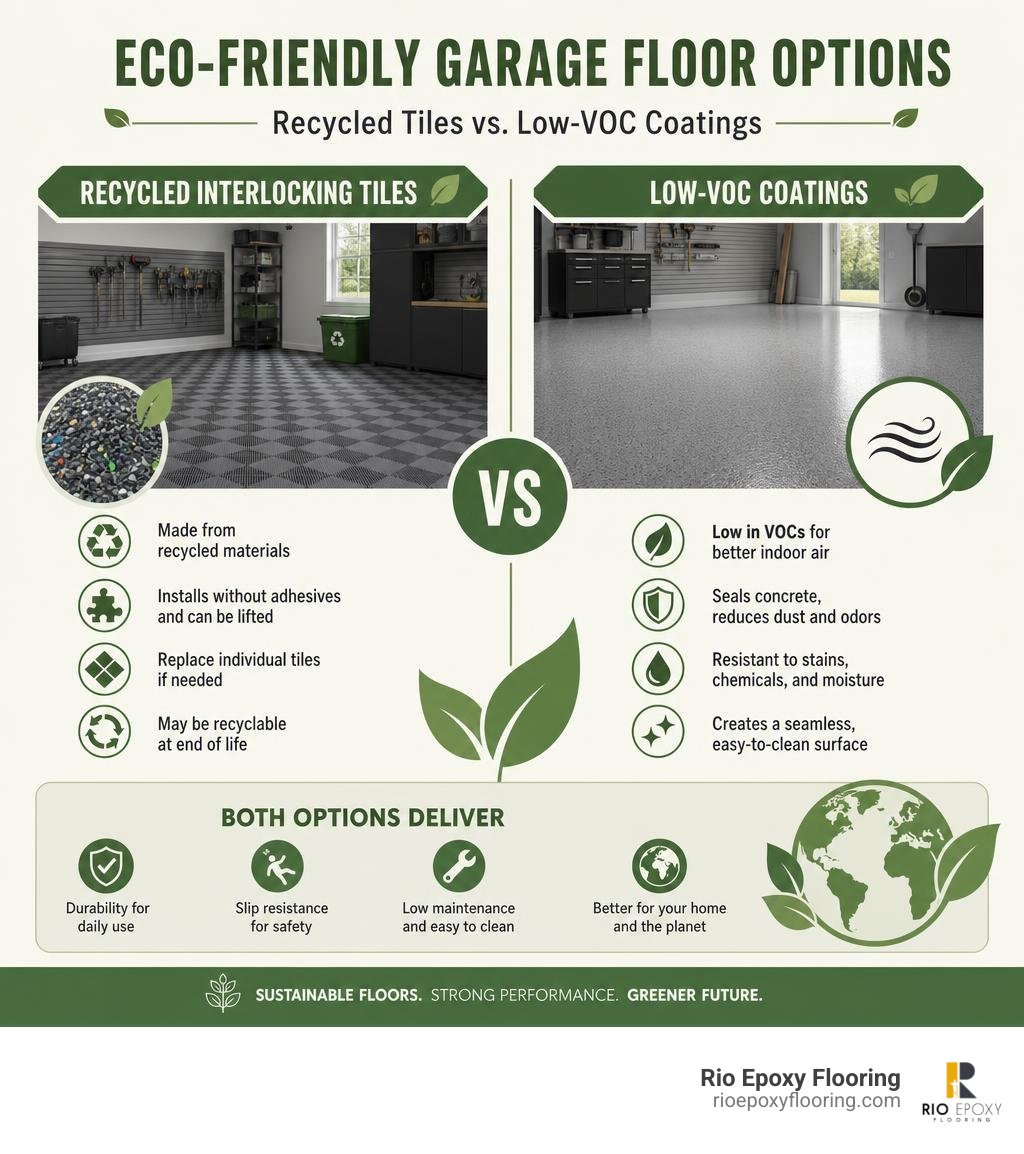
- Recycled interlocking tiles made from PVC, vinyl, or polypropylene. They install without adhesives, can often be lifted or replaced one tile at a time, and may be recyclable at end of life.
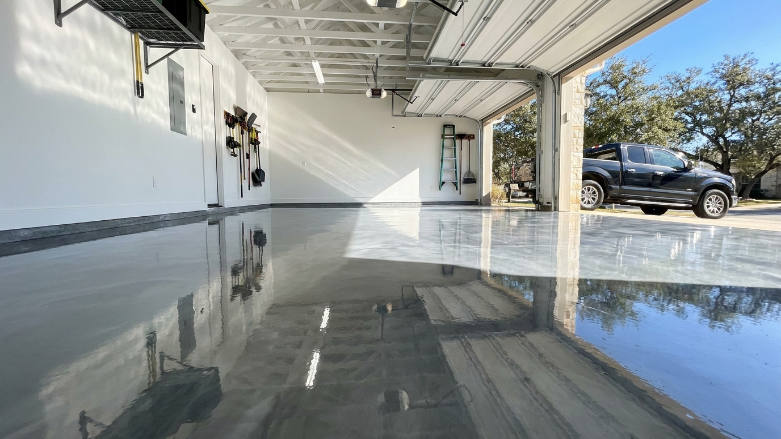
- Low-VOC epoxy or polyaspartic coatings that seal concrete, reduce dust, and limit odors and volatile organic compounds during installation.
- Durable modular systems with recycled content, slip resistance, and verified load ratings for vehicles, tools, and daily use.
The right choice depends on your priorities. Recycled tiles can divert plastic waste and avoid a permanent coating, while a properly installed low-VOC coating creates a seamless, easy-clean surface that protects the concrete below.
Look beyond a vague “green” label. Check the percentage of recycled material, VOC information, chemical and UV resistance, expected lifespan, end-of-life recyclability, and where the product is made. A floor that lasts longer, needs fewer repairs, and does not require harsh cleaners can be the more sustainable choice over time.
I am Roger Aguiar, an Austin-based entrepreneur and digital marketing professional with more than seven years of experience helping local businesses communicate practical home-improvement options. In this guide, I will help you compare eco friendly garage floor materials based on health, performance, maintenance, and long-term value.
Top Sustainable Materials for an Eco Friendly Garage Floor
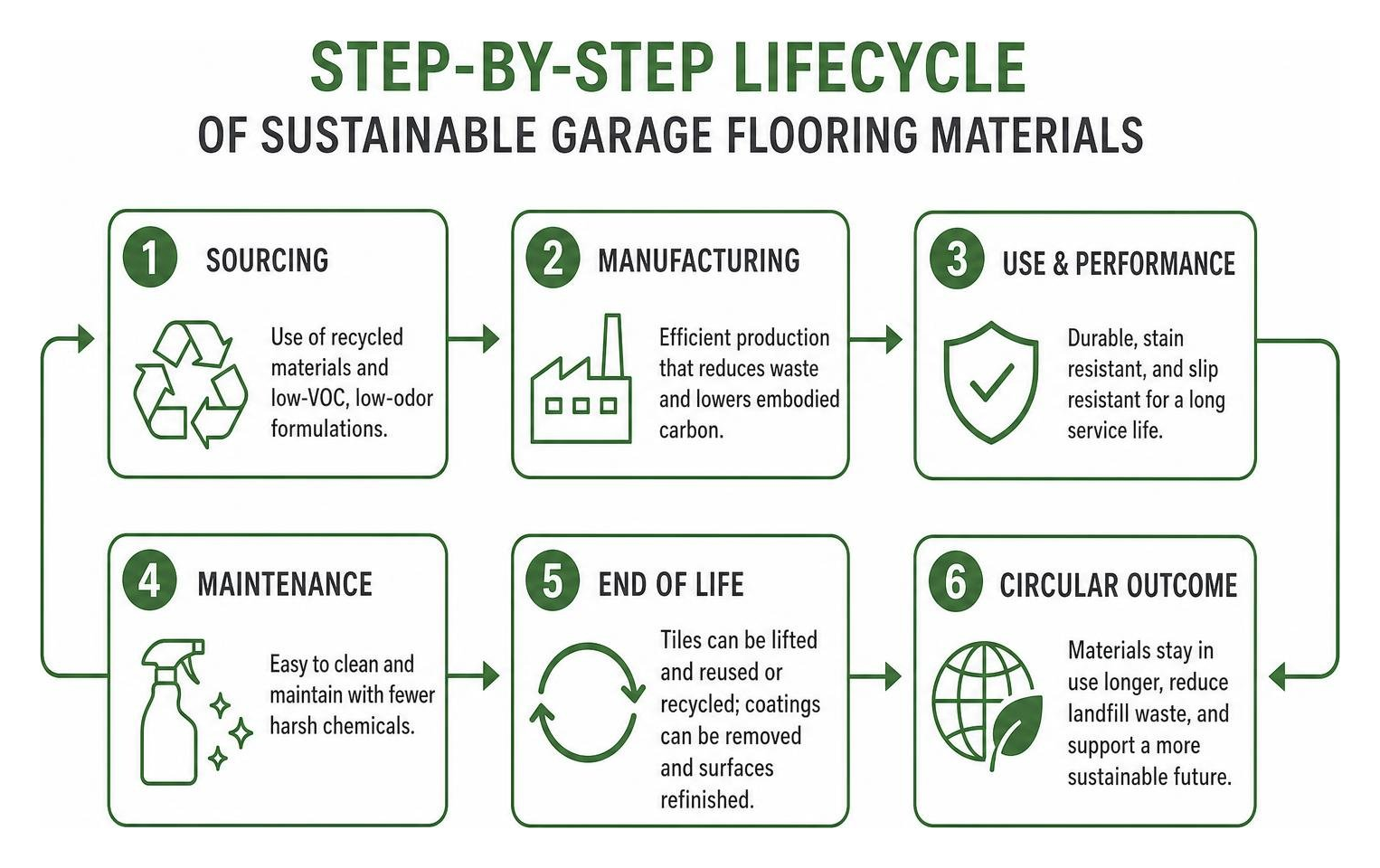
When homeowners look into greening their garage space, the sheer volume of plastic and chemical choices can feel overwhelming. True sustainability comes down to three measurable pillars: waste diversion, embodied carbon, and life-cycle durability. If a floor is made of green materials but falls apart after two years, it ends up in a landfill just the same.
Modern polymer recycling and advanced resin chemistry have completely changed what is possible. Today, an eco friendly garage floor can be built from high-strength recycled industrial plastics or formulated with low-emission resin technology that eliminates toxic solvent off-gassing. Understanding how each material functions allows you to pick the right platform for your daily garage routine.
Recycled PVC and Interlocking Vinyl Tiles
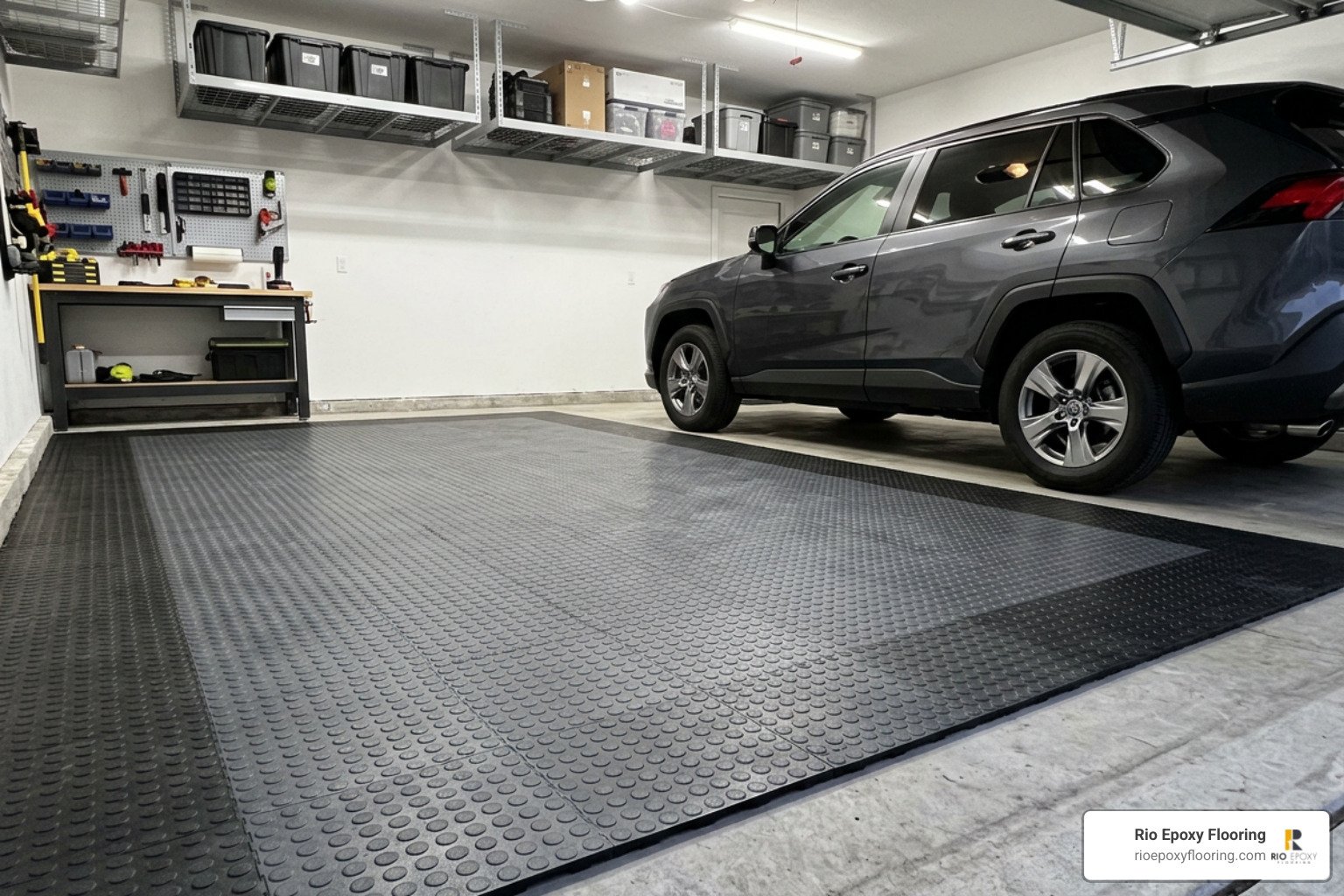
Flexible polyvinyl chloride (PVC) and vinyl tiles represent one of the most effective ways to capture post-industrial and post-consumer plastic waste. Specialized manufacturers take vinyl scraps and repurpose them into dense, impact-absorbing flooring systems that lock together like puzzle pieces.
- 100% Recycled Formulations: Premium options such as Recycled 25m² Garage Floor Tile Bundles in Black use 100% recycled PVC, keeping hundreds of pounds of solid polymers out of municipal waste streams.
- Safety and Fire Ratings: High-grade recycled PVC tiles boast a British fire rating of Bfl-S1, ensuring they do not support open combustion. They also carry standard R10 slip resistance ratings to prevent falls in damp environments.
- Adhesive-Free Installation: Because interlocking vinyl and PVC systems float above the concrete substrate, they require no noxious solvent-based glues, primers, or mastics. If a single tile sustains cosmetic damage, you pop it out and snap in a replacement.
While flexible vinyl tiles cushion feet during long hours at the workbench, it helps to weigh their performance against permanent resin barriers by exploring the pros and cons of epoxy flooring.
Recycled Polypropylene and Heavy-Duty Modular Tiles
For maximum structural rigidity, polypropylene (PP) modular tiles deliver unmatched compressive strength while repurposing substantial volumes of post-consumer waste.
Tiles like the VALT® PRO Garage Tile combine 100% recycled polypropylene and PVC. A single square meter of these tiles captures approximately 12 kg of plastic waste. At 14 mm in depth—twice the 7 mm thickness of standard PVC floor products—they provide substantial thermal insulation against cold concrete while dampening noise from vehicle traffic and dropped tools. Furthermore, their textured surface delivers an R11 anti-slip rating, giving confident grip in wet or dusty conditions.
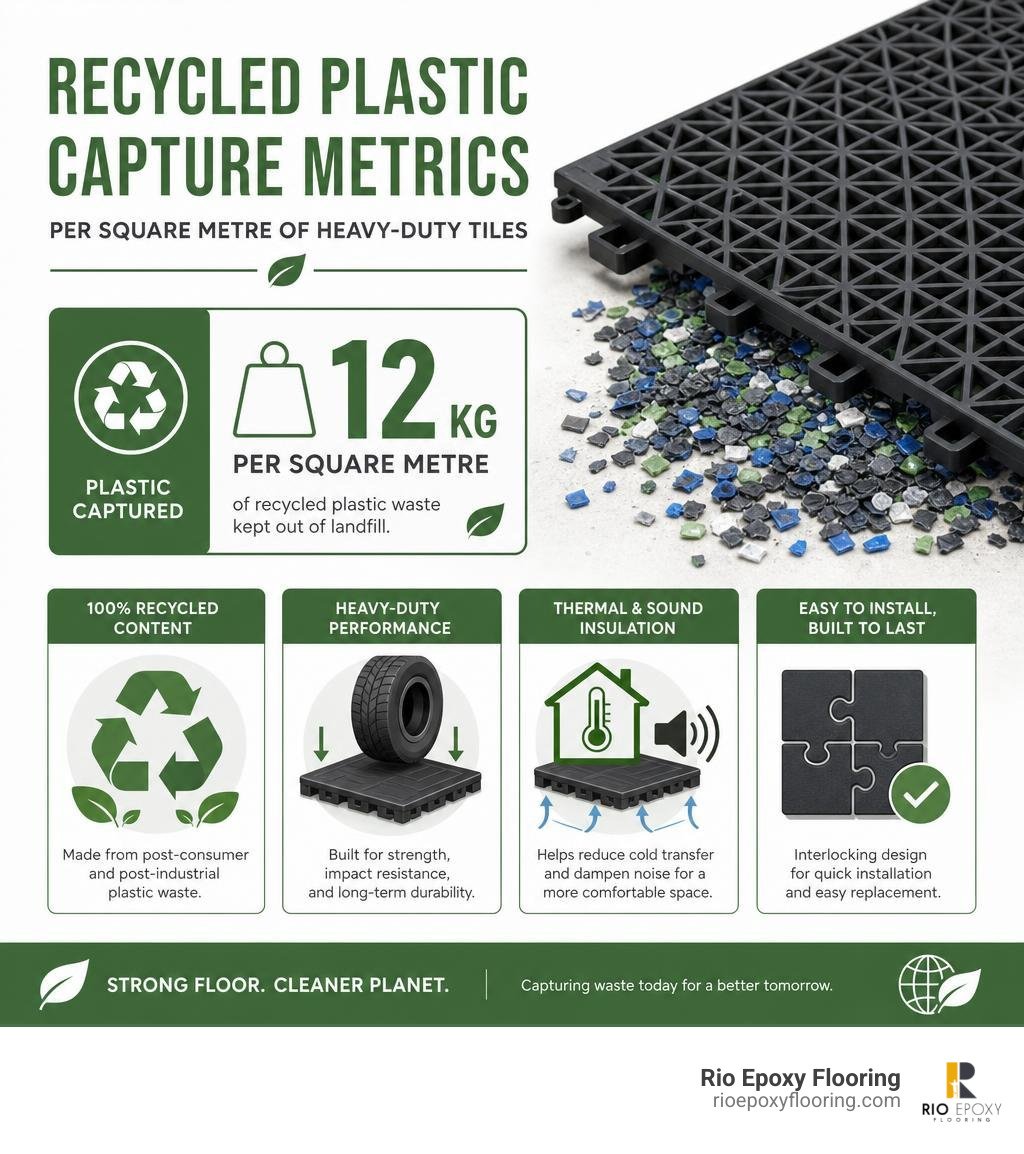
When engineered with open-rib configurations—such as the ventilated profiles found in ULTRAGRID® Space Grey Tiles or ULTRAGRID® Electric Green Tiles—polypropylene tiles provide sub-floor airflow channels. This drainage allows spilled liquids and rainwater brought in by vehicle tires to evaporate freely without becoming trapped against the concrete, preventing mold growth and moisture buildup.
Low-VOC Epoxy and Polyaspartic Coating Systems
Liquid floor coatings have historically had a reputation for strong chemical odors and high solvent emissions. Modern green resin chemistry has transformed this standard through high-solids, low-VOC formulations.
- Zero to Low VOC Emissions: Modern solvent-free epoxies release virtually zero volatile organic compounds during application and curing, safeguarding your family’s indoor air quality.
- Hermetic Concrete Sealing: A seamless resin barrier seals porous concrete, eliminating concrete dusting (which irritates respiratory systems) and preventing automotive fluids from leaching into the soil beneath your foundation.
- Rapid-Cure Chemistry: Advanced multi-layer systems utilize polyaspartic topcoats that cure rapidly with zero hazardous air pollutants, delivering robust UV stability that prevents ambering under intense sunlight.
To understand how low-emission resins protect your living space while transforming dull gray concrete, explore the key low-VOC epoxy flooring benefits and see real-world examples of how residential epoxy flooring transformations upgrade modern homes.
Comparing Eco-Friendly Garage Tiles vs. Low-VOC Epoxy Coatings
Choosing between interlocking modular tiles and a seamless low-VOC coating comes down to how you use your space, your aesthetic taste, and your maintenance preferences.
| Performance Metric | Recycled Interlocking Modular Tiles | Low-VOC Epoxy & Polyaspartic Coatings |
|---|---|---|
| Recycled Content | Up to 100% post-consumer PP / PVC | Low (focus is on non-toxic chemistry & longevity) |
| Emissions / VOCs | Zero VOCs during assembly | Ultra-low to zero VOC formulations |
| Load Bearing | Up to 20 tonnes/m² static load | Tensile strength exceeds compressive concrete |
| Installation Time | 2 to 6 hours (DIY snap-together) | 24 to 48 hours (Professional mechanical prep & cure) |
| Chemical Sealing | Fluid drains through/between joints | 100% seamless liquid and vapor barrier |
| Portability | High (can unclick and move homes) | Permanent architectural bonding |
| Expected Lifespan | 15–25 years (UV & wear dependent) | 20+ years (with professional surface profiling) |
For many property owners evaluating long-term value, asking is epoxy flooring worth it comes down to whether they prefer a completely seamless, mop-clean floor or a modular, movable system. You can read our complete epoxy flooring guide to dive deeper into multi-coat resin dynamics.
Performance and Durability of an Eco Friendly Garage Floor Tile System
Engineered modular tiles—whether made from recycled polymers or 100% recyclable virgin polypropylene like 3DFlex Pro™ Lime Green Tiles—are built to handle immense mechanical stress.
- High Load Capacity: Rigid polypropylene tiles easily handle compressive loads exceeding 20 tonnes per square metre. They support heavy SUVs, trucks, rolling toolboxes, and hydraulic floor jacks without cracking or buckling.
- Thermal Endurance: High-grade modular tiles withstand temperature extremes ranging from -40°C to +120°C (-40°F to 248°F). This broad thermal range prevents thermal brittleness in winter freezes and warping during summer heatwaves.
- Chemical Impermeability: Solid polymers resist motor oil, antifreeze, battery acid, brake fluid, and road salts. Spills can be blotted up or rinsed away with clean water.
Longevity and Installation of an Eco Friendly Garage Floor Coating
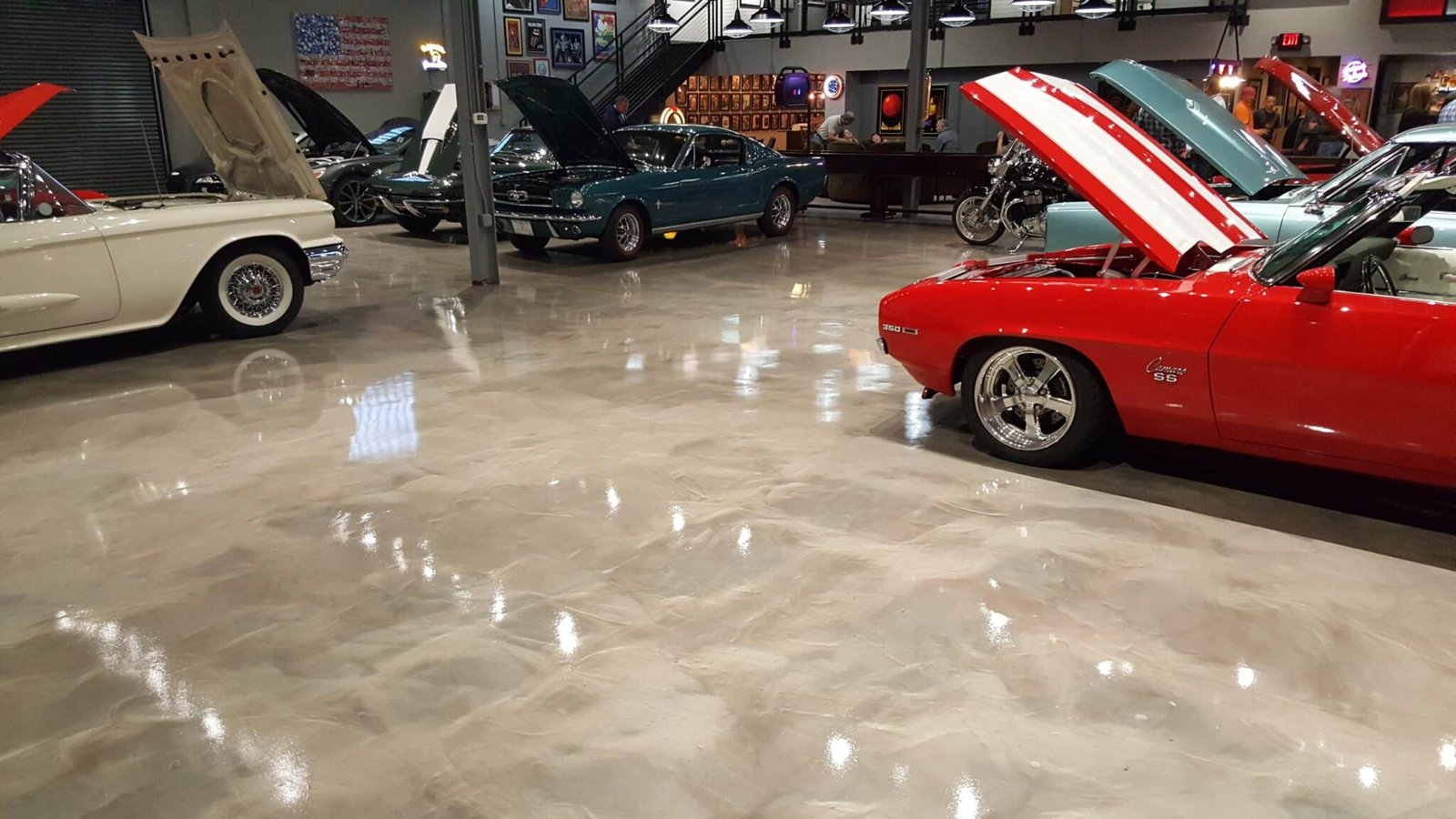
While modular tiles offer rapid DIY snap-lock installation, a professionally applied low-VOC coating creates a monolithic surface fused directly to the concrete pores.
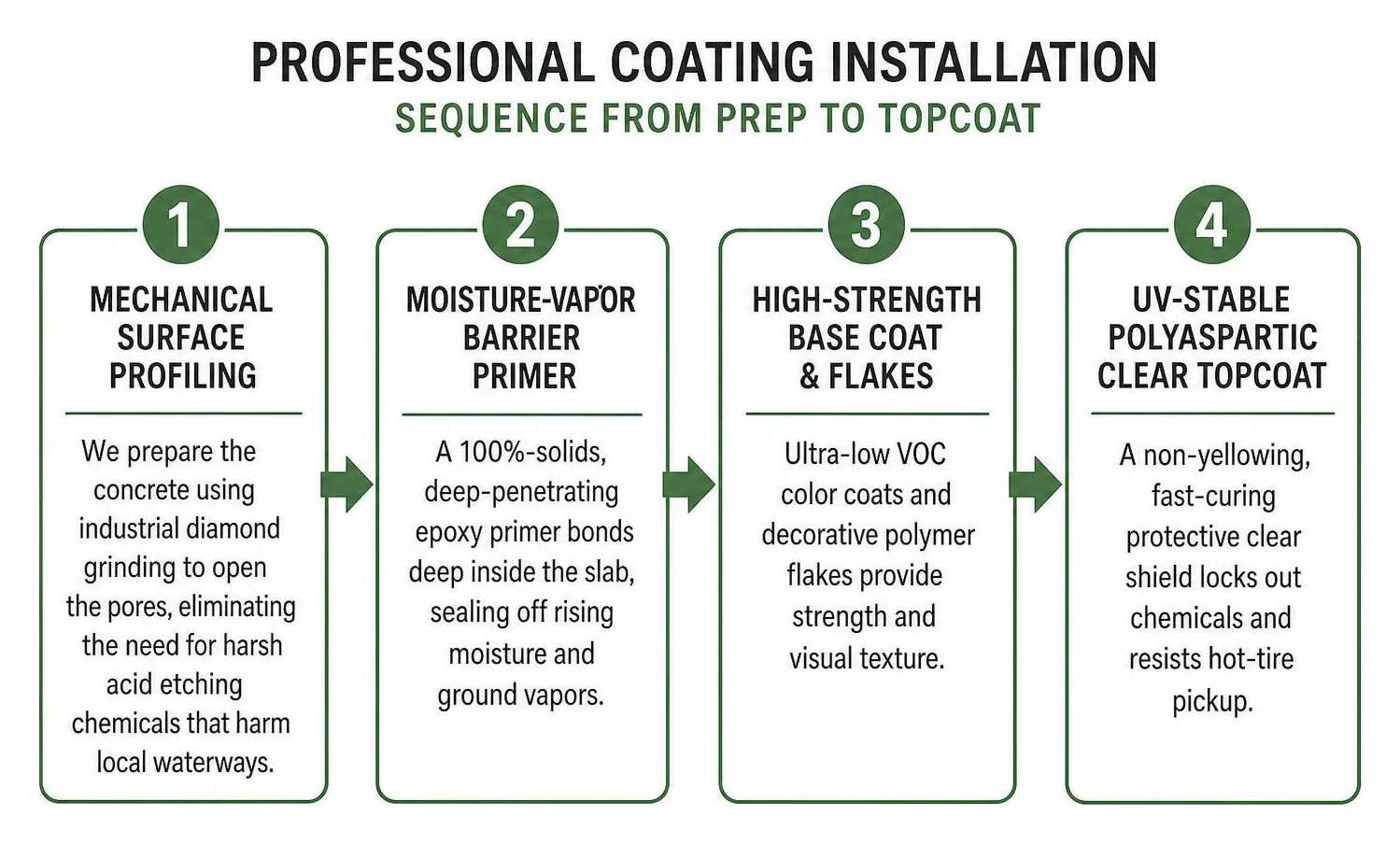
- Mechanical Surface Profiling: We prepare the concrete using industrial diamond grinding to open the pores, eliminating the need for harsh acid etching chemicals that harm local waterways.
- Moisture-Vapor Barrier Primer: A 100%-solids, deep-penetrating epoxy primer bonds deep inside the slab, sealing off rising moisture and ground vapors.
- High-Strength Base Coat & Flakes: Ultra-low VOC color coats and decorative polymer flakes provide strength and visual texture.
- UV-Stable Polyaspartic Clear Topcoat: A non-yellowing, fast-curing protective clear shield locks out chemicals and resists hot-tire pickup.
To see the exact technical standards required for an enduring bond, review our epoxy flooring installation guide and discover the best garage floor coatings for home workspaces.
Key Factors to Consider When Choosing Green Garage Flooring
Selecting a truly eco-conscious garage floor requires checking product specifications against real-world environmental metrics.
- Verified Recycled Content: Look for products with clear, verified recycled content percentages (such as 100% post-consumer PVC or PP). Some products advertise “eco” features while containing only trace amounts of regrind material.
- Low-Emission and Non-Toxic Certifications: When opting for resin coatings, verify that the formulation is solvent-free and contains zero phthalates, nonylphenols, or high-VOC carriers.
- UV Stability and Heat Resistance: In sun-drenched climates, unprotected plastics and cheap epoxy yellow, fade, and degrade. Choose UV-stabilized polymers or polyaspartic topcoats to avoid premature replacement. For tips on managing severe climates, read our guide on how to maintain epoxy floors in Texas heat.
- Manufacturing Footprint: Transporting heavy tiles or liquid resins halfway around the globe inflates the carbon footprint of your project. Prioritizing regionally sourced materials or domestic manufacturing keeps transport emissions to a minimum.
- Substrate Protection and Repairability: The greenest floor is the one you only install once. Make sure your system can withstand dropped tools, jack stands, and road salts. Stay updated by browsing our epoxy garage floor insights for the latest durability studies.
Frequently Asked Questions About Sustainable Garage Flooring
Can recycled plastic garage floor tiles be recycled again at end of life?
Yes. High-quality recycled PVC and polypropylene tiles participate in a true closed-loop recycling model. Because they snap together without permanent glues or mastics, they can be uninstalled decades later, washed, shredded, and re-extruded into brand-new consumer products or flooring tiles, keeping them entirely out of landfills.
How do low-VOC coatings protect indoor air quality compared to traditional epoxy?
Traditional solvent-borne coatings release large quantities of volatile organic compounds (VOCs) during application and off-gas for days or weeks, introducing harmful fumes into attached living quarters. Modern low-VOC and zero-solvent coatings cure without off-gassing, keeping indoor air clean and healthy. For more technical specifications, check our epoxy flooring FAQs.
Do eco-friendly garage floors hold up against extreme temperatures and heavy vehicles?
Yes. Quality recycled tiles and low-VOC resin coatings are specifically engineered for heavy automotive environments. Modular polypropylene tiles handle static loads of up to 20 tonnes per square meter and resist temperatures up to +120°C (+248°F). When installing interlocking tiles, simply leave a 5–10 mm expansion gap around perimeter walls to accommodate natural thermal movement.
Sustainable Flooring for Long-Term Home Protection
Upgrading your garage with an eco-conscious mindset does not require compromising on industrial-grade strength, eye-catching style, or long-term durability. Whether you choose 100% recycled interlocking tiles that capture post-consumer plastic waste or a seamless, low-VOC multi-layer resin system that permanently seals your slab, you are investing in a healthier home environment and a smaller environmental footprint.
At Rio Epoxy Flooring, we take pride in delivering premium, eco-friendly floor transformations across Austin, Texas. Our family-owned team specializes in rapid 48-hour installations using low-VOC, UV-resistant materials backed by a lifetime warranty. Ready to build a durable, sustainable garage you can be proud of? Visit Rio Epoxy Flooring today to request your custom flooring consultation.