

In This Article
- The short answer
- Why does epoxy garage floor temperature matter more than the weather forecast?
- Is your slab the same temperature as the air in your garage?
- What are the 5 checks that decide whether you can coat this week?
- When can you coat in a Texas winter, and when should you wait?
- Why do store-bought epoxy kits struggle in a cold garage?
- How does a professional handle heat, airflow and moisture?
- Frequently asked questions
- How do cold limits differ between epoxy and garage floor paint?
- Can you epoxy a garage floor in a Texas winter?
- Does the season I coat in change how I care for the floor?
- Why does epoxy turn cloudy or stay sticky in a cold garage?
- What affects the cost of a winter epoxy install?
- What should you ask an installer before booking a winter coat?
- Final thoughts
The Short Answer
Direct Answer: Epoxy garage floor temperature is the temperature of the concrete slab, not the air, and in a Texas winter you can often coat when the slab, air and dew point all meet your product’s data sheet limits.
You have a bare concrete garage, a cold front on the forecast, and one nagging question: is it too cold to coat? Epoxy garage floor temperature is one of the factors that decides whether a coating cures hard and bonds well, or stays soft, cloudy and weak.
Online, you will see “garage floor paint,” “epoxy kits,” “winter formula” and “cold cure” used as if they mean the same thing. They do not. Each is a different product with its own limits, which is why a neighbor’s winter success story can sit next to another neighbor’s peeling floor.
This guide covers three things: why slab temperature is not air temperature, five checks that tell you whether your floor can be coated now, and when waiting is the smarter call. If you would rather have someone look at your garage first, talk with our Austin and Dallas crews and we will walk through the conditions with you.
Why Does Epoxy Garage Floor Temperature Matter More Than the Weather Forecast?
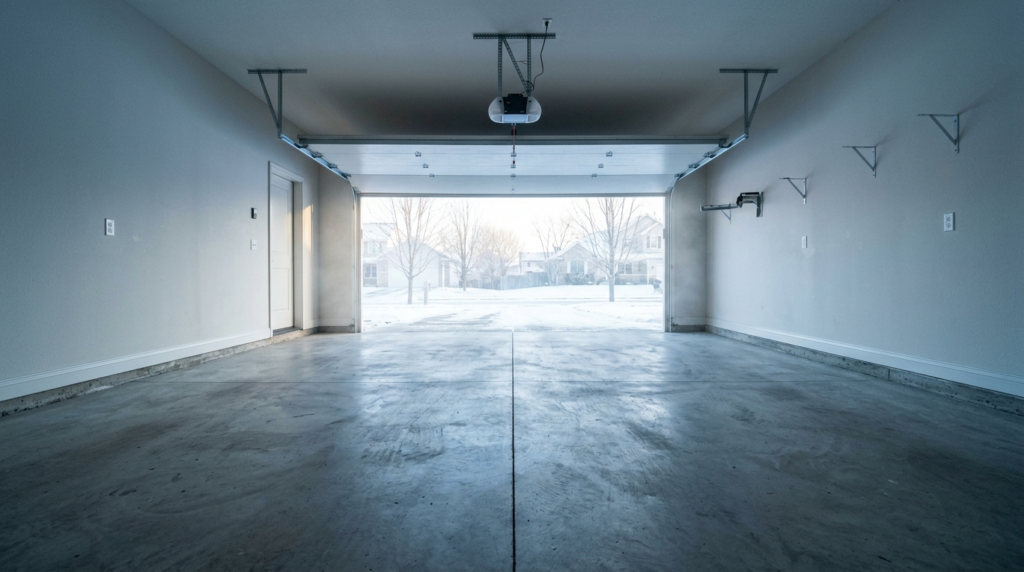
Epoxy is a chemical reaction between a resin and a hardener, and that reaction speeds up or slows down with the temperature of the surface it sits on. The forecast tells you about the air. The coating cares about the concrete.
Cold slows the reaction. A coating that cures slowly stays soft longer, collects dust and moisture, and has more time to go wrong. Heat does the opposite. A warm mix thickens fast, so your crew has less time to spread it before it starts to set.
Too cold, the floor stays soft for too long. Too warm, the mix is stiff before it is rolled out. Both are epoxy garage floor temperature problems, and both are avoidable.
Every product has its own minimum and maximum, printed in its technical data sheet. We are not giving you one number here on purpose. A limit that suits one system can ruin another, so ask your installer which product they use and what its range is.
Is Your Slab the Same Temperature as the Air in Your Garage?
Usually not. Concrete changes temperature more slowly than the air around it, so the slab can stay cold after the air warms up, and it can stay cool while a mild afternoon makes the wall thermometer look reassuring.
This is the problem few people mention. Epoxy takes on the temperature of the slab as soon as it goes down, so your epoxy garage floor temperature is really the slab’s temperature. If the concrete is colder than you think, the coating cures as if the whole garage were that cold.
Moisture adds a second layer. When the slab is colder than the dew point of the air in the garage, water can condense on the surface, sometimes where you cannot see it. Epoxy over that film can turn hazy or fail to bond.
Here is how a careful crew handles it:
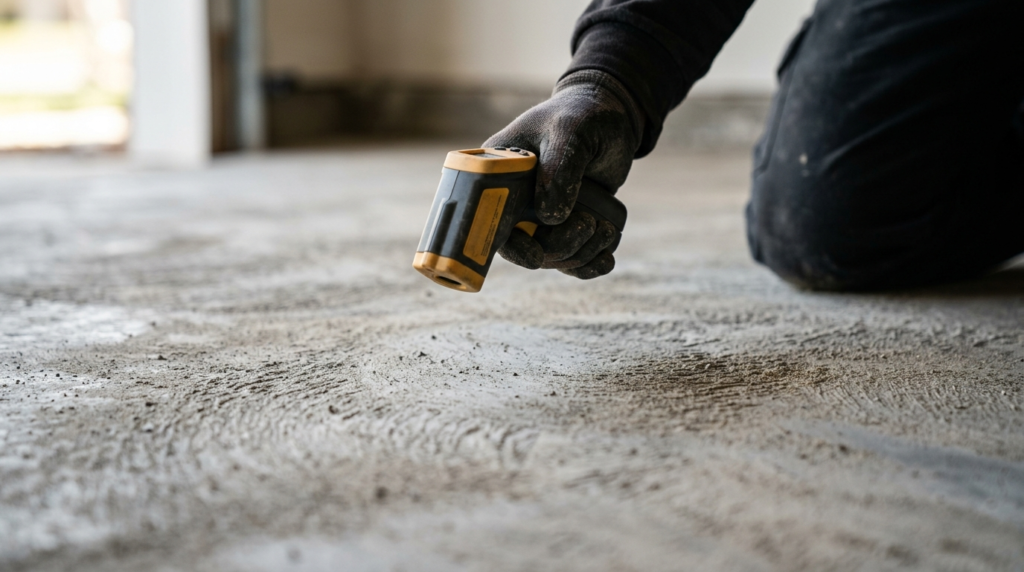
- Measure the concrete itself with an infrared thermometer, in several spots, early in the day and again in the afternoon.
- Compare the readings with the data sheet for the exact product being installed.
- Calculate the dew point from the garage’s air temperature and humidity.
- Look at the forecast for the whole cure window, not only the start time.
- Keep the garage closed and conditions steady until the coating has cured.
A good question to ask any installer: “What will the slab temperature be when you start, and how will you keep conditions in range until the coating cures?”
What Are the 5 Checks That Decide Whether You Can Coat This Week?
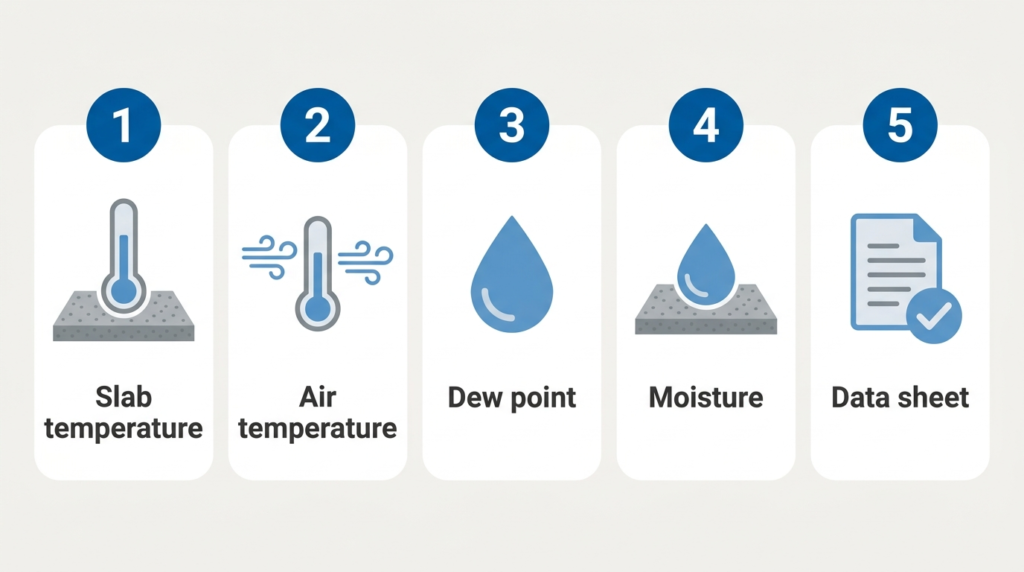
Five checks decide it: slab temperature, air temperature, dew point margin, moisture, and the product’s data sheet. If any one of them fails, the answer for that day is wait.
- Slab temperature. Measure the concrete in several spots and compare it with the product’s minimum and maximum. Common mistake: trusting the thermometer on the garage wall.
- Air temperature. It needs to stay in the product’s range during application and cure, not just at the moment you start. Common mistake: checking at noon on a day when the evening drops hard.
- Dew point margin. The slab should sit comfortably above the dew point, with the margin set by the data sheet. Common mistake: coating a damp, humid morning because the floor “looks dry.”
- Moisture in the concrete and the air. The slab has to be dry enough, and humidity has to stay within the product’s limit. A cold, damp garage brings both problems together. Common mistake: coating right after rain or a hose-down.
- Product data sheet. Read the limits for the exact product, and for every coat in a multi-coat system. Common mistake: applying a rule you heard online to a different product.
Our guide on whether fall is the best time to install an epoxy garage floor in Central Texas compares seasons for scheduling. This article stays on epoxy garage floor temperature, so you can judge your own floor on the day.
When Can You Coat in a Texas Winter, and When Should You Wait?
You can coat in a Texas winter when the slab, air, dew point and moisture checks all pass for your product and will keep passing until it cures. Texas winters swing, so a mild week can sit between two cold ones.
January is usually the coldest month in Central Texas, and most winters bring at least a few freezing nights. That is why a warm Tuesday does not settle anything. What matters is epoxy garage floor temperature on your install day and the nights that follow.
| Check | Usually fine to coat | Better to wait |
|---|---|---|
| Slab temperature | Inside the product’s range and holding steady | Below the range, or still dropping |
| Overnight forecast | Stays in range through the cure window | A cold front arrives while the coating is still curing |
| Dew point | Slab well above it, per the data sheet | Slab close to it, or damp air settling in |
| Moisture | Dry slab, humidity within the product’s limit | Recent rain, washdown or visible dampness |
| Product | Data sheet read and followed for every coat | Product chosen without checking its limits |
Picture a shaded two-car garage in Round Rock after a chilly morning. The slab can hold cold all afternoon, even when the air feels fine. A Frisco garage that catches afternoon sun may warm faster, but a front can still blow in overnight and undo the day.
Illustrative example: a cold snap and a Saturday install
This is a generic scenario, not a specific customer. A homeowner in Lakeway books a Saturday install. Friday night turns colder than forecast. The crew measures the slab Saturday morning, finds it outside the product’s range, and moves the job to the next stable window. The floor goes down a few days later and cures the way the data sheet says it should. Losing a weekend beats redoing a floor.
When winter is not the best time to coat:
- The slab is outside the product’s range and nobody can hold conditions through the cure.
- A cold front is forecast while the coating is still curing.
- The slab is wet from rain, a leak or a washdown.
- Nobody has read the data sheet for the product you plan to use.
Why Do Store-Bought Epoxy Kits Struggle in a Cold Garage?
A kit comes with one set of instructions for every garage, and it cannot measure your slab. In cold weather, epoxy garage floor temperature is where that gap shows up fast.
Cold slows the cure, so a kit floor can stay tacky for a long time, turn cloudy, or lose its grip on the concrete later. Cold also makes it harder to spot dampness on the surface, and moisture under a coating is a common reason floors let go.
If you already bought a kit, read its data sheet before you open anything. Check the minimum and maximum for the slab and the air, and plan for the nights, not only the afternoon. A kit can’t take a slab reading. A crew can. If you want a second opinion, see how our garage epoxy flooring service approaches prep and conditions.
How Does a Professional Handle Heat, Airflow and Moisture?
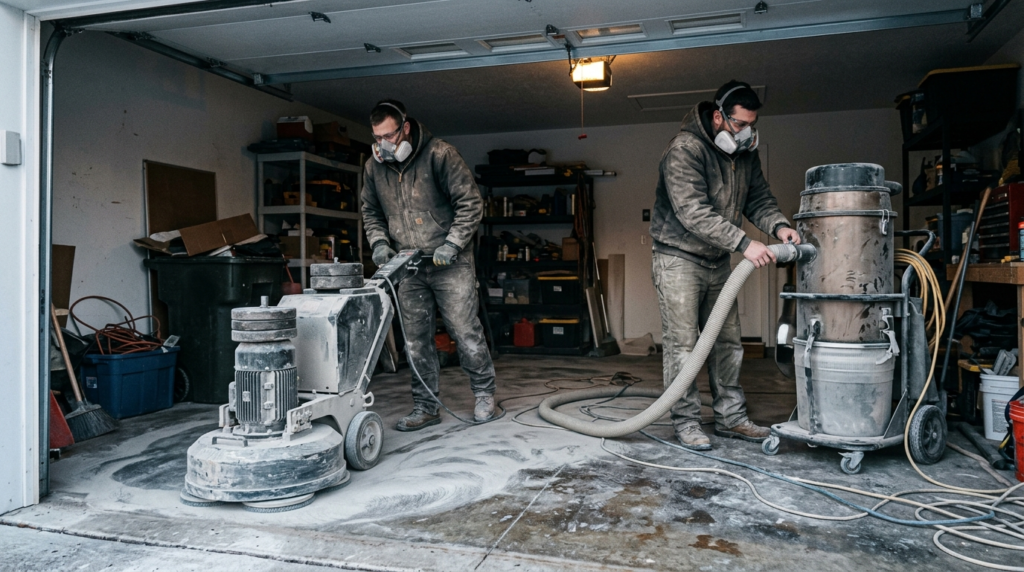
A professional plans epoxy garage floor temperature control, airflow and moisture checks as part of the job, before anything is mixed. It is not an extra, and it is not something to improvise.
Please do not rig your own heat. Epoxy gives off vapors, and a combustion heater without proper exhaust is a fire and health risk. It can also add moisture and exhaust byproducts to the air, which can interfere with the cure. Ask the product maker and your installer how conditions are controlled on a real job.
Our crews work in Austin and across Dallas, and we treat conditions as part of the prep, not an afterthought. Customers in our Google reviews often mention crews who show up on time and garage floors that turned out well. You can also watch prep and install work on our YouTube channel and see finished floors on Instagram.
Ready to find out if your slab is coat-ready? Send us a message or call +1 737-307-1888, any day from 8:00 AM to 6:00 PM.
Frequently Asked Questions
How Do Cold Limits Differ Between Epoxy and Garage Floor Paint?
Both are sensitive to temperature, and each product lists its own limits on the label or data sheet. Epoxy is a two-part reaction between resin and hardener, so cold changes how it cures. Paint dries differently, but cold and damp slabs hurt both. Read the limits for the exact product you plan to use.
Can You Epoxy a Garage Floor in a Texas Winter?
Often yes, when the conditions fit the product. There is no single minimum temperature for epoxy, because each product sets its own range for the slab and the air, during application and cure. Dew point and moisture matter just as much. If any check fails on your day, waiting for a better window is the safer call.
Does the Season I Coat in Change How I Care for the Floor?
Day-to-day care does not change with the season of the install. What changes is the starting point, because a coating that cured in the right conditions gives you the best base. Cooler conditions can also stretch the time before you can walk on the floor or park on it, so ask your installer for those timings.
Why Does Epoxy Turn Cloudy or Stay Sticky in a Cold Garage?
Cold slows the cure, which can leave the surface sticky for longer than expected. Moisture is the other usual cause. If the slab is near the dew point, water can condense on the surface and cloud the coating. Confirm the details with the product’s manufacturer, since each system reacts a little differently.
What Affects the Cost of a Winter Epoxy Install?
The main factors are the size and condition of the slab, how much moisture is in it, how much prep it needs, which product system is used, and how the schedule has to flex around the weather. We do not quote numbers in an article, because every garage is different. A walk-through of your floor gives the clearest picture.
What Should You Ask an Installer Before Booking a Winter Coat?
Ask which product they will use and what its temperature range is. Ask how they will measure slab temperature and dew point, how they will manage heat, ventilation and moisture, and what they do if a front arrives mid-cure. A professional answers these plainly. You can also browse our epoxy flooring FAQs for more questions to bring.
Final Thoughts
The right epoxy garage floor temperature is the one your product’s data sheet calls for, measured on the slab, held through the cure, and checked against the dew point. Texas winter does not rule out a good coating. It just asks for patience on the cold days.
Want a straight answer for your garage? Contact Rio Epoxy Flooring at 9701 Brown Ln Ste 402, Austin, TX 78754, or book a free consultation online, and we will tell you whether your slab is ready or what it needs first.