

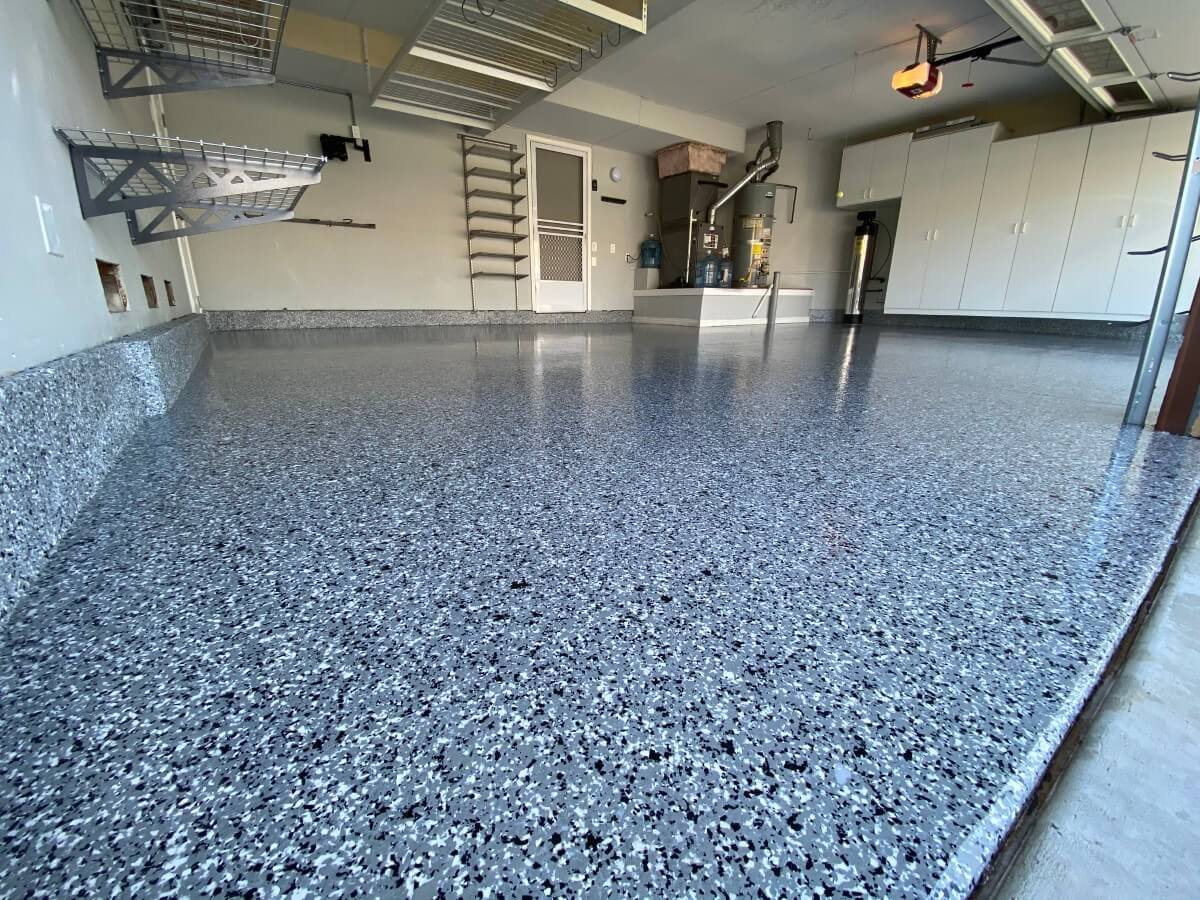
A Smart Starting Point for Epoxy Chip Floors
Epoxy chip floors are multi-layer concrete coatings that combine a durable base coat, decorative vinyl flakes, and a clear protective topcoat. They are a practical choice for garages, basements, retail spaces, gyms, and other hard-working floors because they help hide concrete flaws, resist stains, and create a finished look that is easier to clean than bare concrete.
When selecting a flake blend, start with three decisions:
- Choose the setting. Neutral gray blends fit most garages and commercial spaces, while warmer earth tones can suit interiors.
- Choose coverage. A full broadcast gives the most complete color coverage and hides more slab imperfections. A partial broadcast costs less but leaves more base coat visible.
- Choose the topcoat. A UV-stable polyaspartic topcoat is often the best option where sunlight, tire traffic, or fast return-to-use matters.
The chips are not just decoration. They add visual depth and texture, while the coating system seals the concrete beneath. For areas needing stronger traction, such as commercial kitchens or busy work zones, colored quartz may be a better fit than vinyl flakes.
I am Roger Aguiar, an Austin-based business strategist and digital marketing professional with more than seven years of experience helping service businesses explain complex offerings clearly to their customers. In this guide, I will help you understand the choices behind epoxy chip floors so you can select a blend that fits your space, budget, and long-term needs.

Understanding Epoxy Chip Floors: Materials, Systems, and Benefits
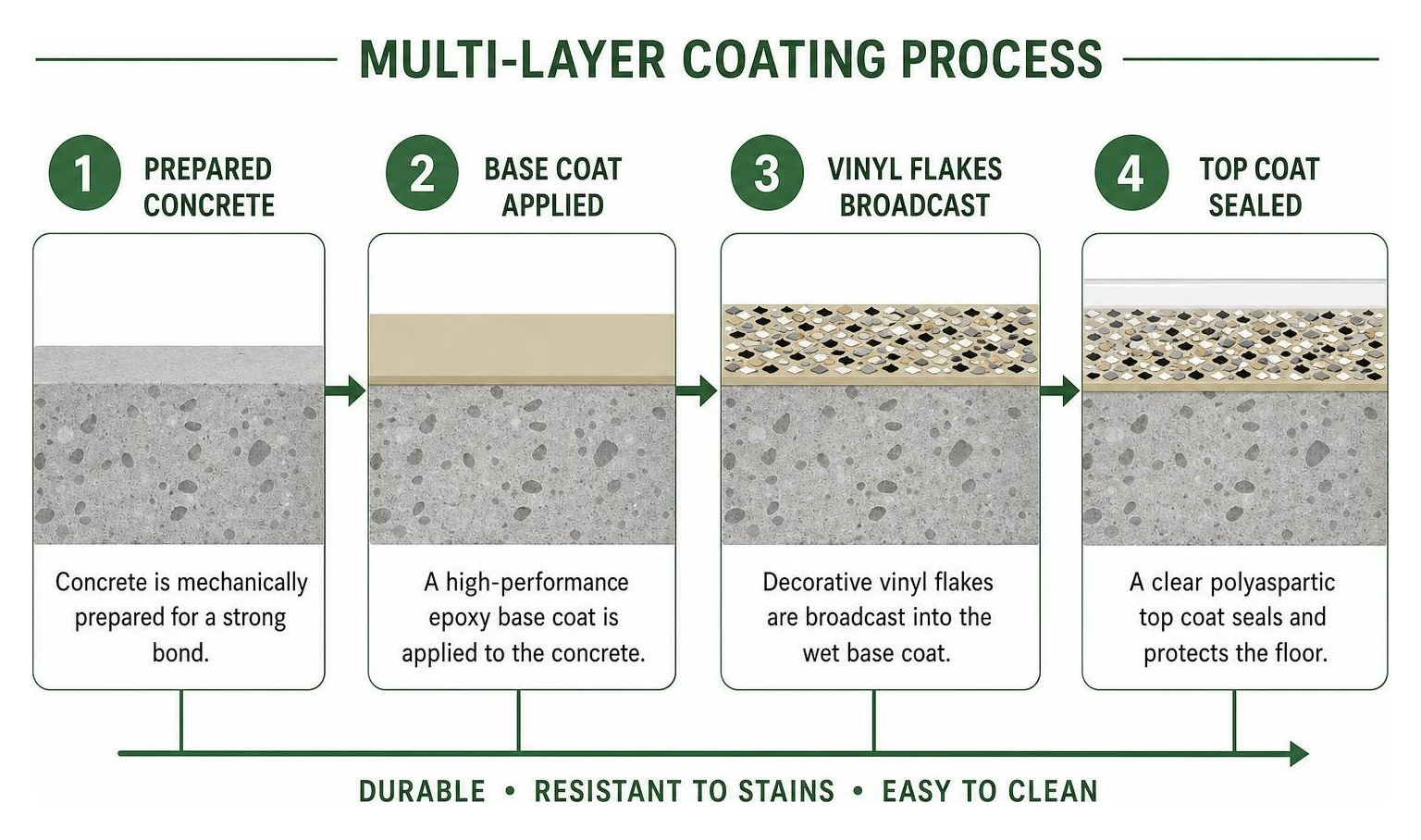
When you look closely at high-performance decorative flooring, you are seeing a multi-tiered structural system engineered to withstand extreme physical and chemical stress. An epoxy chip floor begins with a high-grade polymer basecoat, most commonly a 100% solids epoxy or moisture-mitigating primer. This layer bonds directly into the pores of your mechanically prepped concrete slab.
While the basecoat is still wet, we introduce decorative vinyl color flakes (often called chips). Think of them as the floor’s version of confetti—only highly durable and engineered to lie flat. These chips saturate the resin, creating texture, color depth, and structural bulk. The entire floor is then locked beneath a high-durability, clear polyaspartic or urethane topcoat. For an in-depth breakdown of these structural layers, explore our comprehensive Epoxy Flooring Guide.
1-Day Polyaspartic vs. 2-Day Epoxy Flake Systems
A frequent question we encounter is whether to install a rapid 1-day polyaspartic system or a traditional 2-day epoxy base system. Both offer distinct performance characteristics:
- 1-Day Polyaspartic System: This build uses a pure polyaspartic or fast-curing polyurea basecoat, followed immediately by the flake broadcast and a polyaspartic topcoat. Because polyaspartic materials cure rapidly through chemical cross-linking, you can walk on the floor in hours and park vehicles within 24 hours. It is ideal for homeowners or commercial spaces needing zero downtime.
- 2-Day Epoxy + Polyaspartic System: In this build, we apply a deep-penetrating, 100% solids epoxy moisture-barrier basecoat on day one, broadcast the flakes to complete rejection, and let it cure overnight. On day two, we scrape off excess material and seal it with a durable polyaspartic clear coat. This system delivers maximum bonding depth on concrete slabs prone to hydrostatic pressure or heavy moisture vapor transmission.
Key Advantages Over Standard Concrete Finishes
Bare concrete is naturally porous, prone to cracking, dusty, and absorbs oil and fluids like a sponge. Installing a multi-layer chip system delivers immediate functional benefits:
- Seamless Hygiene: Grout lines and porous concrete trap dirt and bacteria; seamless resin surfaces wipe clean effortlessly.
- Concealment of Imperfections: Minor slab pitting, spider cracks, and uneven patches vanish under dense color chip layers.
- Impact and Chemical Resistance: Vinyl chip systems absorb dropped tools, resist battery acid, hot coolant, road salts, and eliminate hot-tire pickup.
- Enhanced Traction: The subtle orange-peel texture created by the embedded chips provides superior foot grip compared to glassy, slippery smooth finishes. Check out our Flake Epoxy Flooring Blog for more insights on high-traffic performance.
Selecting the Ideal Flake Size, Density, and Broadcast Rate
Choosing the right visual aesthetic requires understanding two main variables: chip diameter and broadcast density.
Comparing Flake Sizes: 1/8-Inch vs. 1/4-Inch
Decorative vinyl chips come in various sizes, but two industry standards dominate modern installations:
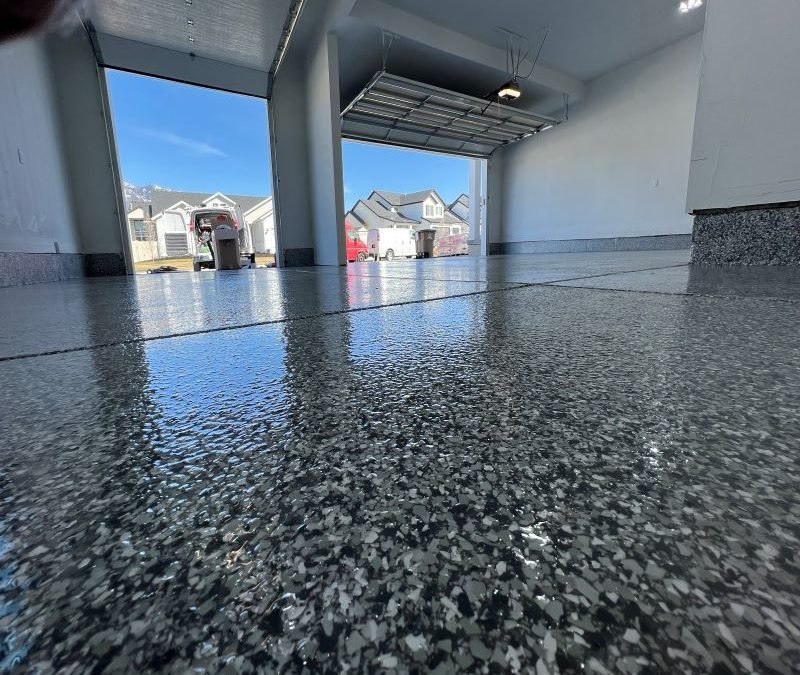
- 1/4-Inch Flakes (Standard): The most popular flake size for residential garages and commercial floors. It provides a balanced, mosaic-like appearance, excellent texture, and hides concrete flaws better than smaller sizes.
- 1/8-Inch Flakes (Micro): These smaller chips deliver a refined, dense, terrazzo-like look. Because the chips are smaller, they create a tighter, more uniform color pattern, popular in modern interior basements, retail boutiques, and office spaces.
Broadcast Densities: Light, Medium, and Full Coverage
Broadcast density refers to how heavily chips are scattered across the wet basecoat:
| Broadcast Level | Flake Quantity per 100 Sq. Ft. | Basecoat Visibility | Best Use Cases |
|---|---|---|---|
| Light Broadcast | 1 to 2 lbs | 70% to 85% visible | Budget-friendly accenting; minimal hide |
| Medium Broadcast | 5 to 8 lbs | 30% to 50% visible | Partial coverage, clean contrast designs |
| Full Broadcast (To Rejection) | 12 to 20 lbs | 0% visible (100% chip coverage) | Garages, shops, showrooms, maximum durability |
A full broadcast to rejection means scattering chips across the wet base coat until no wet resin can absorb any more. This creates a solid layer of vinyl chips across the entire concrete floor, maximizing impact resistance, texture, and hiding power.
Decorative Vinyl Flakes vs. Colored Quartz Aggregates
While vinyl chips provide vibrant color combinations and comfortable underfoot texture, colored quartz aggregates offer an alternative for high-demand environments.
- Vinyl Color Flakes: Flexible, easy to scrape, comfortable to walk on barefoot, and perfect for residential garages, basements, and retail stores.
- Colored Quartz Aggregate: Composed of microscopic, ceramic-coated quartz sand grains. Quartz provides an extremely hard, high-traction, sandpaper-like profile engineered for heavy industrial abuse and wet safety zones. We regularly install quartz systems where sanitation and slip resistance are mandatory; learn more about specialized food-prep flooring on our Epoxy Flake Flooring Commercial Kitchens page.
Popular Color Palettes and Custom Blend Selection
Your color choice dictates the lighting balance, mood, and cleanliness profile of your interior space.

Popular standard palettes include:
- Domino: A high-contrast blend of pure black, bright white, and medium charcoal grays.
- Orbit: A modern charcoal and slate blend accented with cool cobalt blue highlights.
- Stonehenge: Natural granite-inspired stone tones that blend seamlessly with industrial concrete walls and outdoor stone accents.
- Shoreline & Creek Bed: Warm tan, beige, taupe, and bronze blends that pair well with wood finishes and neutral interior decor.
Designing Custom Blends for Epoxy Chip Floors
If standard blends do not match your vision, custom blending lets you control color ratios. You can select primary base shades (such as 60% medium gray, 20% white) and integrate 10% to 20% accent colors like safety red, electric blue, or even metallic and glow-in-the-dark chips. Check out our design recommendations in 10 Stunning Epoxy Floor Colors Transform for creative inspiration.
Application Settings: Residential Garages to Commercial Spaces
- Garages & Workshops: Darker grays and high-density 1/4-inch chips hide tire tracks, dust, and oil drips between washings.
- Basements & Living Spaces: Warm earth tones and 1/8-inch micro-chips create a comfortable, terrazzo-inspired floor that brightens low-light spaces.
- Retail Showrooms & Gyms: Custom brand colors and bold, high-contrast blends add visual energy while resisting heavy foot traffic.
- Commercial Kitchens & Light Industrial: Full-broadcast quartz or heavy-texture vinyl flake builds provide chemical safety, oil resistance, and wet traction.
Installation Process, Professional Tooling, and Common Mistakes
A quality finish comes down to thorough surface preparation and proper chemical handling.
Surface Preparation and Mechanical Profiling
The bond of your coating depends on the concrete profile. Smooth concrete cannot hold resin under heavy shear stress. We mechanically grind the entire concrete surface using industrial planetary grinders equipped with diamond-segmented tooling. This opens up the concrete pores to achieve a Concrete Surface Profile (CSP) 2 to 3.
Before mixing resin, we repair all divots, spalls, and control joints using structural polyurea crack fillers, followed by complete HEPA dust extraction. We also conduct electronic moisture testing to confirm the concrete is dry. Review our detailed installation methodology in our Epoxy Flooring Installation Guide Texas.
Flake Broadcasting and Clear Topcoat Application
Applying a full broadcast floor requires steady hands and strict timing:
- Basecoat Application: We mix 100% solids epoxy or low-VOC polyaspartic resin and roll it evenly across the prepped concrete.
- Broadcasting: Wearing spiked shoes, the installer walks onto the wet coating and tosses flakes upward into the air, allowing them to cascade down like rain. This prevents clumped spots and ensures even coverage.
- Scraping and Reclaiming: Once the base coat cures, we scrape down any protruding, sharp chip edges using flat spring-steel scrapers and vacuum up the loose flakes.
- Topcoat Sealing: A clear, UV-resistant polyaspartic topcoat is squeegeed and back-rolled to lock the chips into a clean, seamless, chemical-resistant shield.
DIY Installation vs. Professional Execution
While big-box stores sell water-based DIY kits, common issues often result from thin resin builds and limited working time:
- Outgassing & Bubbles: Improperly prepped or unsealed concrete releases trapped air as temperatures rise, creating bubbles in thin coats.
- Hot-Tire Delamination: Inexpensive water-based coatings soften and peel under the heat and weight of parked vehicle tires.
- Uneven Flake Clumping: Rushing the broadcast into fast-drying paint basecoats leaves bare spots and patchy clusters.
- Inadequate Moisture Barriers: Failing to test for moisture vapor under the slab can push off thin DIY sealers within months.
Maintenance Protocols, Durability, and Investment Costs
Epoxy chip floors are very easy to maintain. Keep them clean with regular sweeping to remove loose grit and an occasional mop using a pH-neutral cleaner. Harsh acids and abrasive scrubbing pads are completely unnecessary—fresh water and mild soap are all it takes to lift dirt and oil.
When professionally installed with high-solids industrial resins, a full-broadcast flake floor delivers a lifespan of 10 to 20 years or longer. Learn more about local market factors and budgeting on our Epoxy Flooring Cost Austin Texas breakdown.
Cost Factors and Lifespan of Epoxy Chip Floors
Several variables shape the final installation cost:
- Condition of Concrete: Slabs with heavy spalling, deep oil penetration, or shifting cracks require more diamond grinding and patching.
- System Type: Premium 100% solids epoxy basecoats paired with dual polyaspartic clear coats cost more initially than single-coat roll-ons, but they prevent premature replacement.
- Broadcast Density: A full-broadcast floor uses 12 to 20 pounds of chips per 100 square feet, increasing both material durability and overall coating thickness.
Frequently Asked Questions About Flake and Quartz Systems
Check out our comprehensive Epoxy Flooring FAQs for additional details on care and application.
How much flake material is required for full-broadcast coverage?
A true full-broadcast floor requires 12 to 20 pounds of flakes per 100 square feet. This ensures the base resin is completely saturated to rejection, hiding the concrete slab entirely and building up floor thickness.
Are epoxy chip floors naturally slip-resistant?
Yes. The natural profile of thousands of embedded, overlapping vinyl chips creates an orange-peel texture beneath the clear topcoat. This provides better traction than bare or smooth-coated concrete. For areas with constant water or grease, fine aluminum oxide or micro-glass aggregates can be added to the topcoat for extra grip.
Do decorative vinyl flakes fade under direct sunlight?
Quality vinyl flakes are UV stable. However, the topcoat you choose is what protects the overall system from ambering or fading. Using an aliphatic polyaspartic topcoat prevents yellowing and keeps your colors vibrant even in open, sunlit garage bays.
Conclusion
Installing a high-performance flake or quartz floor is one of the most reliable ways to protect your concrete, increase property value, and create a clean, modern aesthetic. At Rio Epoxy Flooring, our family-owned team uses premium low-VOC, UV-resistant epoxy, polyurea, and polyaspartic coatings designed for rapid installation and long-term durability. Whether you want a full-broadcast garage makeover or a durable commercial quartz floor, choosing the right blend and topcoat system ensures your floors hold up for decades to come.