

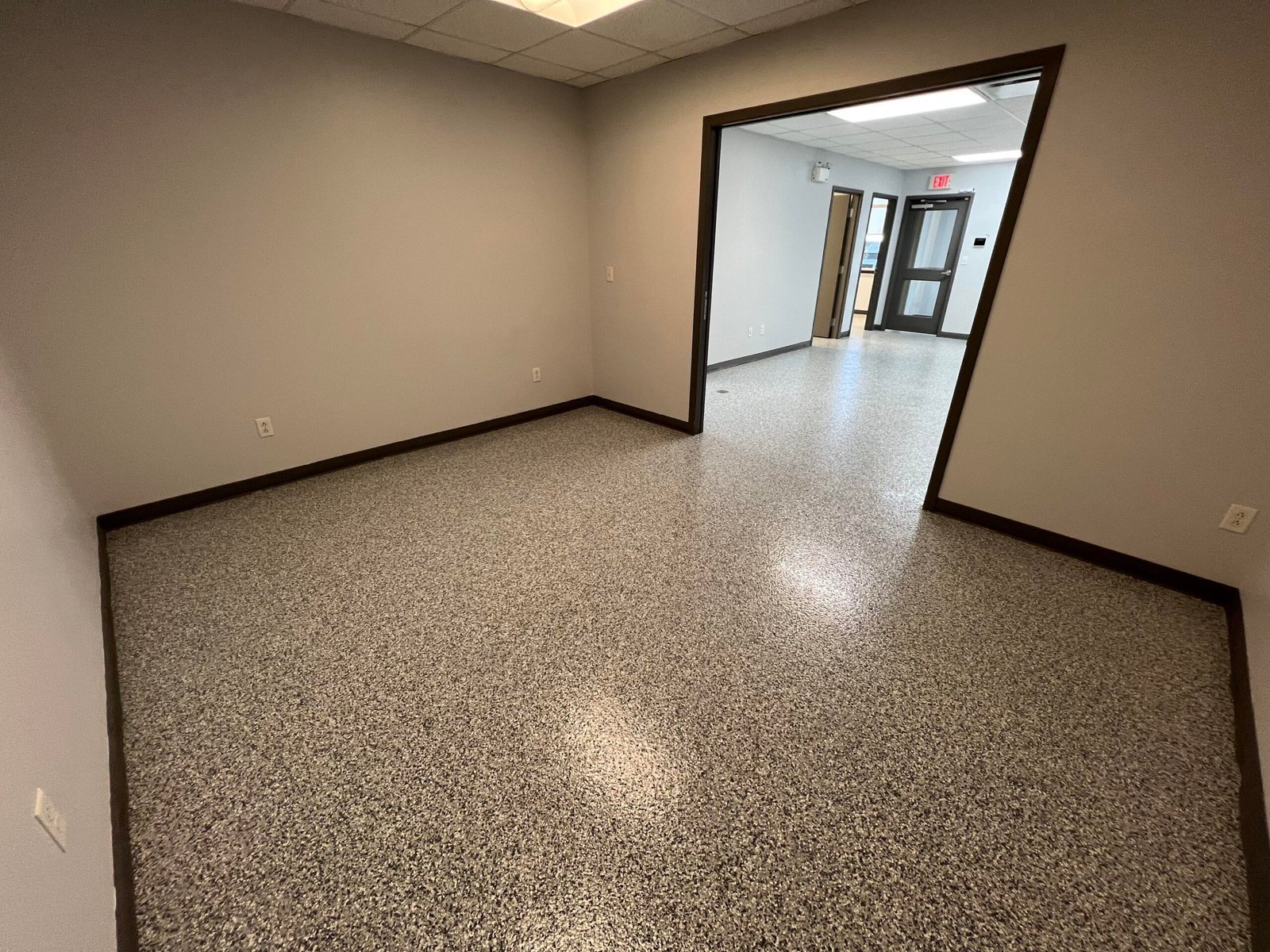
Epoxy Flooring Restaurants: A Smart Balance of Cost and Durability
For restaurants, epoxy flooring is a strong option when you need a seamless surface that handles foot traffic, spills, stains, and routine cleaning without giving up design flexibility. The best system depends on the area: decorative epoxy can suit dining rooms and bars, while kitchens often need a textured, slip-resistant resin system designed for grease, water, and heavy equipment.
Epoxy flooring restaurants can also use custom colors, flakes, metallic pigments, matte finishes, or high-gloss looks to support a brand’s atmosphere. Because the coating is non-porous when properly installed, it has no grout lines to trap dirt and is easier to keep clean than many tiled surfaces.
The tradeoff is upfront planning. Concrete must be properly cleaned, repaired, moisture-tested, and mechanically prepared before coating. Installation and cure time can require scheduling around service hours, but a well-selected commercial system can reduce ongoing repair and replacement costs.
I am Roger Aguiar, an Austin-based entrepreneur and digital marketing professional with more than seven years of experience helping small and midsize businesses make informed growth decisions. My work covering epoxy flooring restaurants focuses on clear, practical details that help operators weigh durability, safety, appearance, downtime, and long-term value.
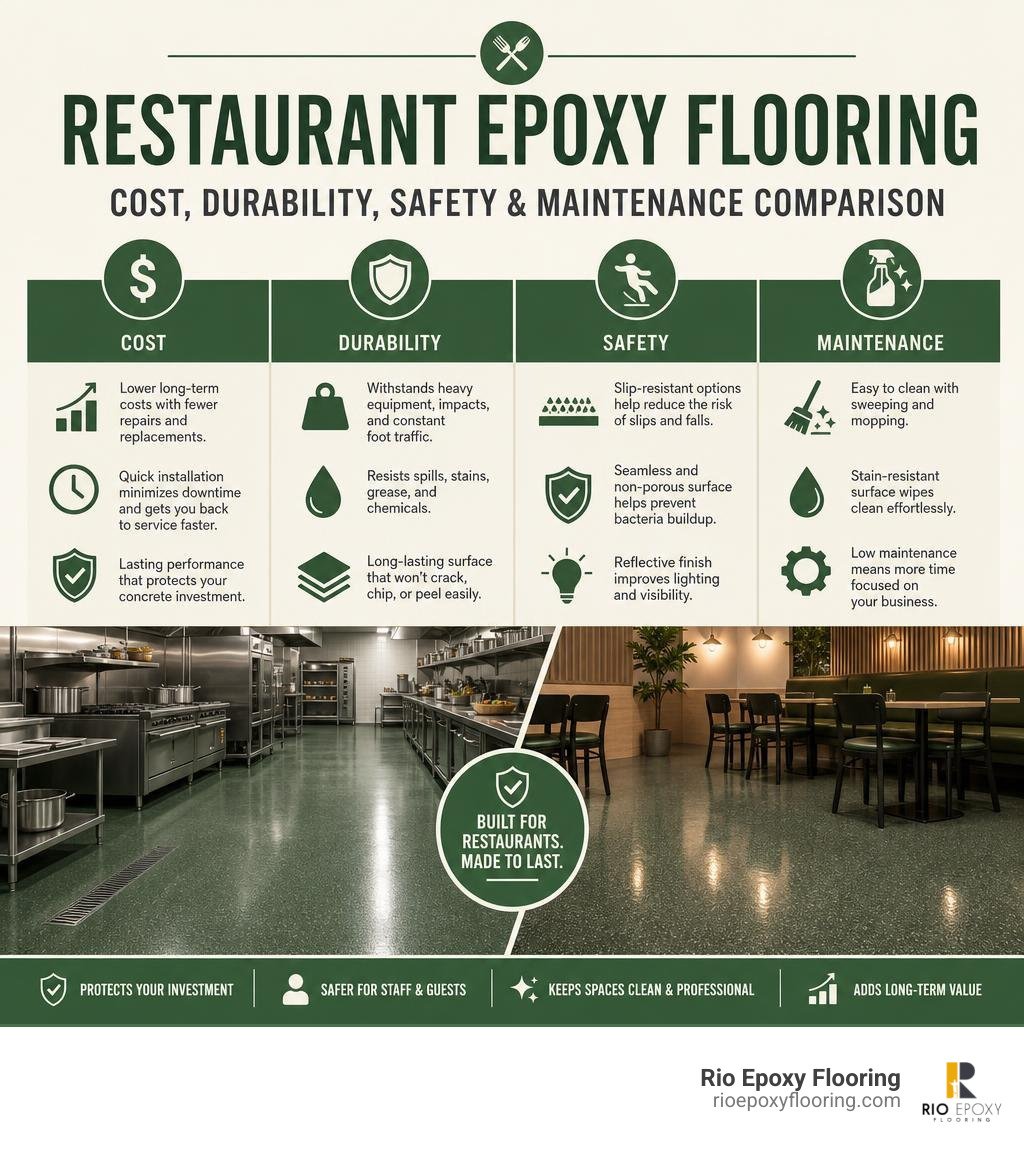
Why Choose Epoxy Flooring for Restaurant Spaces?
Running a restaurant means managing a continuous flow of guests, staff, food prep, and heavy equipment. Commercial floors take a relentless beating every single day. Between dropped cast-iron skillets, boiling liquids, acidic citrus juices, and constant chair scraping, traditional materials like quarry tile or polished concrete often begin to fail within a few years.
Epoxy provides a seamless, non-porous finish that bonds directly to the prepared concrete slab. This monolithic seal eliminates the weak points typical of tiled floors. When exploring the core epoxy flooring benefits for commercial spaces, high impact and abrasion resistance consistently top the list. Heavy kitchen equipment like walk-in freezers, multi-burner ranges, and loaded utility carts can cause standard concrete to chip and crack. A commercial-grade resin system disperses weight evenly, preventing structural damage and reducing long-term repair costs.
Health Code Compliance and Food Service Hygiene
Hygiene regulations in the food and beverage industry are strict for good reason. Health inspectors prioritize cleanliness, and traditional quarry tile with porous cementitious grout lines provides a breeding ground for bacteria, mold, and trapped grease. Over time, traditional grout erodes, creating stagnant pockets of dirty wash water that harbor foul odors.
Seamless resin floors solve this issue. Because the surface is completely impervious, moisture and organic matter cannot penetrate the substrate. Installing an integrated sanitary cove base creates a smooth, continuous transition from the floor several inches up the wall. This allows kitchen staff to hose down prep areas and push standing water directly toward floor drains without moisture seeping behind drywall or baseboards. For back-of-house operations, choosing specialized epoxy flooring for commercial kitchens ensures seamless compliance with local health department requirements as well as FDA and USDA standards.
Why Epoxy Flooring Restaurants Need High Slip Resistance
Safety is a critical operational priority for any restaurant owner. In bustling kitchen environments, grease, water, cooking oils, and dropped ingredients can turn a smooth surface into an immediate hazard. Front-of-house areas also encounter tracked-in rainwater, spilled craft cocktails, and high guest foot traffic.
To protect staff and patrons while complying with OSHA and ADA safety standards, commercial epoxy systems can be customized with various traction additives:
- Aluminum Oxide: A tough, fine aggregate that provides exceptional non-skid texture and scratch resistance.
- Silica Sand: Broadcast into base coats to create an aggressive, high-traction profile ideal for wet dishwashing stations and cooklines.
- Polymer and Vinyl Flakes: Provide light mechanical texture for front-of-house dining and bar spaces while adding visual depth.
A common question among operators is are epoxy floors slippery, and the answer comes down to texture specification. While a bare, high-gloss clear coat can become slick when wet, tailored commercial systems incorporate custom aggregate levels calibrated for specific zones—maximizing safety without compromising cleanability.
Durability and Performance Benchmarks for Restaurant Floor Coatings
Selecting the right commercial coating requires evaluating your space against key performance metrics like compressive strength, chemical resistance, and thermal tolerance.
| Performance Metric | Standard Commercial Epoxy | Epoxy Flake System with Polyaspartic Topcoat | Urethane Cement Mortar (Kitchen Grade) | Polished Concrete |
|---|---|---|---|---|
| Compressive Strength | 8,000 – 10,000 PSI | 9,000 – 11,000 PSI | 10,000 – 12,000 PSI | 4,000 – 6,000 PSI |
| Slip Resistance (Wet) | Moderate (Requires Aggregate) | High (Textured Flake + Non-Skid) | Maximum (Aggressive Texture) | Low to Moderate |
| Chemical & Acid Resistance | High (Oils, Mild Acids, Bleach) | Excellent (Alcohol, Citrus, Solvents) | Maximum (Boiling Oil, Harsh Caustics) | Poor (Acid Etches Readily) |
| Thermal Shock Resistance | Up to 140°F | Up to 180°F | Up to 250°F+ (Steam / Boiling Water) | Moderate |
| Ideal Restaurant Zone | Dry Storage, Corridors, Restrooms | Dining Areas, Bars, Entryways | Cooklines, Dishwashing, Bakeries | Front-of-House Industrial Chic |
Design Aesthetics and Custom Branding

While back-of-house floors prioritize rugged utility, front-of-house flooring serves as a visual foundation for your restaurant’s brand identity. Whether you are aiming for a refined fine-dining atmosphere, a lively sports bar, or a minimalist modern café, resinous floors provide extensive aesthetic flexibility.
High-gloss topcoats reflect ambient and architectural lighting, making intimate dining rooms feel open and vibrant. Conversely, satin and matte finishes offer a warm, subdued look that diffuses light and helps hide day-to-day dust during busy dinner services. Today’s commercial formulations also feature low VOC epoxy flooring benefits, meaning you can upgrade dining room aesthetics without harsh chemical fumes lingering in your dining space or HVAC system.
Design and Aesthetic Options for Epoxy Flooring Restaurants
You can tailor resinous coatings to complement any interior theme:
- Metallic Pigments: Create flowing, marble-like, three-dimensional patterns that produce a luxurious, upscale look in bars, lounges, and modern dining concepts.
- Decorative Vinyl Flakes: Blend multiple color chips to mimic terrazzo or granite. Flake systems provide subtle texture and help disguise everyday crumbs and scuffs between table turnovers. Many operators rely on decorative epoxy flake flooring for commercial kitchens and customer restrooms alike.
- Solid Color Pigments: Provide clean, uniform finishes that complement industrial or minimalist architectural themes.
- Custom Brand Accents and Logos: Embed custom floor graphics, safety walking paths, or brand emblems directly beneath clear topcoats for a unique finish.
The Financial Equation: Cost vs. Durability for Epoxy Flooring Restaurants
When planning a restaurant buildout or renovation, flooring costs must be evaluated across the entire lifecycle of the space, not just the initial installation invoice. While inexpensive vinyl composite tile (VCT) or basic tile might present a lower upfront cost, their recurring maintenance, regrouting, and replacement cycles add up quickly over a 5- to 10-year period.
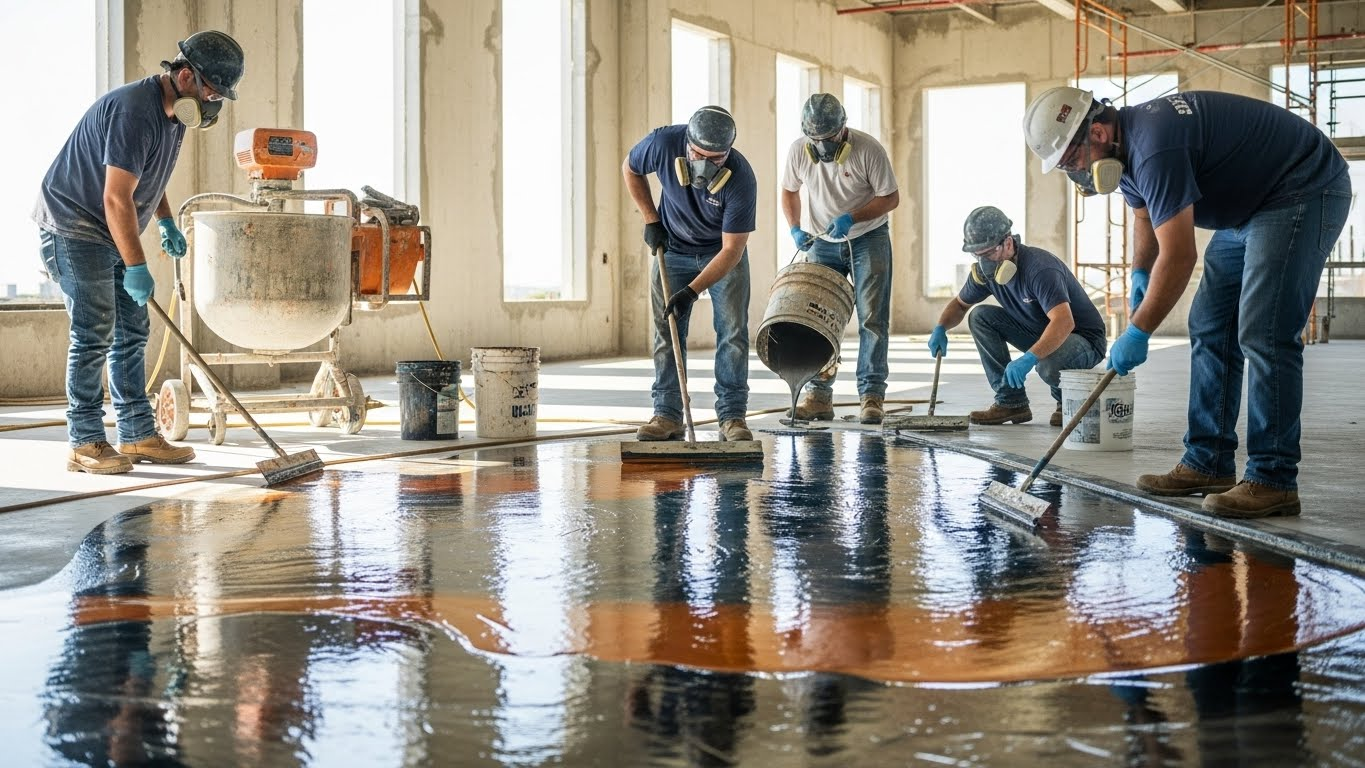
Commercial epoxy systems deliver strong return on investment by eliminating routine waxing, stripping, and grout repairs. The total project investment depends on concrete condition, required thickness, anti-slip additives, and decorative topcoats. Operators can review detailed line items using our guide to commercial epoxy flooring cost Austin TX 2026 to balance budget constraints against long-term operational durability.
Installation Timeline and Minimizing Restaurant Downtime
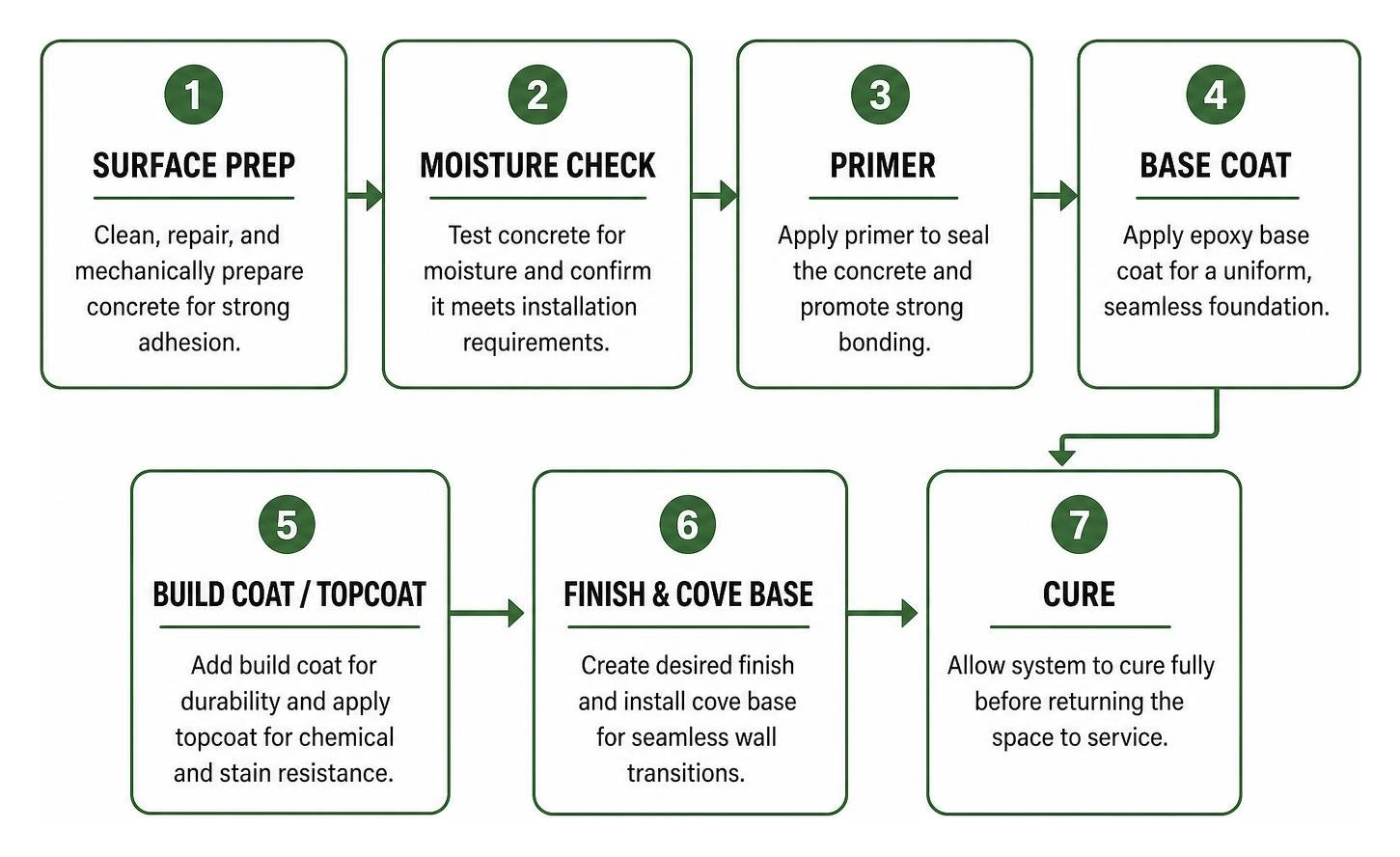
Closing doors for renovations directly impacts revenue. Minimizing downtime requires a streamlined, well-coordinated installation process:
- Mechanical Surface Preparation: Diamond grinding or shot-blasting the concrete slab to create a concrete surface profile (CSP 2–3) that guarantees mechanical adhesion.
- Moisture Testing & Crack Repair: Conducting calcium chloride or relative humidity (RH) tests, filling expansion joints, and patching spalled areas.
- Primer Application: Applying a deep-penetrating epoxy primer that locks into concrete pores and prevents outgassing bubbles.
- Body Coat & Media Broadcast: Laying down base resins and broadcasting color flakes, metallic pigments, or non-slip aggregates.
- Protective Topcoat: Sealing the system with a chemical-resistant polyurethane or fast-curing polyaspartic clear coat.
Understanding commercial epoxy flooring installation time how long projects take helps general managers coordinate trades effectively. Rapid-curing polyaspartic topcoats can accept foot traffic within 24 hours, allowing restaurants to reopen quickly.
Ongoing Maintenance and Cleaning Protocols
Maintaining commercial epoxy floors requires minimal labor compared to tile or wood. A straightforward routine keeps them looking pristine:
- Daily Sweeping and Dust Mopping: Remove abrasive sand and loose grit that could scratch clear topcoats over time.
- Mopping with Neutral Cleaners: Use neutral-pH floor detergents. Avoid harsh citrus degreasers with high acid concentrations or overly caustic solutions that could haze the topcoat over time.
- Deck Brushing & Squeegee Drying: In kitchen areas, agitate grease deposits using a medium-bristle deck brush and pull dirty wash water toward floor drains with a foam squeegee.
- Periodic Deep Cleaning: Power washing with hot water (within system temperature limits) removes stubborn kitchen grease without harming the non-porous finish. For seasonal advice, check out how to maintain epoxy floors Texas heat care guide.
Frequently Asked Questions About Epoxy Flooring in Food Service
How long does epoxy flooring last in a high-traffic commercial restaurant?
A professionally installed commercial epoxy floor typically lasts 7 to 15 years in busy restaurant environments. Longevity depends on proper daily cleaning, appropriate non-skid maintenance, and prompt spill cleanups. Applying a fresh topcoat every 3 to 5 years can extend the lifespan of the base coating indefinitely without a full tear-out.
Can epoxy flooring withstand thermal shock from commercial dishwashers and hot spills?
Standard thin-mil epoxy coatings can soften or delaminate under continuous exposure to boiling liquids or steam washdowns. For intense thermal-shock zones—such as underneath commercial dishwashers, tilting skillets, and deep fryers—we install urethane cement mortar systems. Urethane cement expands and contracts at a rate similar to concrete, comfortably handling temperatures from below freezing up to 250°F+.
Is epoxy floor coating safe for indoor dining air quality?
Yes. Modern commercial installations utilize 100% solids, zero-VOC or low-VOC formulations. These coatings emit minimal odor during application and cure quickly without off-gassing harmful vapors, keeping dining room air quality safe for guests and staff.
Conclusion
Choosing the right floor for your restaurant requires balancing upfront budget, aesthetic goals, and everyday durability. Resinous coatings deliver a clean, non-porous, and slip-resistant surface that stands up to demanding commercial kitchen conditions while creating an inviting atmosphere out front.
At Rio Epoxy Flooring, we specialize in custom epoxy, polyaspartic, and urethane cement installations engineered specifically for food service environments across Austin and Central Texas. Contact our team to explore options for the best epoxy flooring for restaurants & retail in Texas and secure a durable, code-compliant foundation for your business.