

Why an Epoxy Floor for Coffee Shop Spaces Outperforms Traditional Tile
An epoxy floor for coffee shop spaces outperforms traditional tile because it creates a seamless, non-porous surface that resists coffee stains, milk acids, impact damage, and daily moisture without relying on grout. For cafes, that means faster cleaning, fewer sanitation concerns, and a longer-lasting floor under heavy customer and barista traffic.
When opening or remodeling a cafe, flooring is rarely just a backdrop. It is a high-traffic work surface that endures dropped portafilters, dragged furniture, scalding water rinses, and a relentless stream of customers from early morning rushes through late afternoon work sessions.
Traditional commercial ceramic or quarry tile has long been a default option in food service, but it brings inherent structural flaws, primarily miles of porous grout lines. Over time, those grout joints act like sponges, absorbing milk fats, sugary syrups, acidic coffee concentrates, and dirty mop water. The result is dark, stained lines, lingering sour odors, and a potential breeding ground for bacteria.
Seamless resin floors eliminate joints entirely. By bonding directly to the underlying concrete substrate, a poured resin system creates an impenetrable, monolithic barrier. Understanding these broader epoxy flooring benefits helps explain why modern cafe owners are shifting away from traditional modular tile.
The differences become even clearer when comparing the two materials side by side across daily commercial demands:
| Performance Metric | Commercial Epoxy Resin | Traditional Ceramic / Quarry Tile |
|---|---|---|
| Seams & Grout | 100% monolithic and seamless | Porous grout lines every 6 to 12 inches |
| Acid & Stain Resistance | Highly resistant to coffee tannins, milk lactic acid, and citrus | Grout stains easily; unglazed tiles absorb acidic liquids |
| Impact Durability | Flexible, high-tensile resin absorbs impact without cracking | Brittle; dropped heavy mugs or metal tampers chip tile edges |
| Hygiene & Sanitation | Seamless barrier stops moisture, mold, and bacterial growth | Moisture and bacteria harbor beneath loose tiles and inside grout |
| Daily Cleaning Time | Fast dust-mop and neutral damp-mop routine | Requires aggressive scrubbing, degreasing, and periodic grout recoloring |
| Lifecycle Cost | Low maintenance; simple resealing after years of service | High maintenance; frequent re-grouting and costly tile replacements |
In hospitality environments where clean inspection reports and rapid turnover are mandatory, seamless resin surfaces consistently outlast rigid alternatives. Professional flooring standards for commercial cafes emphasize that eliminating grout lines reduces daily cleaning time by up to 30%, freeing staff to focus on customer service rather than scrubbing floor joints.
Custom Aesthetics and Design Versatility for an Epoxy Floor for Coffee Shop Brands
A coffee shop’s floor sets the visual baseline for its entire brand identity. Whether your space leans toward a cozy rustic nook, a minimalist Scandinavian espresso bar, or an industrial roastery, resin coatings offer virtually unlimited design flexibility.
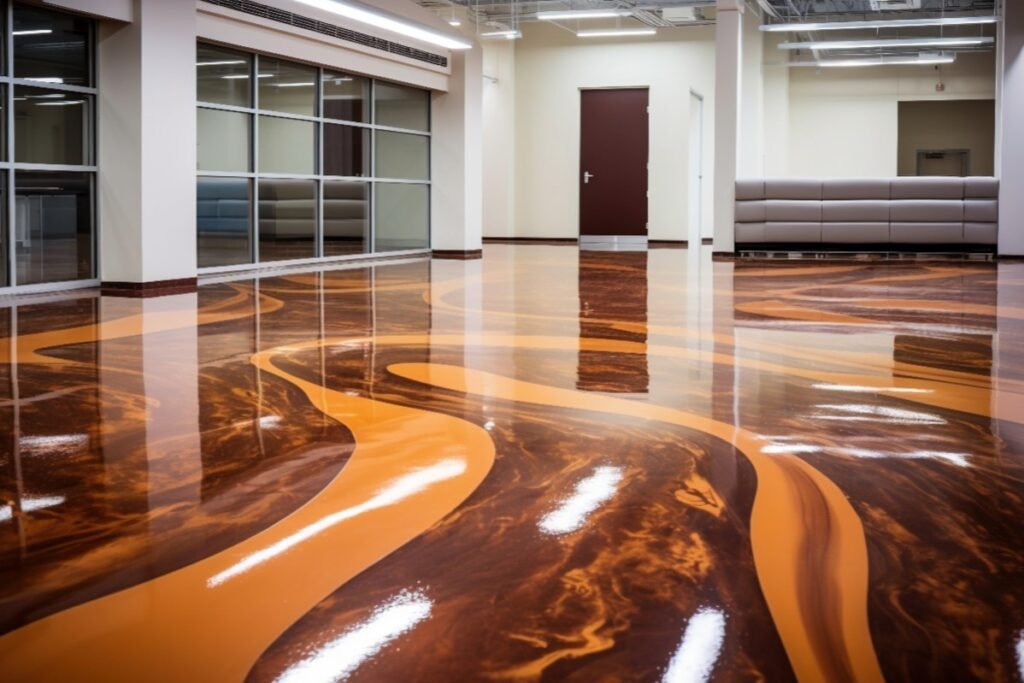
Unlike tile, which limits you to standardized factory patterns, liquid resin can be custom-blended on site. One of the most popular interior trends for coffee shops is the use of rich earth tones, warm bronze highlights, and specialized coffee metallic pigments. These pearlescent additives are manipulated during application to create fluid, organic motion that resembles swirling cream in a freshly pulled shot of espresso or the natural grain of polished stone.
Layering a coffee-toned metallic pigment over a dark charcoal or deep tan base coat adds visual depth, reflecting natural window light to make compact dining areas feel expansive and airy. For brands with distinct corporate colors, epoxy can incorporate custom base hues, borders, or embedded logos beneath clear, UV-stable topcoats to turn the floor into a cohesive branding asset.
Durability and Heavy Foot Traffic Performance
Coffee shops experience severe localized stress across specific functional zones. Point loads from heavy commercial espresso machines, under-counter ice makers, multi-group grinders, and fully stocked refrigeration units place continuous structural pressure on the slab. Meanwhile, service lines experience concentrated foot traffic that quickly wears down inferior surface treatments.
In busy prep zones, resin formulations resist cracking when metal milk pitchers, ceramic mugs, or heavy hand tools strike the surface. High-build commercial coatings create an abrasion-resistant wear layer that prevents surface dulling from grit tracked in by customers. Selecting durable commercial kitchen epoxy flooring ensures your service area can handle continuous thermal washdowns, dropped utensils, and relentless foot traffic without delaminating or chipping.
Comparing Popular Seamless Systems: Metallic, Flake, and Grind-and-Seal
Selecting the right seamless floor requires balancing your visual goals with the specific physical demands of each area in your cafe. Most coffee shops utilize a combination of decorative showroom systems in the front-of-house customer areas and heavy-duty industrial coatings behind the bar.

Metallic Epoxy and Decorative Flake Finishes
For customer seating, dining rooms, and retail checkout stations, decorative systems deliver high visual appeal:
- Metallic Epoxy Systems: These systems use clear resin infused with microscopic metallic powders. When applied, the pigments flow to create a 3D, marbled finish that offers a luxurious, mirror-like gloss. It is ideal for modern boutique cafes wanting an elegant, high-end atmosphere.
- Decorative Flake (Color Chip) Systems: A base coat is broadcast to rejection with vinyl or mica chips, then sealed with a clear, chemical-resistant topcoat. Flake systems provide a textured, granite-like appearance that excels at camouflaging minor surface dust, shoe scuffs, and daily wear during peak business hours.
Grind and Seal vs. Thermal Shock Urethane
For roasteries, entryways, or heavy production stations, functional performance takes priority:
- Grind and Seal: This process involves mechanically grinding the concrete slab with diamond abrasives to expose the natural aggregate, followed by applying a clear epoxy or polyurethane protective sealer. Sealing natural concrete with warm copper or amber undertones creates an authentic industrial look while protecting the porous concrete from coffee spills.
- Thermal Shock Urethane: Behind the espresso bar and inside back-of-house dishwashing stations, standard epoxy can sometimes struggle against extreme temperature fluctuations—such as boiling water drained from espresso group heads followed by ice dumps. In these extreme zones, cement urethane flooring solutions are ideal. Cementitious urethane expands and contracts at a rate similar to the concrete underneath, resisting thermal shock, boiling liquids, and harsh chemical sanitizers without cracking or lifting.
Safety, Installation, and Daily Maintenance
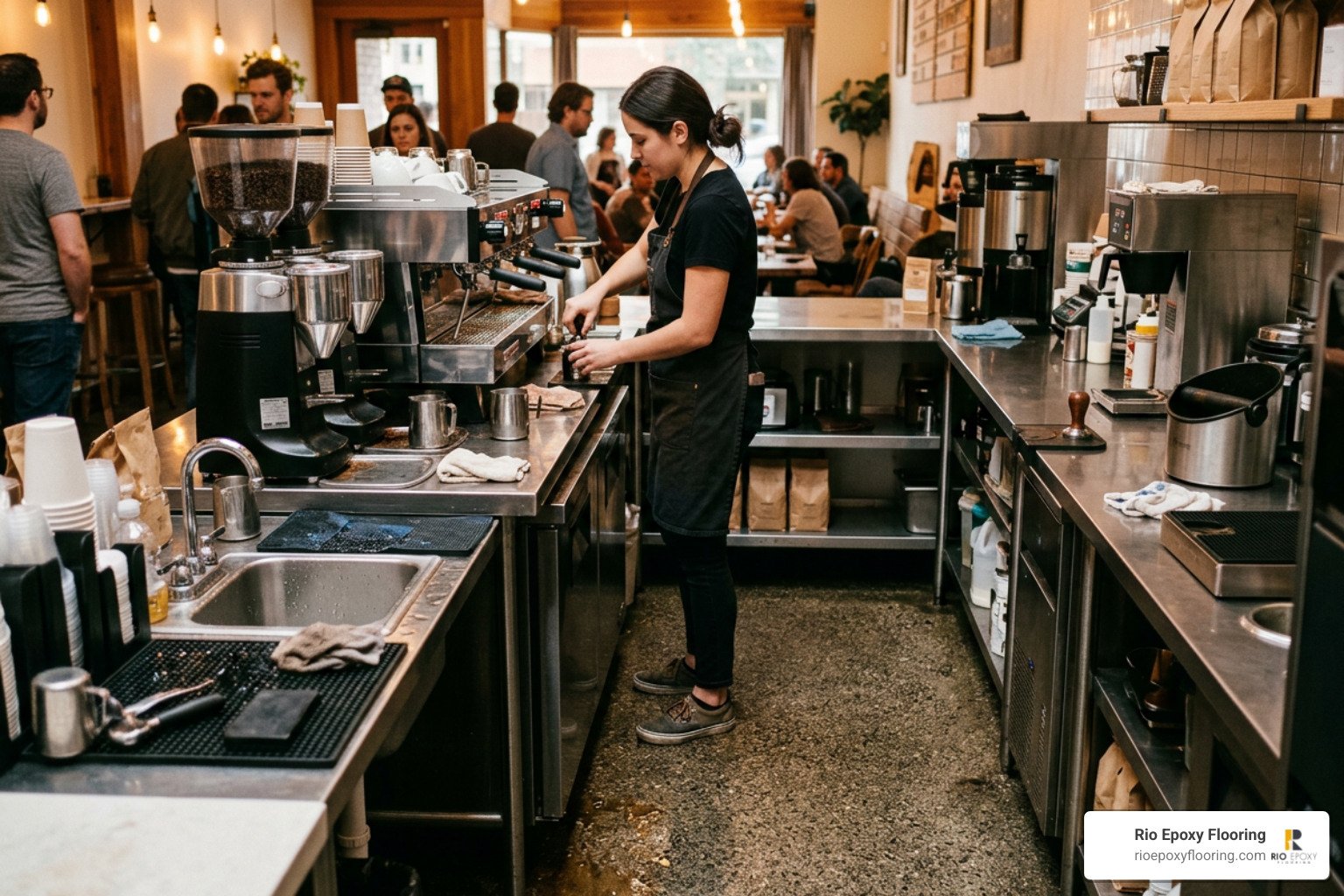
Running a successful coffee shop means balancing customer aesthetics with strict health and safety compliance. Water, steamed milk, ice, and syrup spills are unavoidable during a busy morning rush. Without proper planning, smooth floors can quickly become slip hazards for your team.
Ensuring Slip Resistance in Wet Barista and Kitchen Zones
Safety in food prep zones depends on selecting the proper aggregate profile for the topcoat. While high-gloss, glass-smooth finishes work beautifully in dry dining areas, wet workstations require mechanical traction.
During the final topcoat application, anti-slip media such as aluminum oxide, fine silica sand, or spherical glass beads are broadcast evenly into the clear coat. This creates a textured profile that channels liquids away from footwear treads, meeting OSHA and ADA traction standards without making the floor impossible to mop. Reviewing guidelines on how slippery epoxy floors can be helps owners select the correct level of slip resistance for front-of-house versus back-of-house spaces.
Minimizing Business Downtime During Installation
For an operating cafe or a new build on a strict deadline, every day closed means lost revenue. Professional installation minimizes downtime through a methodical, rapid process:
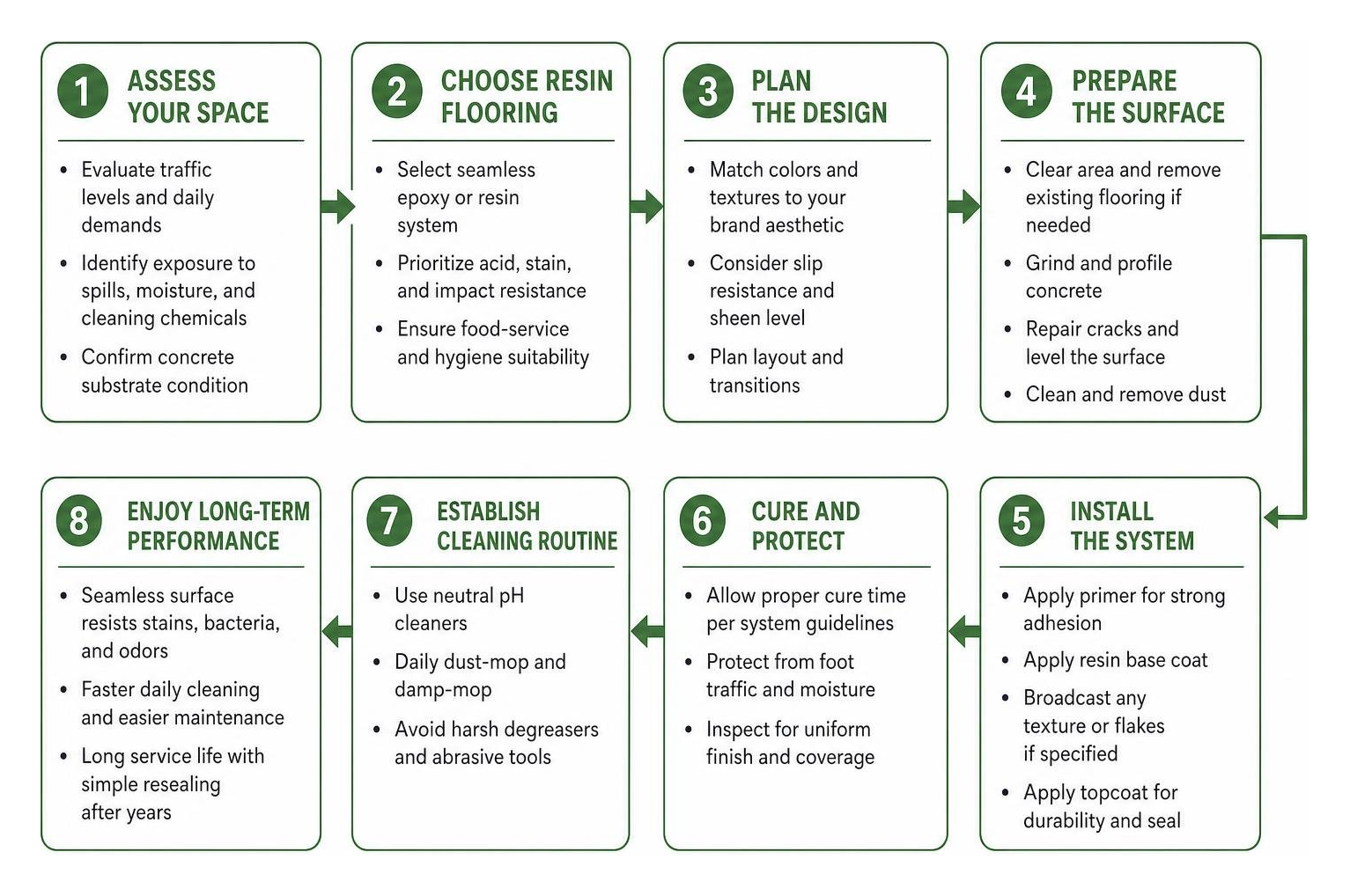
- Mechanical Diamond Grinding: We grind the existing slab to remove old coatings, mastics, and contaminants, creating an open Concrete Surface Profile (CSP 2–3) that ensures a permanent mechanical bond.
- Crack and Joint Repair: Deep fractures and spalls are filled with fast-curing structural polyurea or epoxy menders to create a flat, uninterrupted plane.
- Primer and Body Coat Application: Low-VOC, 100% solids primers penetrate the concrete, followed by the chosen decorative metallic, color, or broadcast system.
- High-Performance Clear Topcoat: A chemical-resistant urethane or polyaspartic wear layer is applied to seal in pigments and slip-resistant aggregates.
- Curing and Recommissioning: Advanced commercial coatings achieve walk-on readiness within 24 hours and a full structural cure within 48 hours, allowing trade crews or cafe staff to move heavy equipment back into place quickly. Understanding commercial epoxy installation timelines allows owners to plan renovations over a standard weekend closure without sacrificing coating longevity.
Frequently Asked Questions About Cafe Flooring
What is the typical cost of an epoxy floor for coffee shop renovations?
The cost of a commercial epoxy installation typically ranges from $5 to $15 per square foot, depending on the chosen system, the condition of the concrete substrate, and the aesthetic complexity:
- Grind and Seal Systems: Generally range from $3 to $7 per square foot, offering an economical, natural industrial finish.
- Decorative Flake Systems: Typically cost between $5 and $9 per square foot, providing durable, multi-layered slip resistance for kitchens and service lines.
- Metallic and Custom Designer Systems: Usually range from $8 to $15+ per square foot due to the artistic labor, multiple resin layers, and specialized pearlescent pigments required.
While the initial investment is comparable to high-grade ceramic tile, epoxy delivers a lower total cost of ownership by eliminating recurring expenses like professional grout cleaning, crack repair, and early tile replacement.
How do you clean and maintain epoxy floors in a busy cafe?
Daily maintenance is straightforward because dirt, coffee grounds, and liquids cannot penetrate the non-porous resin surface:
- Daily Sweeping: Use a soft microfiber dust mop to remove loose grit and dried coffee grounds that could cause micro-abrasions over time.
- Damp Mopping: Mop using warm water and a pH-neutral commercial floor cleaner. Avoid harsh acid-based cleaners, citrus-based strippers, or bleach concentrates, as they can haze the clear topcoat over time.
- Spill Response: While epoxy resists stains from coffee tannins and milk lactic acid, wipe up dark syrups, espresso concentrates, and oils promptly during shifts to maintain surface traction and shine.
- Zero Waxing Required: Unlike vinyl composite tile (VCT), epoxy never requires buffing, stripping, or waxing, saving hundreds of dollars in monthly janitorial labor.
How long do commercial epoxy floors last under high foot traffic?
A professionally installed commercial epoxy floor with a high-performance polyaspartic or urethane topcoat typically lasts 10 to 20 years in a coffee shop setting.
Its overall lifespan depends on surface preparation, foot traffic volume, and routine care. Because the coating bonds mechanically to the concrete pores, it will not peel or delaminate under standard commercial use. If high-traffic walk paths eventually show micro-scratches after years of heavy foot traffic, the floor can be lightly abraded and refreshed with a clear topcoat without having to tear out the underlying system.
Conclusion
Your coffee shop’s floor supports your entire daily workflow—from handling early morning customer lines and accidental spills to reflecting your brand’s unique ambiance. While traditional tile brings persistent grout maintenance, cracking risks, and sanitation headaches, seamless resin delivers an ultra-clean, durable surface that works as hard as your baristas.
At Rio Epoxy Flooring, we specialize in high-performance resin solutions built for the demands of modern hospitality. As a family-owned company based in Austin, Texas, we install custom epoxy, polyurea, and cement-urethane floor systems backed by fast 48-hour turnarounds, eco-friendly low-VOC materials, and lifetime warranty protection.
Whether you need an eye-catching metallic floor for your new dining area or an industrial urethane system behind the espresso bar, our team delivers results built to last. Explore the best epoxy flooring for restaurants and retail in Texas to see how we can transform your cafe from the ground up.