

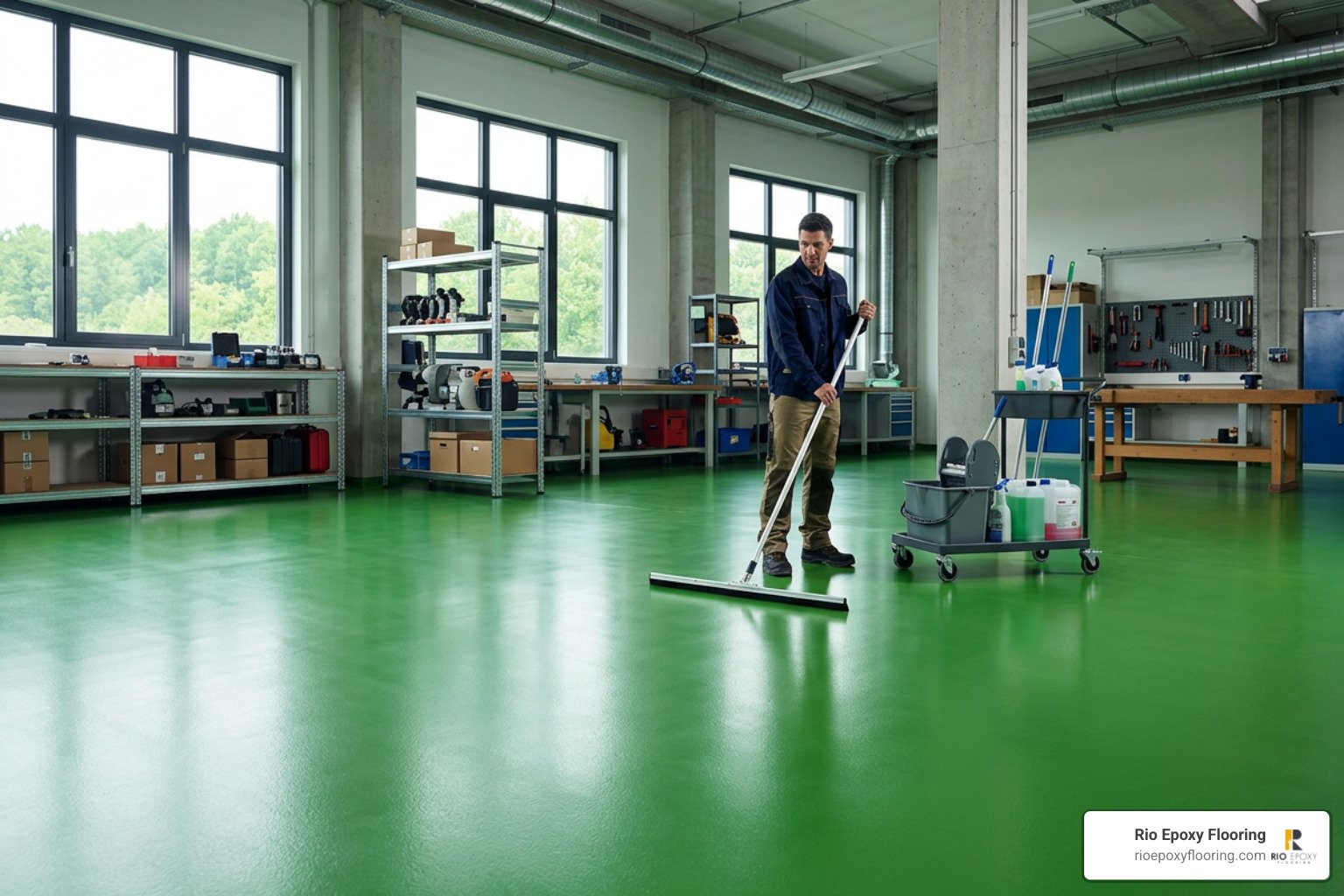
Green Epoxy Floors: From Soft Sage to Bold Emerald
Green epoxy floors can range from calm, matte sage to deep metallic emerald, so they fit both practical garages and polished business interiors. Choose a solid green for a clean, modern look, a green flake blend for more texture and traction, or a metallic finish for dramatic swirls and light-reflective depth.
They are more than a color choice. A properly installed epoxy system creates a seamless surface that is easier to clean than bare concrete and resists many common stains and chemicals. For Austin spaces with sun exposure, vehicle traffic, or wet conditions, the topcoat, slip-resistant texture, and UV performance matter just as much as the shade of green.
Low-VOC and solvent-free epoxy options can also help reduce application odors and emissions. The right system starts with the room’s use, lighting, desired finish, and the concrete’s condition.
I am Roger Aguiar, an Austin-based entrepreneur and digital marketing professional who helps local businesses connect complex home-service choices to the people researching them. In this guide to green epoxy floors, I will help you compare the styles, performance needs, and maintenance tradeoffs before you choose a finish.
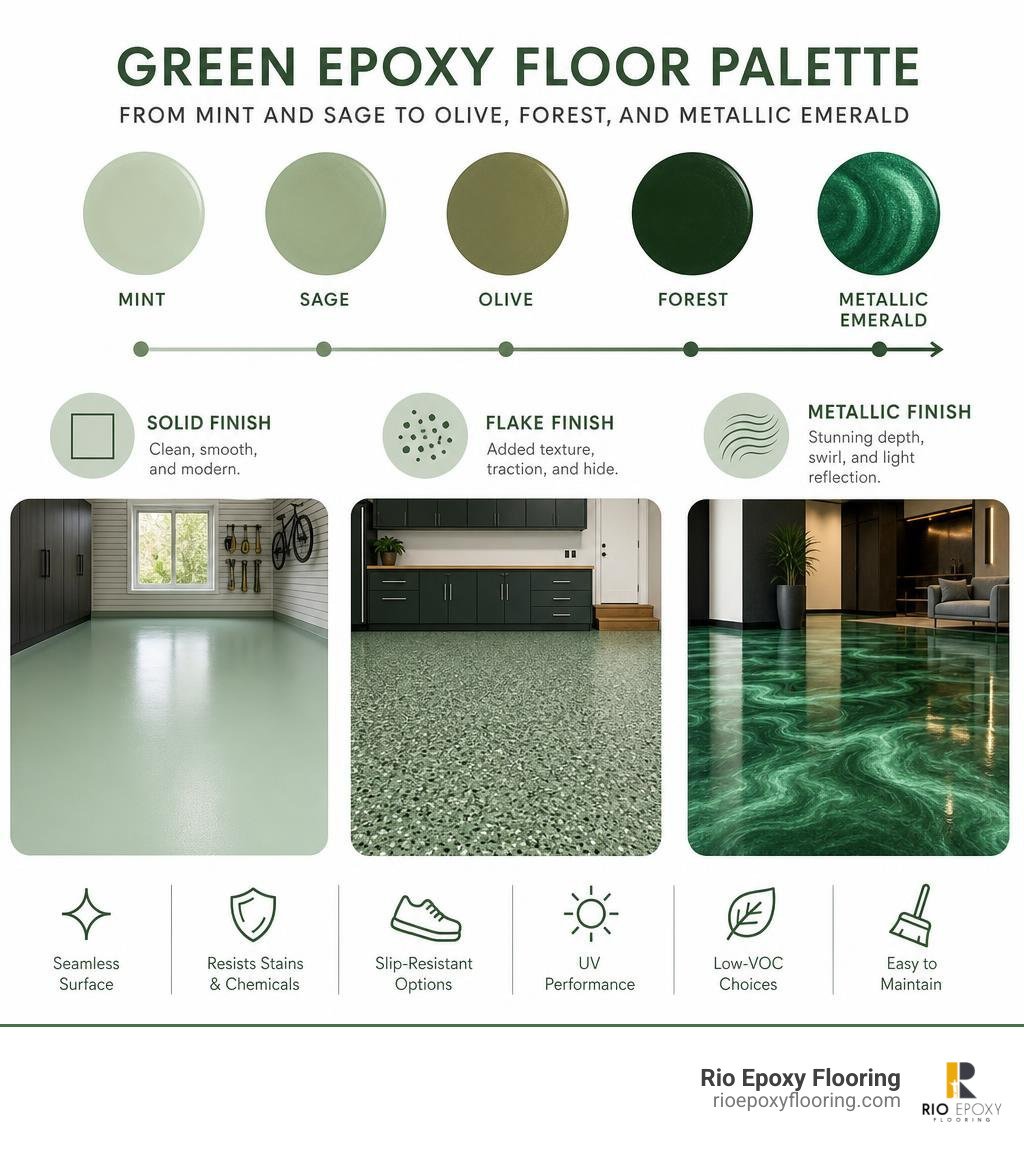
Stunning Styles and Finishes for Green Epoxy Floors
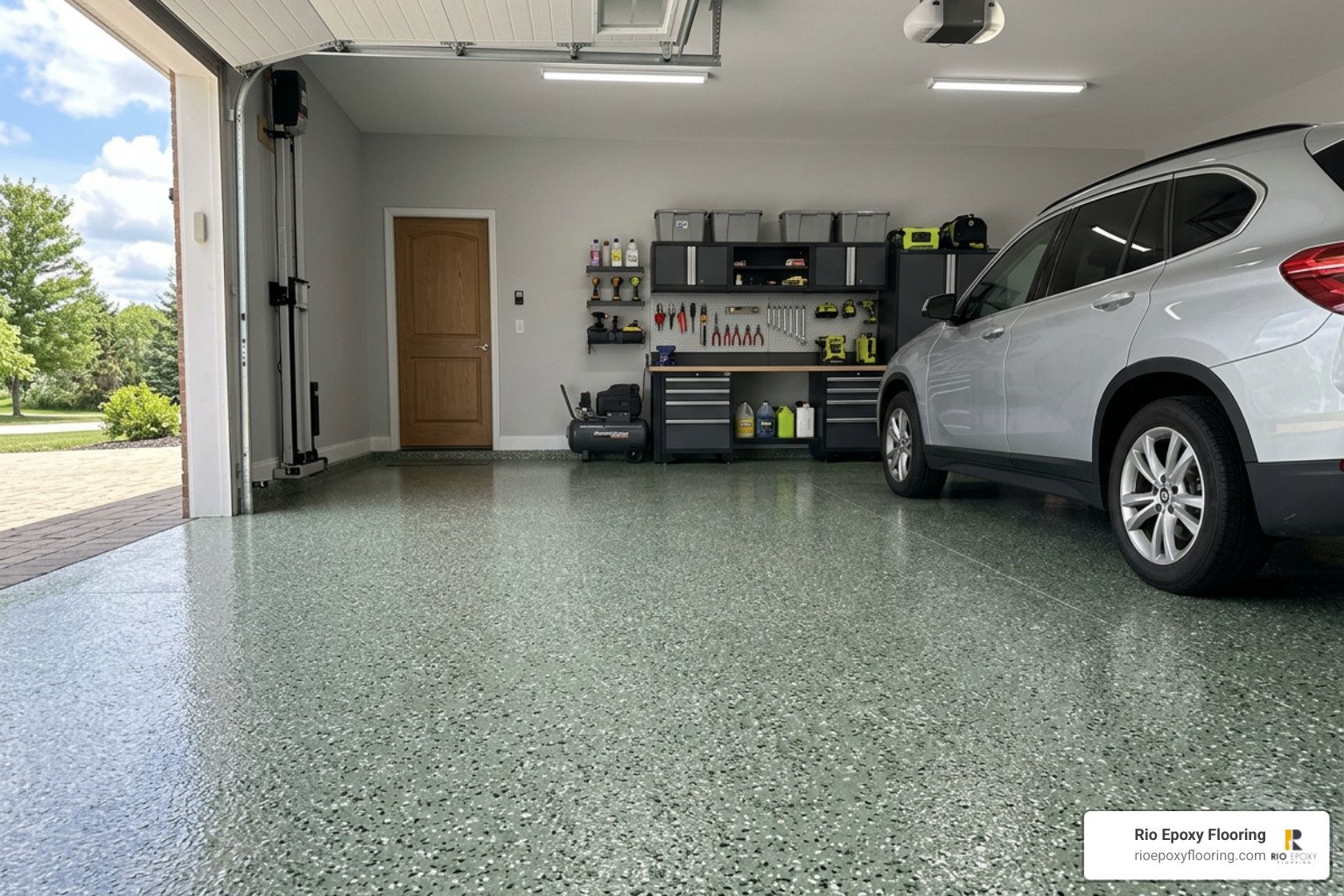
Green brings nature, balance, and visual interest into interior spaces. Whether you want a calming earth tone for a home gym, a bright pastel for a boutique studio, or a rich jewel tone for an executive showroom, green resin systems offer impressive design versatility.
Beyond aesthetics, today’s advanced formulas deliver substantial low VOC epoxy flooring benefits, giving property owners the dual benefit of vibrant color and clean indoor air quality.
Selecting the right finish depends on your aesthetic goals, ambient lighting, and daily functional requirements. Below, we break down the four primary green epoxy styles dominating modern architecture and interior design.
1. Liquid Metallic Emerald and Forest Green
Metallic systems create a shimmering, three-dimensional look that mimics polished marble, flowing water, or natural stone veins. By combining clear epoxy resin carriers with pearlescent mica pigments like Synstar Green, installers can manipulate the wet coat using squeegees, blowers, and specialized rollers to produce custom organic ripples.
- Visual Depth: The metallic particles stay suspended within the resin layer, catching natural and artificial light from various angles to create a deep, layered glass appearance.
- Base Coat Foundation: Applying dynamic green pigments over a dark charcoal or solid black primer maximizes color saturation and contrast.
- Accent Combinations: Mixing forest green pigments with silver pearl or bright white highlights introduces crisp, marble-style veining.
If you are exploring luxurious, one-of-a-kind surface designs, check out our curated top 10 metallic epoxy floor ideas to protect and transform your space.
2. Multi-Color Flake Blends and Terrazzo Accents
Vinyl and acrylic aggregate flakes remain one of the most durable and visually forgiving floor finishes on the market. Flake systems use decorative polymer chips broadcast across a wet pigmented base coat, sealed beneath a resilient clear topcoat.
Custom blends—such as arctic styles mixing emerald or sea-mist green with white, light gray, and black chips—break up large visual planes while disguising everyday tracking, dust, and dirt.
- Safety and Traction: Broadcast flakes build subtle surface profile variations, helping prevent slips without requiring overly aggressive grit additives.
- Terrazzo Charm: Small 1/8-inch flakes provide a tightly knit, classic terrazzo aesthetic, while 1/4-inch chips deliver a bolder, modern mosaic look.
Curious about how chip density affects grip? Learn more about safety ratings and textures in our guide on are epoxy floors slippery?
3. Solid Sage, Mint, and Olive Minimalist Tones
Monochromatic, self-leveling solid epoxy floors offer an ultra-clean, seamless aesthetic suited for modern residential interiors, art galleries, and clinical workspaces.
- Sage and Olive: These muted, earthy shades create a grounding backdrop that pairs well with natural wood accents, exposed brick, and biophilic indoor greenery.
- Mint and Pistachio: Soft pastels reflect natural illumination, brightening basements, laundry suites, and home workshops.
- Satin and Matte Finishes: Pairing a solid earth-toned resin with a satin polyurethane or polyaspartic topcoat softens harsh overhead glare and delivers a warm, contemporary look.
Property owners looking for cohesive, stylish concrete transformations can explore tailored epoxy flooring for Austin homes.
4. Translucent and Eco-Resin Castings
Modern polymer chemistry allows homeowners to choose sustainable, plant-conscious resin systems without sacrificing structural performance. Advanced options like the ECO System (Epoxy Resin + Hardener) – Transparent Green | EPODEX and the ECO System (Epoxy Resin + Hardener) – Semi-Transparent Green | EPODEX deliver brilliant emerald clarity with minimal environmental impact.
- Zero-Solvent & BPA-Free: These formulas contain no volatile solvents or harmful plasticizers, meeting strict GHS06 non-toxic health and environmental standards.
- Self-Venting Formulations: Premium eco-resins release air bubbles naturally at room temperature during curing, eliminating surface pinholes without heavy solvent off-gassing.
- Subtle Hue Washes: Translucent green resin pours let underlying concrete aggregate or decorative screeds show through, creating an authentic, industrial-chic feel.
Essential Surface Preparation and Base Coat Selection
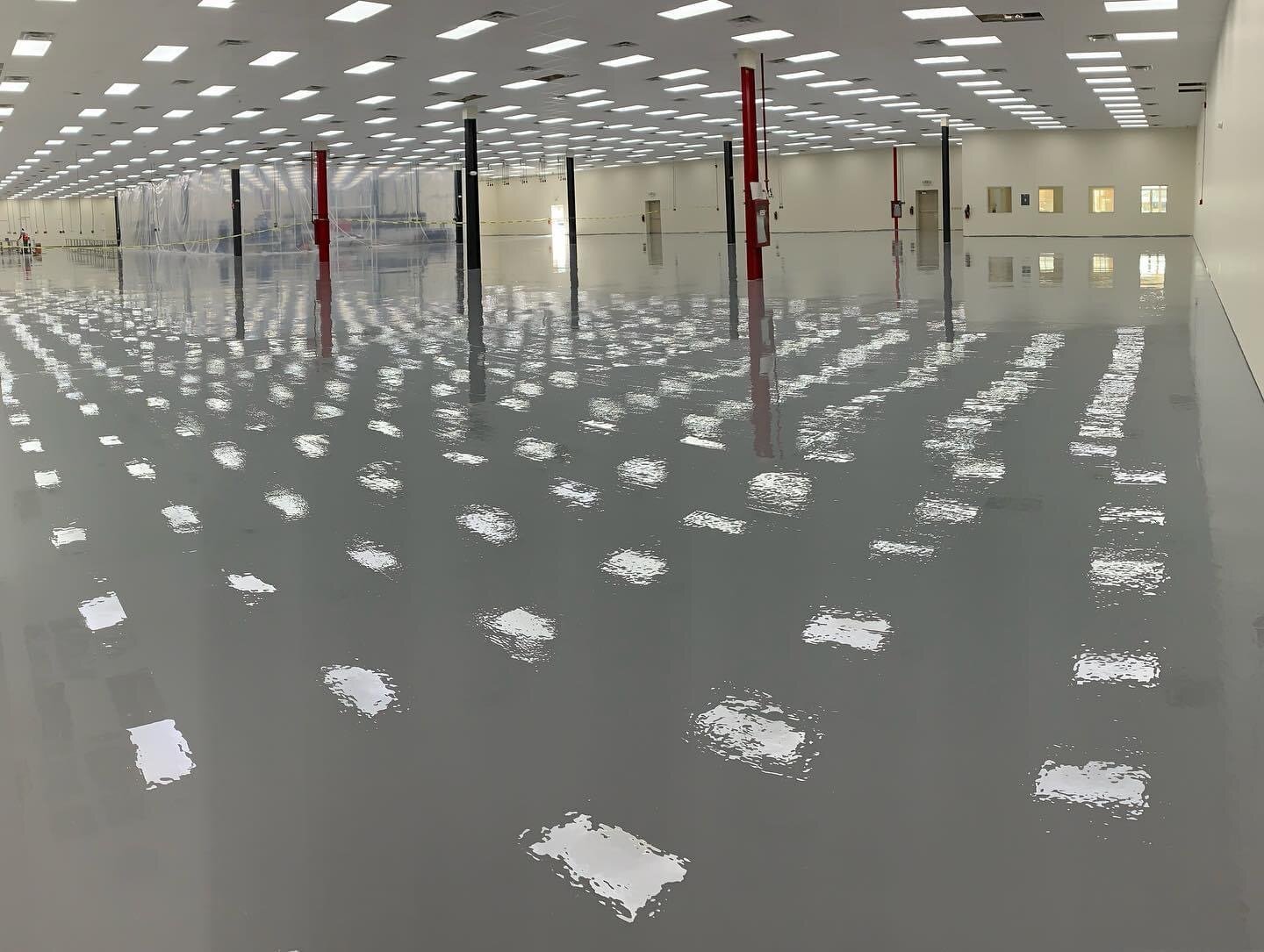
Even the highest-grade resin will fail prematurely if the underlying concrete substrate is not mechanically prepared. Epoxy forms a mechanical bond with the concrete slab; it does not simply sit on top like house paint.
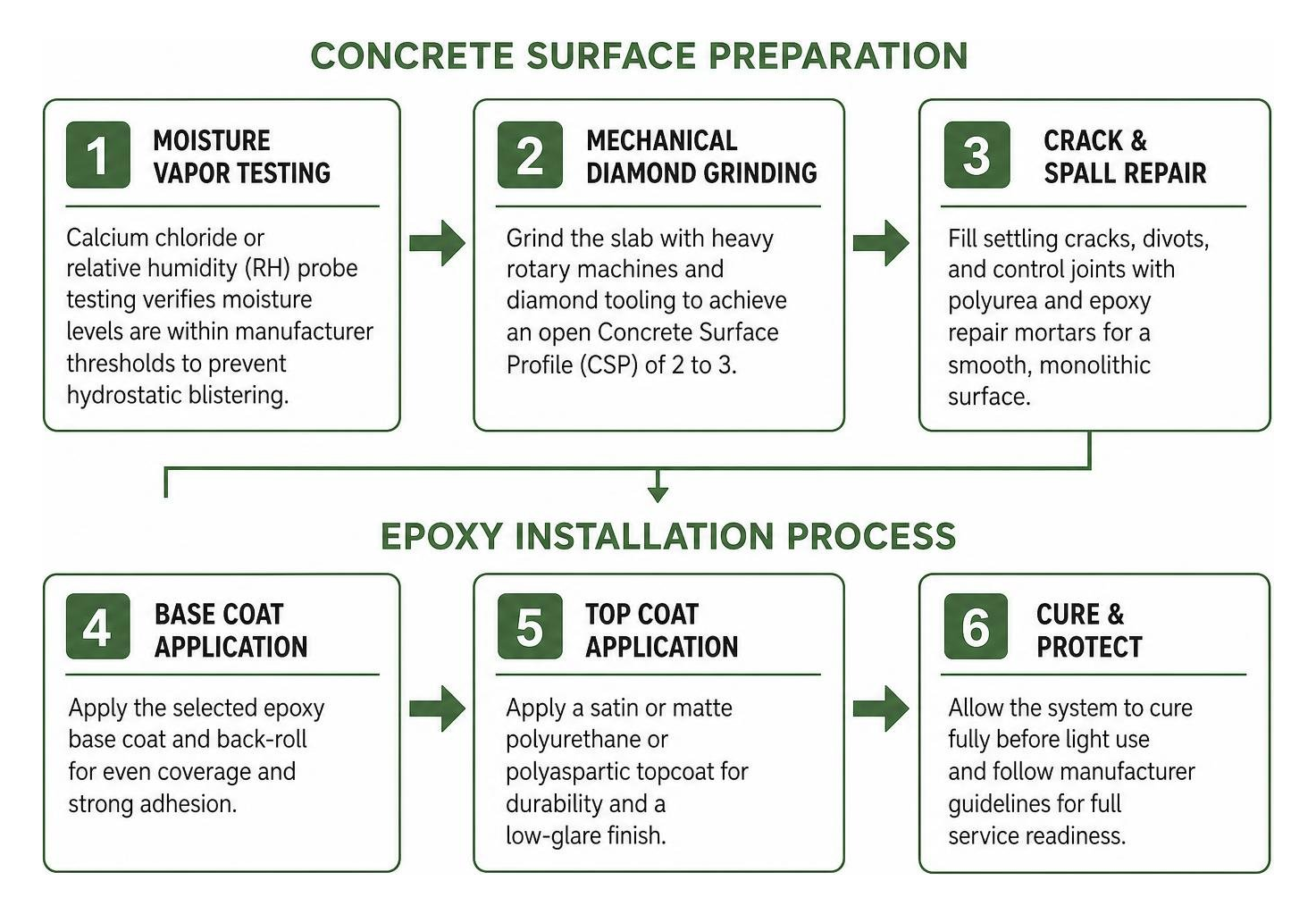
The Step-by-Step Installation Standard
- Moisture Vapor Testing: Concrete slabs breathe moisture vapor. Calcium chloride or relative humidity (RH) probe testing verifies that moisture levels fall within the epoxy manufacturer’s thresholds, preventing hydrostatic blistering.
- Mechanical Diamond Grinding: Acid etching is inconsistent and can leave chemical residues. Installers grind the slab using heavy rotary machines equipped with diamond tooling to achieve an open Concrete Surface Profile (CSP) of 2 to 3.
- Crack & Spall Repair: Polyurea and epoxy repair mortars fill settling cracks, divots, and control joints, creating a smooth, monolithic surface.
- Moisture-Blocking Primer Application: A two-component, 100% solids epoxy primer penetrates deep into the concrete’s open pores.
- Pigment Layer & Flake Broadcast: The colored base coat (or metallic matrix) is applied within the primer’s recoat window, followed immediately by decorative aggregate broadcasts.
- Protective Topcoat: A non-yellowing polyaspartic or polyurethane clear coat locks the system down with long-term abrasion and UV resistance.
To see our full professional installation process, consult our detailed epoxy flooring installation guide Texas.
Performance and Durability in High-Traffic Spaces
Epoxy floors deliver incredible compression and tensile strength. When bonded to sound concrete, an industrial-grade epoxy system withstands high vehicle weights, rolling tool cabinets, chemical spills, and continuous foot traffic.
For retail spaces, restaurants, and medical centers, high-performance green floors offer continuous, sanitary protection against liquid intrusion and mold growth. Review our commercial project capabilities under commercial epoxy flooring Austin.
Performance of Green Epoxy Floors in Garages and Workshops
A frequent question from homeowners is how colored epoxy holds up to everyday garage abuse:
- Hot Tire Pickup: Cheap store-bought paints soften when exposed to the heat of parked car tires, causing the coating to peel away. High-build, 100% solids epoxy base coats with polyaspartic topcoats resist hot tire delamination entirely.
- Chemical Spills: Motor oil, brake fluid, battery acid, and glycol coolant wipe away cleanly without leaving dark stains on solid or flake green floors.
- Thermal Limits (Welding and Torch Work): Epoxy is a thermo-set polymer, meaning direct contact with hot slag, metal fabrication grinding sparks, or open torches can scorch, pit, or discolor the resin. Working hobby shops should place heavy welding blankets or sacrificial steel plates over high-heat work zones.
We weigh these performance factors in our honest breakdown of the pros and cons of epoxy flooring.
DIY Kits vs. Professional 100% Solids Systems
| Feature / Metric | Water-Based DIY Box Kit | Professional 100% Solids Epoxy System |
|---|---|---|
| Solids Content by Volume | 40% – 50% (Evaporates as it cures) | 100% (Zero shrinkage, full build) |
| Dry Film Thickness | 2 – 4 mils | 15 – 35+ mils |
| Surface Preparation | Mild citric/muriatic acid etch | Mechanical diamond grinding (CSP 2–3) |
| Working Pot Life | 60 – 120 minutes | 20 – 45 minutes (Requires trained crew) |
| Scrape & Scratch Durability | Low to Moderate (Chips under dropped tools) | High (Resists heavy impacts & rolling loads) |
| UV Resistance | Prone to ambering and chalking | Non-yellowing UV-stable aliphatic topcoat |
| Warranty Protection | None (or limited 30-day product replacement) | Multi-year or Lifetime Warranty |
Material Calculations and Application Coverage Rates
Accurate material planning ensures uniform pigment coverage and prevents mid-project shortages while the resin is actively curing.
1. Resin Volume and Pigment Dosage
For standard 100% solids epoxy base coats, plan on 100 to 150 square feet per gallon depending on slab porosity and desired film thickness. When using dry metallic color pigments (like Synstar Green), follow the standard dosage of 1.5% to 2% pigment by weight (roughly 4 to 8 ounces per mixed gallon of clear resin) to achieve deep color saturation.
2. The Flake Broadcast Formula
Decorative chip coverage depends heavily on whether you want a light speckle or a full terrazzo-style broadcast:
- Full Broadcast (100% Coverage): Calculate between 10% and 12% of the total square footage in pounds of flakes. For a standard 2-car garage measuring 500 sq. ft., you will need 50 to 60 lbs of flake.
- A standard 25-lb box of 1/4″ flake covers 200 to 250 sq. ft. at full rejection (approx. 10 sq. ft. per lb).
- Smaller 1/8″ hybrid chips offer more surface area, covering roughly 125 sq. ft. per 25-lb box (approx. 5 sq. ft. per lb).
- Partial Broadcast (Light to Medium): Requires roughly 0.02 to 0.05 lbs per square foot (yielding 10 to 25 lbs per 500 sq. ft.).
For deeper insight into planning your installation, explore our comprehensive epoxy flooring guide.
Long-Term Floor Care and Routine Upkeep
Unsealed concrete sheds abrasive silica dust continuously. A seamless green epoxy floor locks down concrete dust and prevents fluid absorption, making routine maintenance quick and easy.
Maintenance Best Practices for Green Epoxy Floors
- Daily Dust Removal: Sweep away loose grit, sand, and dirt with a soft microfiber push broom to avoid micro-scratches from foot traffic.
- Weekly Wet Mopping: Use warm water paired with a pH-neutral cleaner or a mild dish soap solution. Avoid citrus-based, acidic cleaners or bleach, which can dull glossy clear coats over time.
- Tackling Grease: For oil spills or workshop grease, use a diluted non-abrasive degreaser with a soft-bristle deck brush, then rinse with clean water.
- Surface Protection: Place felt pads beneath heavy metal equipment feet, tool chests, and patio furniture to safeguard high-gloss metallic surfaces.
Read our detailed recommendations in the maintaining epoxy floors guide 2025.
Frequently Asked Questions About Green Epoxy Flooring
Find answers to common project questions below, or browse our comprehensive epoxy flooring FAQs.
How do I calculate the exact amount of flake needed for full broadcast coverage?
Use the 10% to 12% rule of thumb. Multiply your total square footage by 0.10 or 0.12 to find the required weight in pounds. For example, an 800 sq. ft. workshop floor needs 80 to 96 lbs of flake chips. Always round up to include a safety margin for edges and collection loss.
Can welding and heavy fabrication damage green epoxy floor coatings?
Yes. Direct welding sparks, hot metal shavings, and slag droplets can exceed 1,000°F, which will burn small divots into epoxy topcoats. If you weld frequently in your shop, use fire-resistant welding blankets across the floor working radius to protect your finish.
What base coat color creates the best metallic green effect?
A solid black or deep charcoal gray base coat yields the deepest, most dynamic metallic green finish. The dark primer absorbs background light, forcing reflective green mica particles to bounce light back toward the surface for maximum contrast and marble-like depth.
Conclusion
From modern sage living areas to head-turning emerald metallic showrooms, green epoxy finishes bring together personal style, functional strength, and long-term durability.
At Rio Epoxy Flooring, we bring spaces to life across Austin, Texas, with custom, eco-friendly epoxy, polyurea, and cement-urethane systems. Backed by rapid 48-hour installations, low-VOC materials, and a dependable lifetime warranty, our family-owned team delivers floor transformations built to last.
Ready to bring your vision to life? Contact us today to start planning your custom epoxy flooring transformations!