

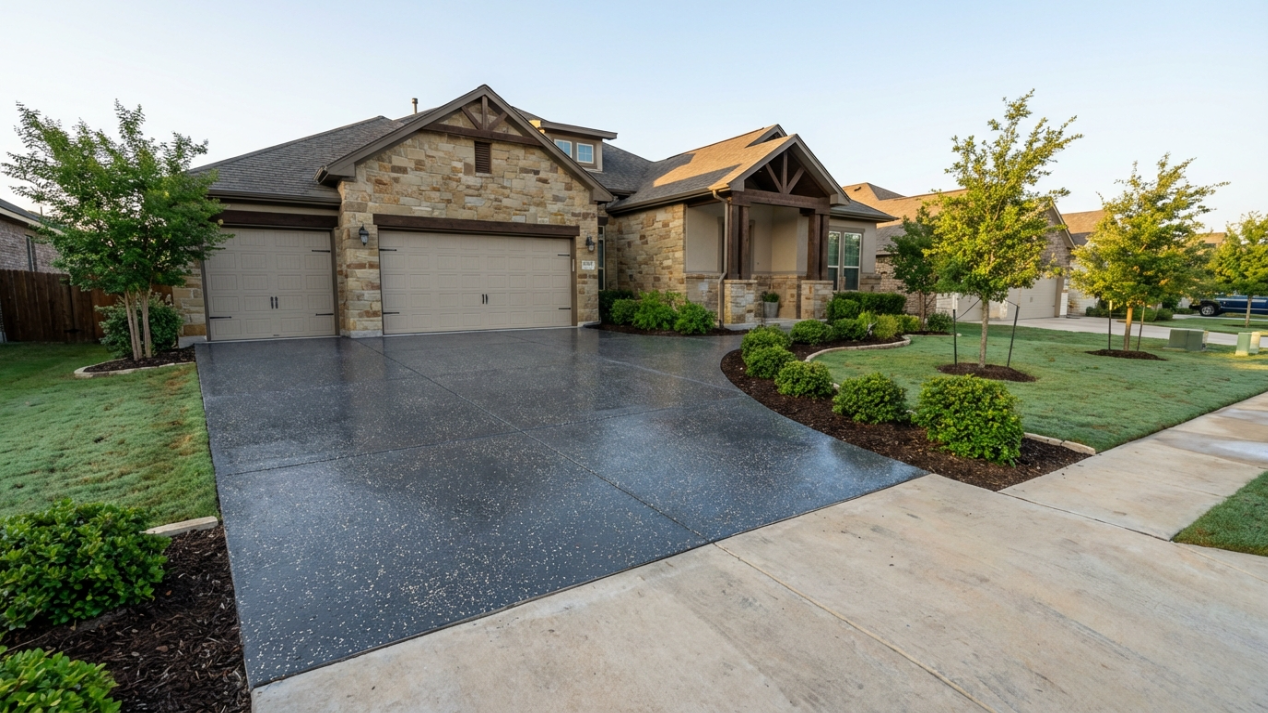
Is your driveway cracking, staining, or simply looking worn out after years of Texas heat and heavy use? You are not alone. Thousands of homeowners across Austin and Central Texas face the same problem every year — and many of them are discovering that epoxy driveway coating is one of the most cost-effective and durable solutions available today.
In this complete guide, you will learn exactly what epoxy driveway coating is, how it works, what it costs, and whether it is the right investment for your home. We will walk you through the installation process step by step, highlight the most common mistakes to avoid, and share real insights from homeowners who have already made the upgrade.
Whether you are comparing options or ready to move forward, this guide gives you everything you need to make a confident decision. Keep reading to find out if epoxy driveway coating is worth it for your specific situation.
Ready to get started? Request a free quote from Rio Epoxy Flooring today.
What Is Epoxy Driveway Coating?
Epoxy driveway coating is a high-performance surface treatment applied directly over concrete driveways to protect, strengthen, and enhance their appearance. It consists of two main components — an epoxy resin and a hardener — that chemically bond when mixed together and applied to a prepared concrete surface.
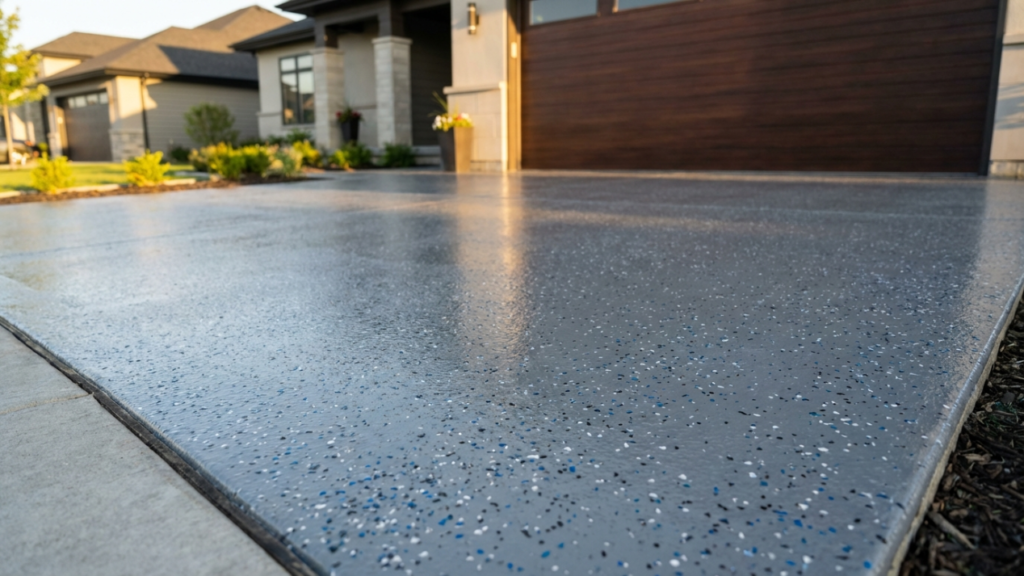
Once cured, the coating forms a rigid, seamless layer that adheres tightly to the concrete substrate. This layer acts as a protective barrier against oil stains, water penetration, UV damage, tire marks, and surface abrasion. Unlike standard concrete sealers, epoxy driveway coating adds measurable thickness and structural reinforcement to the surface.
The result is a driveway that looks polished, resists damage, and requires significantly less maintenance than bare concrete.
How Is Epoxy Driveway Coating Different from Regular Concrete Sealer?
This is one of the most common questions homeowners ask, and the distinction matters when you are comparing products and pricing.
| Feature | Epoxy Driveway Coating | Standard Concrete Sealer |
|---|---|---|
| Thickness | 2–10 mils (builds up surface) | Less than 1 mil (penetrating) |
| Durability | 5–10+ years with proper care | 1–3 years |
| Stain resistance | Excellent | Moderate |
| Chemical resistance | High | Low to moderate |
| Appearance | Glossy, decorative options | Matte or slight sheen |
| Cost per sq ft | $3–$12 | $0.50–$2 |
| DIY friendly | Moderate difficulty | Easy |
As you can see, epoxy driveway coating is a more substantial investment — but it delivers significantly better performance and longevity. For homeowners in Austin who deal with intense summer heat, heavy rainfall, and frequent vehicle traffic, the durability advantage is especially relevant.
Why Epoxy Driveway Coating Is Worth Considering for Texas Homes
Texas weather is hard on concrete. The combination of extreme heat, UV exposure, freeze-thaw cycles in winter, and heavy rain creates conditions that accelerate surface deterioration. Bare concrete driveways in the Austin area often show cracking, spalling, and deep staining within just a few years of installation.
Epoxy driveway coating addresses all of these vulnerabilities at once. Here is why it is worth serious consideration:
1. Superior Protection Against the Texas Climate
The cured epoxy layer reflects UV rays rather than absorbing them, which reduces surface temperature and slows the thermal expansion and contraction that causes cracking. It also creates a waterproof barrier that prevents moisture from penetrating the slab and weakening it from below.
2. Dramatic Improvement in Curb Appeal
A freshly coated driveway with a high-gloss or satin finish immediately elevates the appearance of your home. Epoxy driveway coating is available in a wide range of colors and decorative finishes, including metallic effects, flake systems, and solid tones that complement your home’s exterior.
3. Long-Term Cost Savings
While the upfront cost of epoxy driveway coating is higher than a basic sealer, the long-term math often favors epoxy. A properly installed coating can last 7–10 years or more, compared to 1–3 years for standard sealers. That means fewer reapplications, less maintenance, and lower total cost over time.
4. Increased Home Value
Exterior improvements that enhance curb appeal and reduce maintenance requirements are consistently valued by real estate professionals. A clean, well-maintained driveway with a professional epoxy coating signals to buyers that the home has been cared for.
If you are also considering interior upgrades, our team at Rio Epoxy Flooring offers residential epoxy flooring solutions that complement your driveway work and create a cohesive look throughout your property.
How Much Does Epoxy Driveway Coating Cost?
Featured Snippet Target — see note at end of article
The cost of epoxy driveway coating typically ranges from $3 to $12 per square foot for professional installation, depending on the condition of the existing concrete, the type of epoxy system used, and the complexity of the finish. For a standard two-car driveway of approximately 400–600 square feet, homeowners can expect to pay between $1,200 and $7,200.
Here is a more detailed cost breakdown:
| Project Size | Estimated Cost (Professional) |
|---|---|
| Single-car driveway (200–300 sq ft) | $600 – $3,600 |
| Two-car driveway (400–600 sq ft) | $1,200 – $7,200 |
| Large driveway (700–1,000 sq ft) | $2,100 – $12,000 |
Factors That Affect the Final Price
Several variables influence the total cost of your epoxy driveway coating project:
- Concrete condition: Driveways with significant cracking, spalling, or previous coatings require more preparation work, which adds to labor costs.
- Epoxy system type: Water-based epoxy is less expensive but less durable. Solvent-based and 100% solids epoxy systems cost more but deliver superior performance.
- Decorative finish: Solid color coatings are the most affordable. Metallic finishes, broadcast flake systems, and custom designs increase the price.
- Surface area: Larger driveways benefit from economies of scale, but total cost still increases with square footage.
- Geographic location: Labor rates vary by market. In Austin, TX, professional epoxy installation is competitively priced given the density of qualified contractors.
If budget is a concern, Rio Epoxy Flooring offers flexible financing options to help homeowners in Austin and surrounding areas move forward with their projects without delay.
Step-by-Step: How Epoxy Driveway Coating Is Applied
Understanding the installation process helps you evaluate contractor proposals and set realistic expectations for your project. Here is how a professional epoxy driveway coating installation is completed from start to finish.
Step 1: Surface Inspection and Assessment
Before any product is applied, the concrete must be thoroughly inspected. The contractor evaluates the slab for cracks, moisture issues, previous coatings, oil contamination, and surface profile. This assessment determines what preparation steps are needed and which epoxy system is appropriate.
Step 2: Concrete Surface Preparation
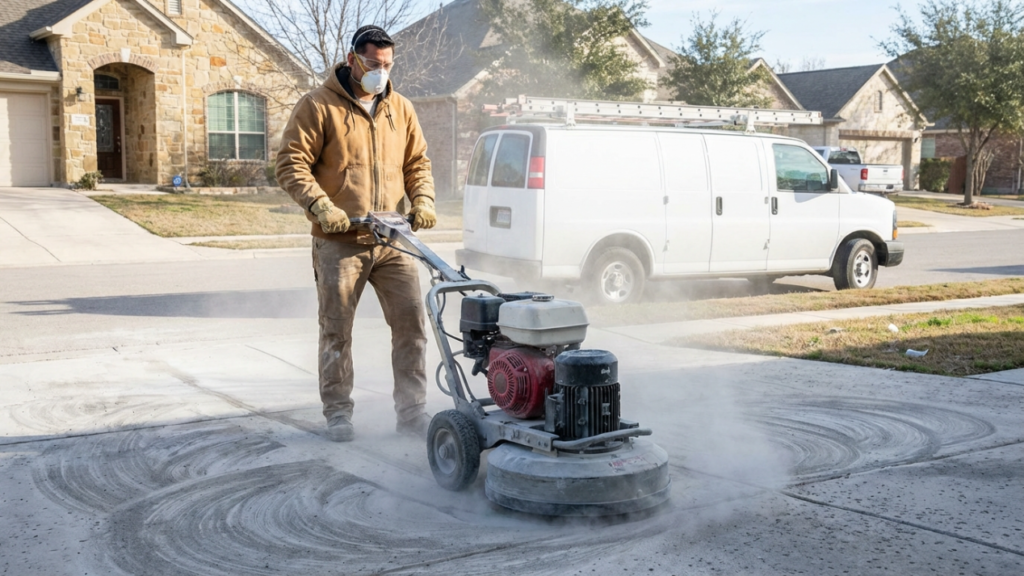
This is the most critical step in the entire process. Proper surface preparation determines whether the epoxy driveway coating bonds correctly and lasts as long as it should.
Preparation typically includes:
- Diamond grinding or shot blasting to open the concrete pores and create a mechanical profile for adhesion
- Crack repair using epoxy injection or polyurea filler
- Oil and stain removal using chemical degreasers
- Moisture testing to ensure the slab is dry enough for coating
Skipping or rushing this step is the number one cause of epoxy coating failure. Professional contractors like the team at Rio Epoxy Flooring in Austin invest significant time in surface preparation because they know it determines the quality of the final result.
Step 3: Primer Application
A primer coat is applied to penetrate the concrete and create a strong chemical bond between the substrate and the epoxy layers above. The primer is allowed to cure for the time specified by the manufacturer before the next coat is applied.
Step 4: Base Coat Application
The main epoxy base coat is applied using a roller or squeegee. This coat provides the primary color, thickness, and protective properties of the system. Depending on the product and the desired finish, one or two base coats may be applied.
Step 5: Decorative Elements (Optional)
If the homeowner has chosen a decorative finish, this is when color flakes, metallic pigments, or other decorative elements are broadcast into the wet epoxy. These elements are embedded into the surface and become part of the coating system.
Step 6: Topcoat Application
A clear polyurethane or polyaspartic topcoat is applied over the base coat to seal the surface, enhance gloss, and add UV resistance. The topcoat is what gives the driveway its final appearance and provides the outermost layer of protection.
Step 7: Curing Time
Epoxy driveway coating requires time to cure before it can be used. Light foot traffic is typically possible within 24 hours. Vehicle traffic should be avoided for at least 72 hours, and full cure is usually achieved within 7 days.
Epoxy Driveway Coating vs. Other Driveway Surface Options
Homeowners evaluating epoxy driveway coating often compare it to other popular options. Here is how it stacks up:
| Option | Lifespan | Cost/sq ft | Maintenance | Appearance |
|---|---|---|---|---|
| Epoxy coating | 7–10+ years | $3–$12 | Low | High-gloss, customizable |
| Concrete sealer | 1–3 years | $0.50–$2 | Moderate | Minimal enhancement |
| Asphalt | 20–30 years | $2–$5 | Moderate | Dark, limited options |
| Pavers | 25–50 years | $10–$30 | Low | Highly decorative |
| Stamped concrete | 10–25 years | $8–$18 | Moderate | Very decorative |
Epoxy driveway coating occupies a strong middle ground — more durable and attractive than a basic sealer, more affordable than pavers or stamped concrete, and easier to maintain than asphalt.
Real Customer Experiences: What Austin Homeowners Are Saying
Hearing from real customers gives you a clearer picture of what to expect. Here are verified reviews from homeowners who worked with Rio Epoxy Flooring:
“I had my driveway and garage floor done at the same time. The crew was professional, showed up on time, and the finished product looks incredible. My neighbors keep asking who did the work. Highly recommend.” — James T., Austin, TX (Google Review)
“We were skeptical about the cost at first, but after seeing the final result, we have zero regrets. The driveway looks brand new and has held up perfectly through two Texas summers. Worth every penny.” — Maria L., Round Rock, TX (Google Review)
“Rio Epoxy Flooring did an amazing job on our driveway. They explained the whole process, answered all our questions, and cleaned up completely when they were done. The coating still looks great two years later.” — David R., Georgetown, TX (Yelp Review)
You can read more reviews and see project photos on our Google Business Profile and Yelp page.
Is Epoxy Driveway Coating a Good DIY Project?
This is a question many cost-conscious homeowners ask. The honest answer is: it depends on your experience level, the condition of your concrete, and how important the final result is to you.
When DIY Might Work
- The driveway is in good condition with no major cracks or moisture issues
- You are comfortable with surface preparation equipment
- You are using a consumer-grade epoxy kit for a small area
- You accept that the result may not match professional quality
When You Should Hire a Professional
- The concrete has visible damage, staining, or previous coatings
- You want a decorative finish with flakes, metallics, or custom colors
- The driveway is large (over 300 square feet)
- You want the coating to last 7–10 years without peeling or delaminating
- You are in a high-heat climate like Austin, TX, where improper application leads to rapid failure
The most common DIY failure point is inadequate surface preparation. Without professional-grade diamond grinding equipment, most homeowners cannot achieve the surface profile needed for proper epoxy adhesion. The result is a coating that looks good for a few months and then begins to peel.
For homeowners in the Austin area, including communities like Lakeway, Leander, Dripping Springs, and Round Rock, professional installation from a trusted local contractor is almost always the better investment.
Common Mistakes to Avoid with Epoxy Driveway Coating
Whether you are hiring a contractor or considering a DIY approach, knowing these common mistakes will help you protect your investment.
Mistake 1: Skipping Moisture Testing
Concrete that contains excess moisture will prevent epoxy from bonding properly. Always test the slab with a plastic sheet test or a professional moisture meter before applying any coating.
Mistake 2: Applying Epoxy in Extreme Temperatures
Epoxy driveway coating should be applied when surface temperatures are between 50°F and 90°F. In Austin, summer surface temperatures can exceed 120°F, which causes the epoxy to cure too quickly and results in bubbling, fisheyes, or delamination. Schedule your project for spring or fall when temperatures are more moderate.
Mistake 3: Using the Wrong Epoxy Product
Not all epoxy products are suitable for exterior driveway applications. Many consumer-grade epoxy kits are formulated for interior garage floors and will yellow, chalk, or peel when exposed to UV light and outdoor conditions. Always use a UV-stable, exterior-grade epoxy driveway coating system.
Mistake 4: Rushing the Cure Time
Driving on a freshly coated driveway before it has fully cured is one of the fastest ways to damage the surface. Follow the manufacturer’s cure schedule and resist the temptation to use the driveway early.
Mistake 5: Neglecting Ongoing Maintenance
Epoxy driveway coating is low maintenance, but it is not zero maintenance. Clean spills promptly, avoid harsh chemical cleaners, and reseal the topcoat every 2–3 years to maintain maximum protection and appearance.
How to Maintain Your Epoxy Driveway Coating
Proper maintenance extends the life of your epoxy driveway coating and keeps it looking its best year after year.
Routine Cleaning
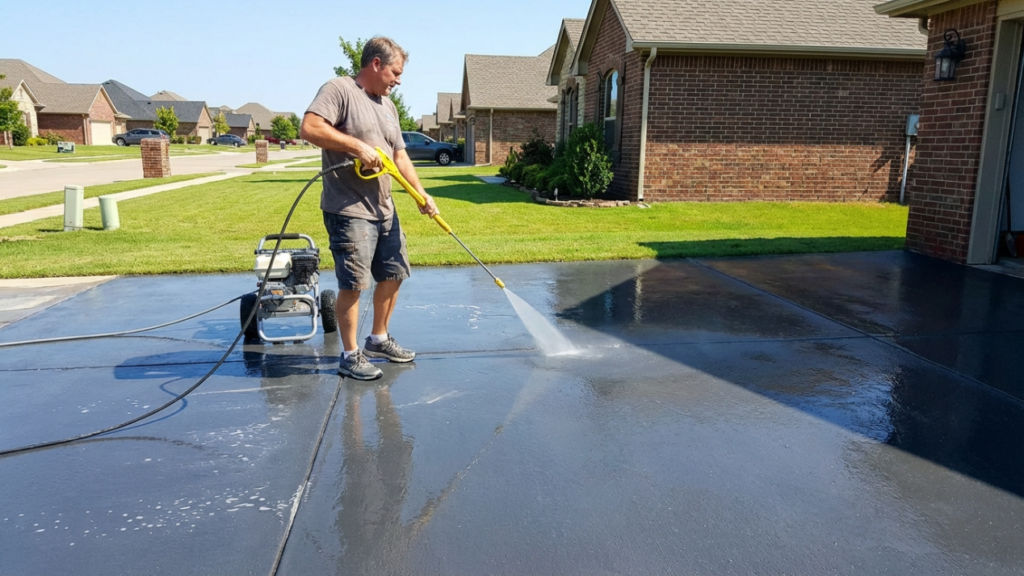
Sweep or blow off debris regularly to prevent surface scratching. For deeper cleaning, use a garden hose or pressure washer on a low setting with a mild detergent. Avoid acidic cleaners, bleach, or abrasive scrubbing pads.
Stain Management
Epoxy driveway coating resists most stains, but prompt cleanup is still important. Wipe up oil, gasoline, and chemical spills as soon as they occur. For dried stains, use a degreaser approved for use on epoxy surfaces.
Periodic Topcoat Renewal
The clear topcoat is the first layer to show wear. Reapplying a fresh topcoat every 2–3 years restores the gloss and refreshes the protective barrier without requiring a full recoat of the entire system.
Crack Monitoring
Inspect the surface annually for any new cracks or areas where the coating has lifted. Address these promptly to prevent water infiltration and further damage.
Epoxy Driveway Coating in Austin, TX: Local Considerations
Austin and the surrounding Central Texas region present specific conditions that influence how epoxy driveway coating performs and how it should be applied.
The intense UV exposure in Texas requires a UV-stable topcoat to prevent yellowing and chalking. The clay-heavy soils common in the Austin area can cause slab movement, which means crack repair and flexible primer systems are especially important here. And the dramatic temperature swings between summer and winter — from over 100°F in July to freezing conditions in January — demand an epoxy system with good thermal flexibility.
Rio Epoxy Flooring has been serving homeowners and businesses across Austin and Central Texas for years, with completed projects in neighborhoods and communities including West Lake Hills, Barton Creek, Georgetown, Killeen, and Temple. Our team understands the local climate and selects products specifically suited to Texas conditions.
We are also proud to serve the broader Central Texas region, including Rollingwood, Sunset Valley, Lost Creek, and Kempner. View our full areas served page to see if we cover your location.
Thinking about upgrading your garage floor at the same time? Check out our garage floor epoxy solutions for a complete exterior and interior transformation.
Beyond the Driveway: Other Epoxy Services from Rio Epoxy Flooring
Once homeowners see the results of a professional epoxy driveway coating, they often want to extend the same quality to other areas of their property. Rio Epoxy Flooring offers a full range of epoxy and surface coating services, including:
- Commercial epoxy flooring in Austin for businesses, warehouses, and retail spaces
- Custom epoxy countertops for kitchens, bathrooms, and outdoor entertaining areas
- Pool resurfacing to restore and protect your pool deck and interior
- Residential epoxy flooring for garages, basements, patios, and living spaces
You can explore our complete services page or visit our epoxy flooring experts in Austin page to learn more about our team and our approach.
We also encourage you to follow us on LinkedIn and subscribe to our YouTube channel for project videos, tips, and behind-the-scenes content.
For additional research and third-party comparisons, resources like Angi and HomeAdvisor provide useful cost guides and contractor reviews that can help you benchmark pricing in your area.
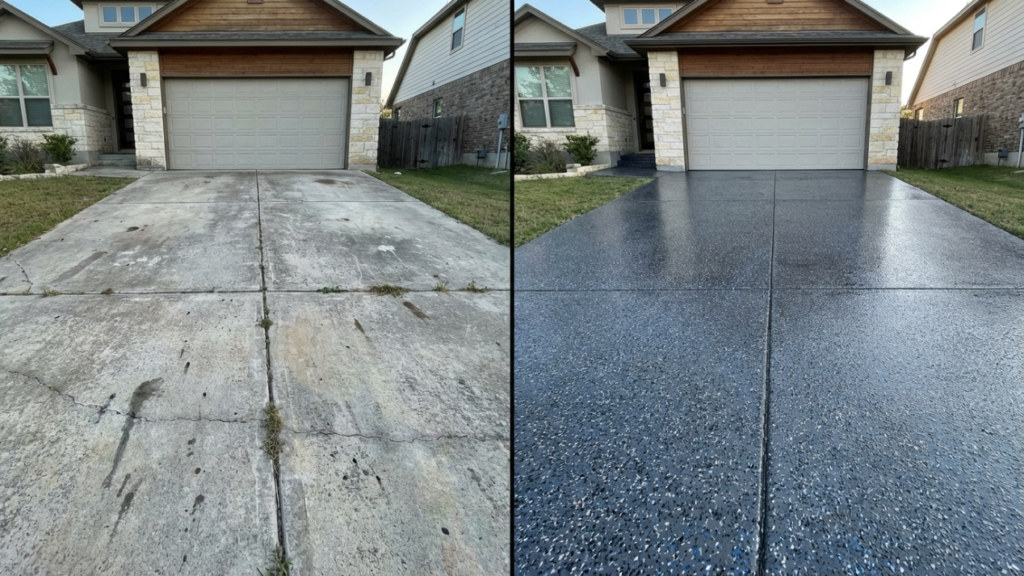
Case Study: Driveway Transformation in Barton Creek, Austin
One of our most memorable projects involved a homeowner in the Barton Creek area of Austin who had a 550-square-foot concrete driveway that had been neglected for over a decade. The surface had multiple hairline cracks, deep oil stains from a leaking vehicle, and a rough texture that collected dirt and debris.
The homeowner had received quotes for full driveway replacement ranging from $8,000 to $14,000. After consulting with Rio Epoxy Flooring, they chose a professional epoxy driveway coating system instead.
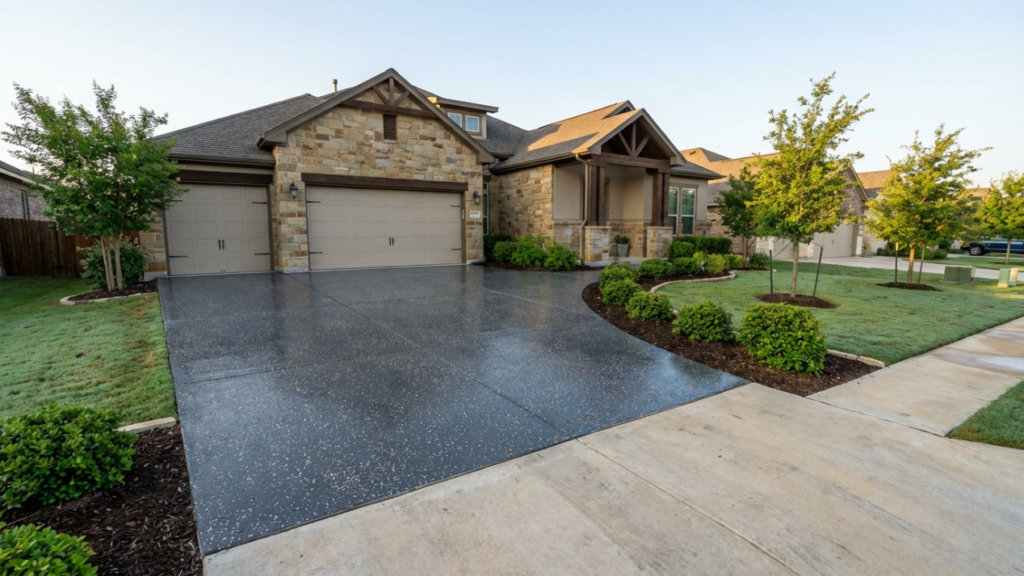
The project included full diamond grinding, crack injection repair, a two-coat 100% solids epoxy base in a custom gray tone, a full broadcast of decorative flakes, and a polyaspartic topcoat for UV and abrasion resistance. Total project cost: $4,200.
The homeowner reported that the finished driveway looked better than the original concrete ever had. Two years later, the coating remains in excellent condition with no peeling, cracking, or significant wear. The homeowner has since referred three neighbors to Rio Epoxy Flooring.
This project is a strong example of how epoxy driveway coating can deliver results that exceed full replacement — at a fraction of the cost.
Frequently Asked Questions About Epoxy Driveway Coating
How long does epoxy driveway coating last?
A professionally installed epoxy driveway coating typically lasts between 7 and 10 years with proper maintenance. Factors that affect longevity include the quality of the epoxy system used, the thoroughness of surface preparation, the local climate, and how well the surface is maintained after installation. In high-UV environments like Austin, TX, a UV-stable topcoat is essential for maximizing lifespan.
Can epoxy driveway coating be applied over cracked concrete?
Yes, in most cases. Minor to moderate cracks can be repaired with epoxy injection or polyurea filler before the coating is applied. However, structural cracks caused by significant slab movement or foundation issues should be addressed by a concrete repair specialist before any coating is applied. A professional assessment will determine whether the concrete is a suitable candidate for epoxy driveway coating.
How long does it take to install epoxy driveway coating?
Most residential epoxy driveway coating projects are completed in one to two days. Surface preparation typically takes the longest, especially if crack repair or heavy degreasing is required. The coating itself is applied in layers, with cure time between coats. The driveway is usually ready for light foot traffic within 24 hours and vehicle traffic within 72 hours.
Is epoxy driveway coating slippery when wet?
Standard epoxy driveway coating can be slippery when wet, especially with a high-gloss finish. To address this, contractors typically add anti-slip aggregate — such as aluminum oxide or silica sand — to the topcoat. This creates a textured surface that provides traction in wet conditions without significantly affecting the appearance of the coating.
What is the best time of year to apply epoxy driveway coating in Austin, TX?
Spring (March through May) and fall (September through November) are the ideal seasons for epoxy driveway coating installation in Austin. During these periods, surface temperatures are within the optimal range for epoxy application and curing. Summer installation is possible but requires careful scheduling to avoid peak heat hours, and winter installation may require temperature monitoring to ensure proper cure.
Conclusion: Is Epoxy Driveway Coating Worth It?
After reviewing the costs, benefits, installation process, and real-world results, the answer for most homeowners is a clear yes — epoxy driveway coating is worth it.
It protects your concrete from the specific challenges of the Texas climate, dramatically improves your home’s curb appeal, reduces long-term maintenance costs, and delivers a lifespan that far exceeds standard sealers. When professionally installed by an experienced team, epoxy driveway coating is one of the highest-value exterior improvements you can make to your home.
The key is choosing the right contractor — one who invests in proper surface preparation, uses commercial-grade materials, and stands behind their work.
At Rio Epoxy Flooring, we have helped hundreds of homeowners across Austin and Central Texas transform their driveways, garages, and living spaces with professional epoxy coating systems. Our team brings the expertise, equipment, and local knowledge to deliver results that last.
Ready to transform your driveway? Contact Rio Epoxy Flooring today for a free, no-obligation quote. Our team serves Austin and the surrounding area, including Round Rock, Georgetown, Leander, Lakeway, Dripping Springs, and beyond.
Rio Epoxy Flooring 823 Congress Ave., Austin, TX 78701 Phone: (737) 307-1888 Email: contact@rioepoxyflooring.
Have more questions? Visit our epoxy flooring FAQ page for answers to the most common questions we receive from homeowners across Central Texas.