

Garage Floor Paint vs Epoxy: Which Is Better for Your Garage?
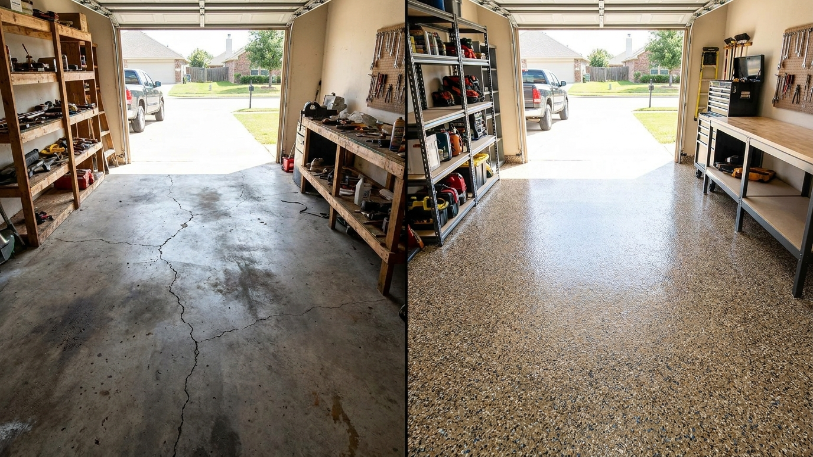
For most garages with daily vehicle traffic, tools, or possible fluid spills, a true two-part epoxy coating is the better long-term choice. It forms a thicker, harder surface that resists hot-tire pickup, stains, abrasion, and automotive chemicals far better than standard floor paint.
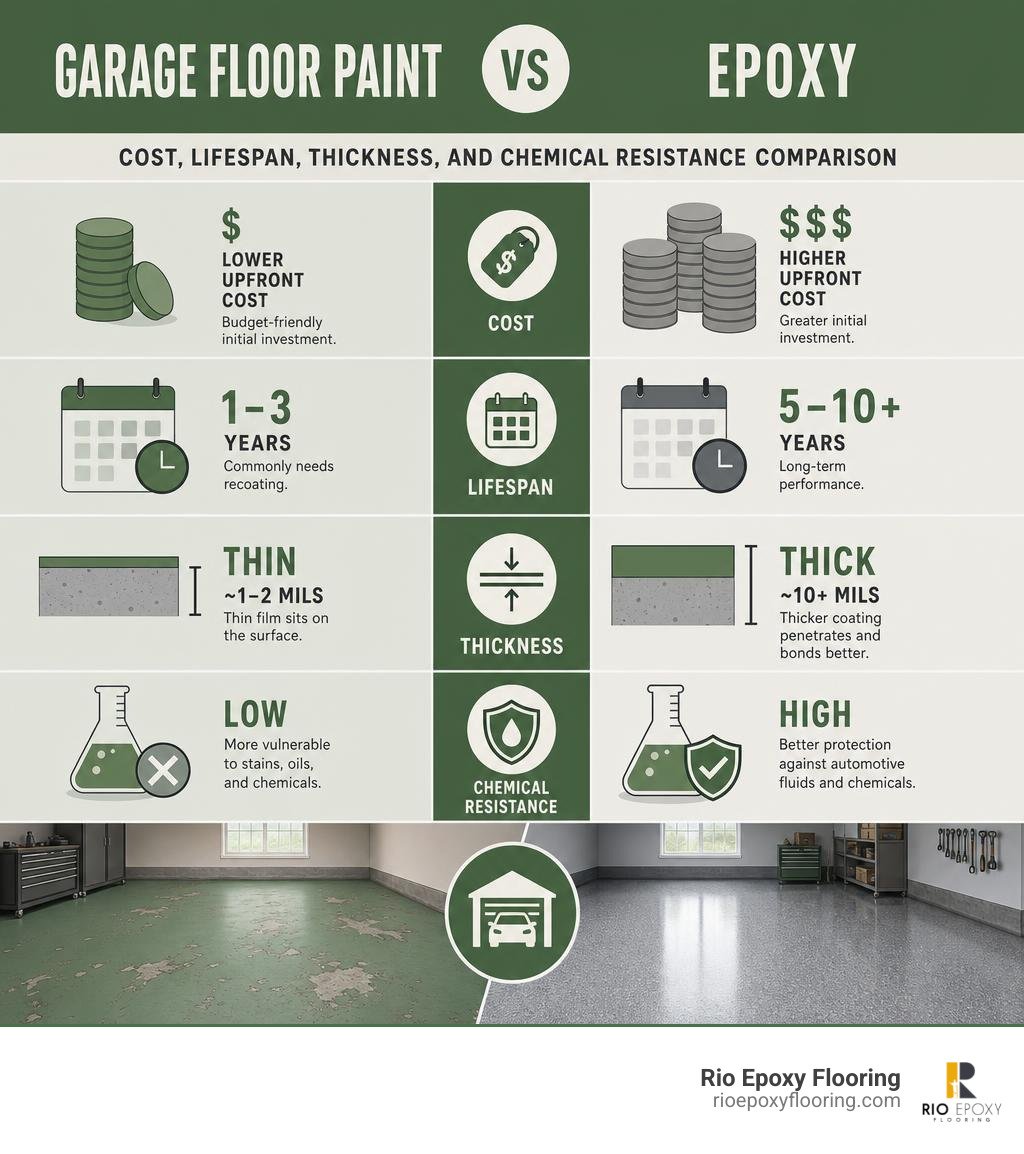
Choose garage floor paint when you need a low-cost, short-term refresh for a storage-only space, rental, or lightly used garage. Paint is simpler to roll on, but its thin finish commonly needs recoating in 1 to 3 years. A properly prepared epoxy system can last 5 to 10 years or longer.
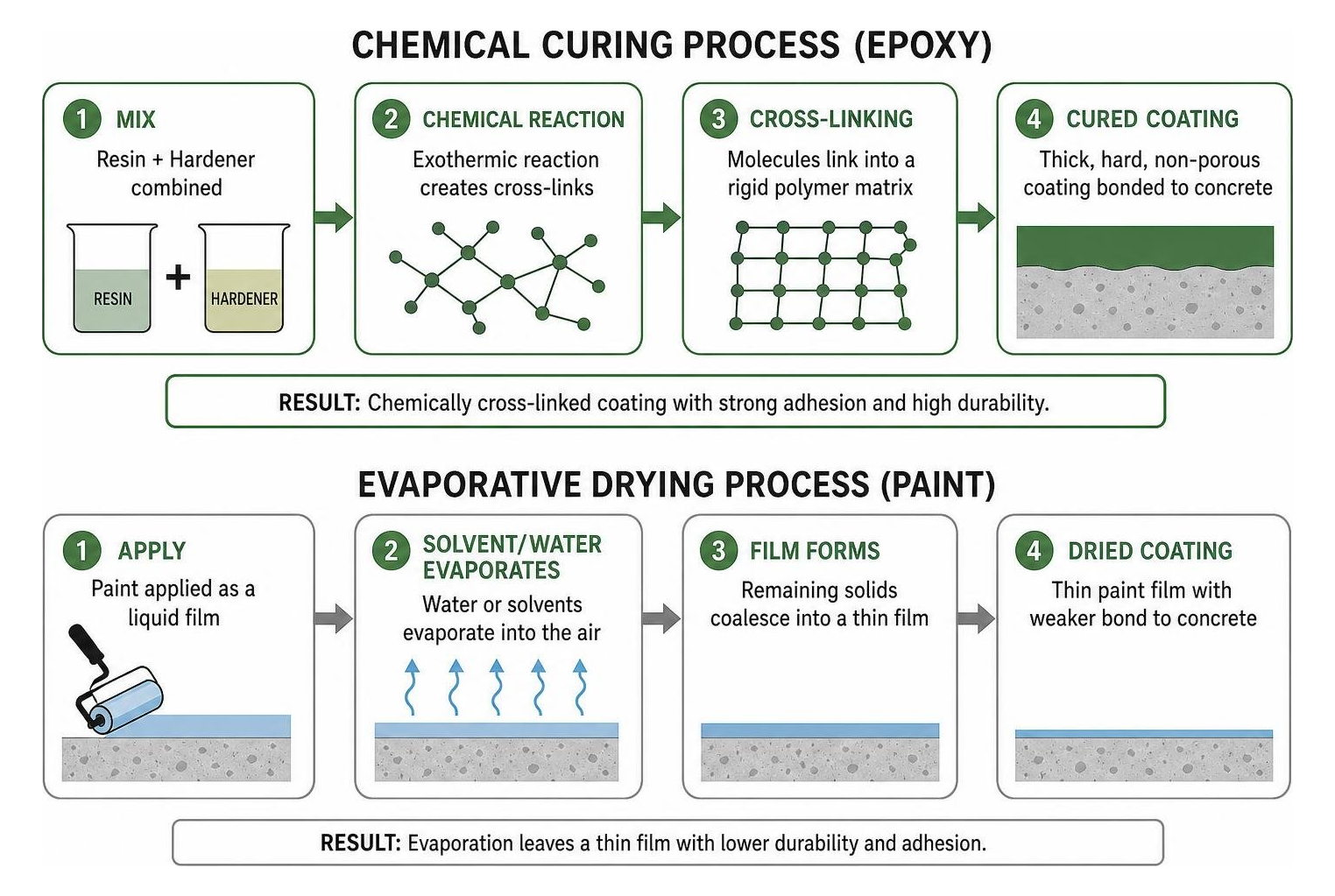
The core difference in garage floor paint vs epoxy is how each product cures. Paint mostly dries as water or solvents evaporate. Epoxy combines resin and hardener to create a chemically cross-linked coating that bonds more strongly to properly prepared concrete.
I am Roger Aguiar, an Austin-based entrepreneur and digital marketing professional with more than seven years of experience helping small and midsize businesses explain technical services clearly. In this guide to garage floor paint vs epoxy, I will help you compare upfront cost, real-life performance, installation demands, and long-term value.
Garage Floor Paint vs Epoxy: Key Differences and Chemistry
When upgrading a dull, dusty slab, homeowners often assume that paint and epoxy are interchangeable. In reality, they are fundamentally different materials. Standard concrete paint relies on simple acrylic latex or oil-based resins suspended in water or solvents. When rolled onto concrete, it cures solely through evaporative drying. Once the liquid evaporates into the air, a thin colored film remains on the surface.
In contrast, a true epoxy system is a thermosetting polymer. It relies on a two-part resin chemistry consisting of an epoxide base resin and a polyamine hardener. When mixed immediately before application, these two components undergo an exothermic reaction that produces chemical cross-linking. Instead of just drying out, the mixture transforms into a rigid, non-porous polymer matrix that mechanically locks into open concrete pores. For a deeper look at these core chemical behaviors, explore our guide on garage floor paint vs epoxy differences.
Composition and Film Thickness
The tangible difference between these two products comes down to volume solids and dry film thickness (DFT). Single-component floor paints feature high amounts of water or volatile organic compounds (VOCs) that evaporate, leaving behind a fragile layer of only 2 to 3 mils (a mil is one-thousandth of an inch).
Professional-grade 100% solids epoxy coatings contain no evaporative water or solvents. Every drop poured onto the floor stays on the floor, building a heavy-duty layer ranging from 10 to 18 mils or more. Waterborne DIY retail epoxies typically sit at around 50% solids, resulting in a modest 3 to 4 mils. Read this breakdown on understanding coating thickness and performance in 2026 to see how dry film thickness dictates long-term performance under heavy vehicle loads.
Durability and Lifespan: Garage Floor Paint vs Epoxy
Because concrete paint creates such a thin barrier, it offers minimal abrasion resistance. Regular foot traffic, dragging patio furniture, or sliding toolboxes will wear through painted layers in 1 to 3 years.
Epoxy coatings provide exceptional compressive strength and impact resistance. When weighed against standard paints, reviewing the pros and cons of epoxy flooring reveals why commercial environments rely on resin systems: professional two-part epoxy easily withstands rolling tool chests, steel jacks, and continuous vehicle traffic, lasting 10 to 15 years or longer without chipping or flaking.
Performance, Hot Tires, and Chemical Resistance
Garages are punishing environments. They endure heavy machinery, intense heat cycles, and harsh chemical drips that will quickly destroy everyday finishes.
Hot Tire Pickup and Adhesion Strength
Hot tire pickup is the single leading cause of garage floor coating failure. When you drive home on a hot afternoon, your vehicle’s tires easily reach temperatures between 140°F and 165°F. When parked on a painted surface, two destructive forces take place simultaneously:
- Thermal Softening: The intense heat from the tire softens the thin acrylic paint layer.
- Plasticizer Migration: Synthetic compounds in the tire rubber leach into the softened paint film.
As the tires cool down, they contract, gripping the paint and pulling it completely off the concrete substrate.
True epoxy resists hot tire pickup because cross-linked polymers do not remelt under heat. Furthermore, epoxy boasts 2 to 5 times the pull-off adhesion strength of standard paint, anchoring deeply into the concrete profile to prevent delamination.
Chemical and Spill Resistance
Concrete floor paint is porous and susceptible to staining. Corrosive fluids such as motor oil, brake fluid, gasoline, battery acid, and glycol-based antifreeze quickly penetrate acrylic coatings, leaving permanent blemishes and softening the binder until it peels away.
Two-part epoxy creates an impervious, non-porous shield. Solvents and oils sit harmlessly on top of the surface, allowing you to wipe up stubborn automotive fluids with a microfiber cloth or mild detergent hours after a spill without leaving a trace.
Application Process, Slab Moisture, and Failure Prevention
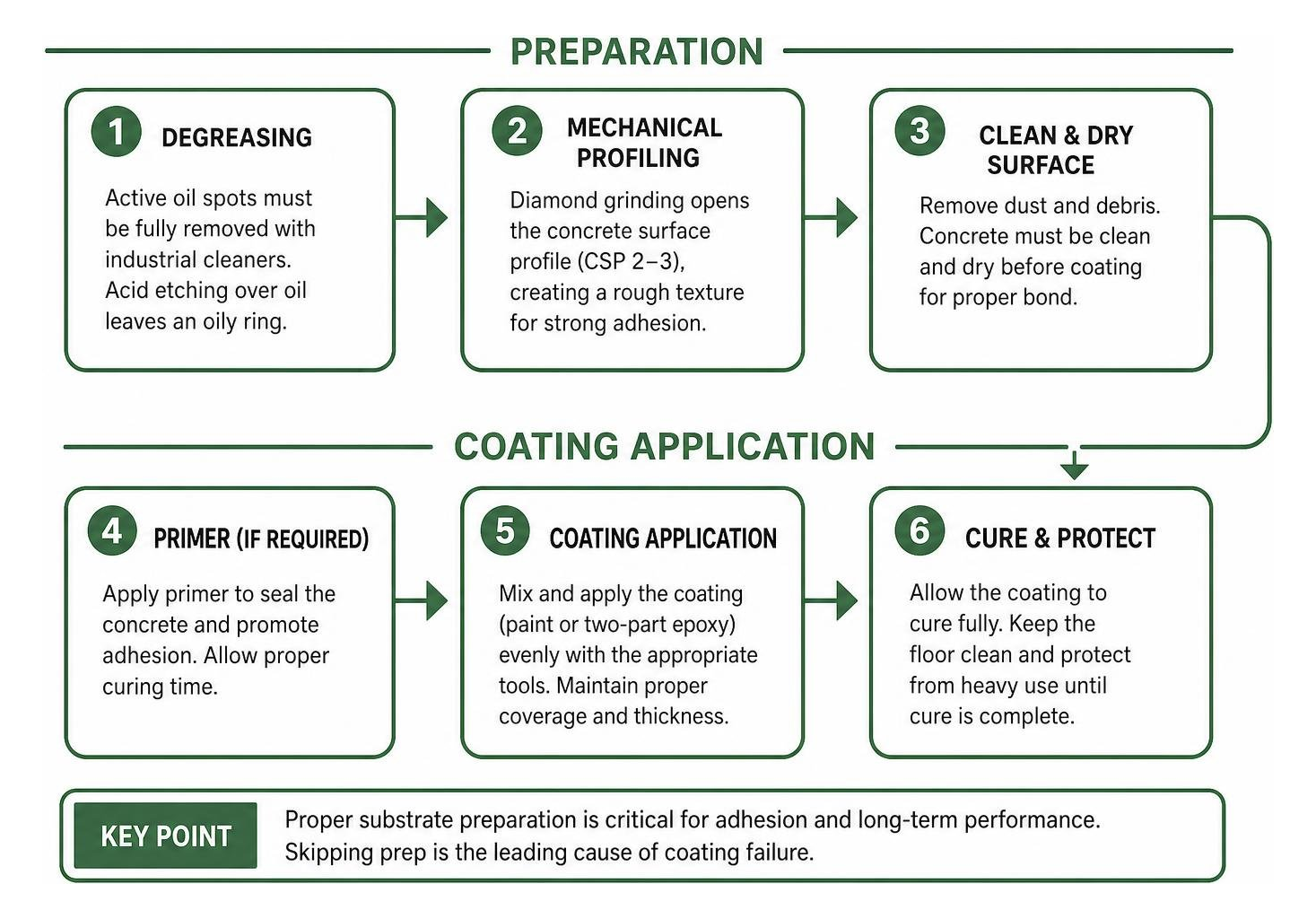
Achieving a lasting floor finish depends almost entirely on substrate preparation. Regardless of whether you choose paint or epoxy, skipping prep guarantees failure. To learn more about modern installation practices, browse through our best garage floor coatings blog.
Surface Preparation and Concrete Moisture
Epoxy cannot bond to smooth, troweled, or contaminated concrete. Proper preparation requires:
- Degreasing: Active oil spots must be fully removed with industrial cleaners. Acid etching over oil simply burns the surrounding concrete while leaving an oily ring.
- Mechanical Profiling: Diamond grinding opens the concrete surface profile (CSP 2–3), giving the epoxy a rough texture like medium-grit sandpaper to bond to.
- Moisture Testing: Trapped moisture vapor underneath a slab will force coatings to blister. Check your slab by taping a 2×2-foot plastic sheet down for 24 hours or performing an official calcium chloride test. Standard epoxies require a Moisture Vapor Emission Rate (MVER) below 3 lbs/1,000 sq ft/24h. For a thorough breakdown on prep, read this guide on evaluating DIY versus professional floor prep.
Slip Resistance and Safety Considerations
A high-gloss epoxy finish can become slick when wet with rainwater or melted snow. Fortunately, slip resistance is simple to integrate during the installation process.
Contractors broadcast vinyl decorative color flakes to full rejection across the wet epoxy basecoat or add ultra-fine aluminum oxide and polymer grit into the clear topcoat. If you are concerned about safety around wet vehicles, we explain the mechanics of surface traction in our article on whether are epoxy floors slippery.
Cost Comparison and Long-Term Value
Evaluating floor upgrades requires balancing upfront materials against long-term replacement cycles. To decide if the higher investment fits your goals, check out our breakdown on is epoxy flooring worth it.
| Feature / Expense | DIY Concrete Floor Paint | DIY Two-Part Epoxy Kit | Professional 100% Solids Epoxy |
|---|---|---|---|
| Upfront Cost (sq ft) | $1.00 – $3.00 | $2.00 – $5.00 | $4.00 – $12.00+ |
| Material Cost (500 sq ft) | $75 – $150 | $215 – $265 | Included in labor |
| Dry Film Thickness | 2 – 3 mils | 3 – 5 mils | 10 – 18+ mils |
| Lifespan | 1 – 3 Years | 3 – 7 Years | 10 – 15+ Years |
| 10-Year Cumulative Cost | $475 – $775 (5 recoats) | $450 – $600 (2 recoats) | $165 – $375 (Amortized per year) |
| Hot Tire Resistance | Poor (Prone to lifting) | Moderate | Superior |
Cost Analysis: Garage Floor Paint vs Epoxy Over 10 Years
While paint seems appealing at $30 to $50 a gallon, its short 1- to 3-year lifespan triggers a recurring cycle of scraping, etching, repainting, and clearing out your entire garage every few summers. Over a 10-year span, the constant material purchases, rental tools, and lost weekends make paint more expensive and frustrating than installing a durable epoxy system once.
When to Choose Paint vs Advanced Coatings
Concrete floor paint makes sense if:
- You rent your home and want a quick aesthetic boost.
- The garage is used purely for clean, static box storage without vehicle parking.
- You are staging a home for immediate sale on a strict budget.
For working workshops, home gyms, and daily vehicle parking, modern resinous systems like 100% solids epoxy, fast-curing polyurea, and UV-stable polyaspartic coatings deliver unmatched durability and aesthetic appeal.
Frequently Asked Questions About Garage Floor Coatings
Can I put epoxy over garage floor paint?
No, you should never apply epoxy directly over old garage floor paint. Epoxy forms a rigid, high-strength bond that exerts surface tension as it cures. Because the underlying paint is only loosely adhered to the concrete, the curing epoxy will pull the old paint right off the floor. All existing paint must be removed via mechanical diamond grinding down to bare concrete before applying epoxy.
Is 1-part epoxy paint the same as true epoxy?
No. Products labeled “1-Part Epoxy Paint” are simply water-based acrylic paints fortified with a small amount of pre-mixed epoxy resin. Because there is no separate hardener to initiate a chemical cross-linking reaction, it dries strictly by evaporation and shares the same weaknesses as standard paint, including poor hot-tire and chemical resistance.
How long does garage floor paint last compared to epoxy?
Under regular residential vehicle traffic, standard garage floor paint lasts between 1 and 3 years before peeling along tire paths. A professionally installed, multi-layer epoxy coating lasts 10 to 15 years or more with simple routine cleaning.
Conclusion
Upgrading your concrete slab turns an underutilized utility area into a clean, functional extension of your living space. While paint offers a temporary cosmetic touch-up, true epoxy delivers an armored, showroom-quality surface built to handle tools, chemicals, and hot tires for decades.
At Rio Epoxy Flooring, we specialize in high-performance residential and commercial concrete transformations. Based in Austin, Texas, our family-owned team delivers custom epoxy, polyurea, and cement-urethane systems featuring rapid 48-hour installations, low-VOC eco-friendly materials, and a lifetime warranty. Ready to transform your concrete? Explore our complete solutions for garage floor paint vs epoxy and schedule your free on-site consultation today!