

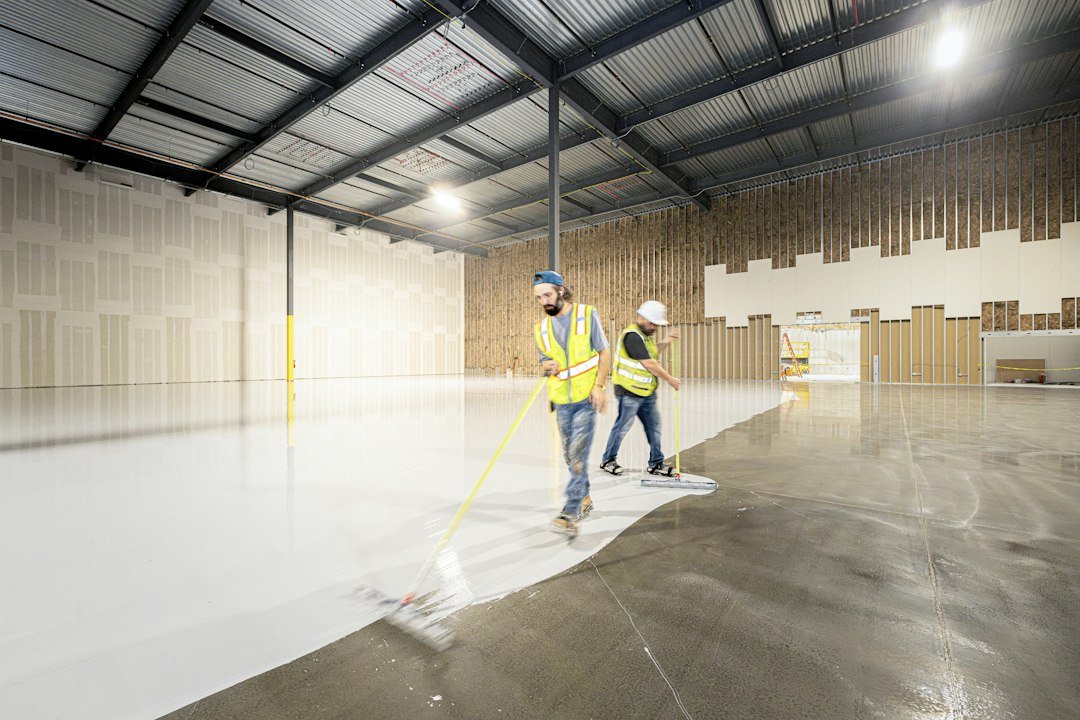
What Low VOC Epoxy and Zero VOC Resin Labels Really Tell You
Low VOC epoxy is designed to release fewer volatile organic compounds than conventional solvent-based coatings. A zero VOC or VOC-free badge can be even more limited: it may refer to the product formula, a specific testing method, or the coating after it has fully cured. It does not mean the uncured resin and hardener are automatically safe to touch or breathe.
For an Austin home or business floor, evaluate the full system, not just the badge:
- Ask for the product’s VOC content in grams per liter and its technical data sheet.
- Look for a 100% solids or solvent-free formulation when low odor and indoor air quality matter.
- Confirm cure conditions, chemical resistance, and traffic-ready time.
- Plan for ventilation, gloves, and proper surface preparation during installation.
Low-VOC and zero-VOC systems can provide the same tough, stain-resistant epoxy surface people expect in garages, shops, showrooms, and interior spaces. But they still need exact mixing, suitable temperature and humidity, and enough time to reach full cure. The details behind the label affect odor, workability, cost, and long-term results.
I am Roger Aguiar, an Austin-based digital marketing professional who helps small and mid-sized businesses explain technical services in clear, useful terms, including low VOC epoxy flooring. Next, we will separate the chemistry and standards behind these often-confusing labels.

Decoding the Chemistry: Low VOC Epoxy vs. Zero VOC Formulations
To understand what goes onto your concrete slab or timber project, we have to look past marketing buzzwords and inspect the basic chemistry. Traditional epoxy formulations often rely on volatile solvents like xylene, toluene, or mineral spirits to thin the liquid. These solvents evaporate into the surrounding atmosphere as the resin cross-links, creating the pungent odor and airborne off-gassing known as volatile organic compounds (VOCs).
Modern eco-conscious systems take a fundamentally different chemical path. Instead of evaporating solvents, high-grade formulations use 100% solids chemistry or reactive diluents. Reactive diluents bond directly into the cross-linked polymer matrix during polymerization rather than evaporating into your living room or workplace. When exploring the low VOC epoxy flooring benefits, you find that eliminating solvent evaporation produces a denser, thicker dry film without pinholes caused by escaping solvent vapors.

Advanced systems also reformulate the base resins and curing agents to eliminate other harmful chemicals. For example, modern non-toxic systems such as the ECO System (Epoxy Resin + Hardener) | EPODEX are engineered to be free of free bisphenol A (BPA) and formulated without harmful phthalate plasticizers. These solvent-free systems achieve a complete VOC-free profile once fully cross-linked and cured, protecting long-term indoor environmental quality.
Understanding Green Product Labels and Certifications
A product labeled “eco-friendly” can mean almost anything without third-party standards. When evaluating technical data sheets (TDS), look for specific regional and international compliance metrics:
- SCAQMD Rule 1113: The South Coast Air Quality Management District sets some of the strictest standards in North America. High-performance low-VOC industrial floor coatings typically must stay well below 50 to 100 g/L of VOCs to meet these benchmarks.
- LEED v4 / v4.1 Compliance: For commercial projects pursuing green building certification, coatings must satisfy strict indoor air quality (IAQ) emissions testing standards (such as CDPH Standard Method v1.2).
- GHS Classification: Inspect the safety data sheet (SDS) for Globally Harmonized System hazard symbols. Formulations that avoid GHS06 (acute toxicity) and GHS08 (health hazards) provide safer handling profiles during installation.
- True Zero-VOC Benchmarks: Products like General Purpose Epoxy – System Three Resins provide a measured 0 VOC profile by utilizing 100% reactive components, ensuring that zero solvent mass is lost during cure.
Key Differences in Durability, Viscosity, and Pot Life
Going low-VOC does not mean sacrificing structural integrity. Because solvent-based coatings lose volume as solvents evaporate, a 50% solids coating applied at 10 mils wet will dry to just 5 mils. In contrast, a 100% solids zero-VOC epoxy cures at 100% of its applied thickness.
However, removing chemical thinners increases resin viscosity (thickness), which alters working times and application mechanics.
| Feature / Metric | Traditional Solvent-Borne Epoxy | Low-VOC Epoxy (High Solids) | 100% Solids Zero-VOC Epoxy |
|---|---|---|---|
| VOC Content | 250 – 500+ g/L | < 50 – 100 g/L | 0 g/L (Solvent-Free) |
| Odor Level | Extremely strong, toxic fumes | Low to moderate | Very low / Mild amine |
| Dry Film Thickness | 40% – 60% of wet film | 80% – 90% of wet film | 100% of wet thickness |
| Viscosity (mPa·s) | 100 – 300 (Water-thin) | 400 – 800 (Syrup-like) | 600 – 1,200+ (Heavy body) |
| Pot Life @ 75°F | 45 – 90 minutes | 30 – 45 minutes | 15 – 30 minutes (Mass dependent) |
| Tensile & Compressive Strength | Moderate (Micro-porous due to vapor escape) | High (Dense matrix) | Superior structural density and bond |
Performance and Application Trade-offs Across Industries
While low-VOC and solvent-free epoxies create stronger, thicker films, their higher viscosity demands strict mechanical substrate preparation. Solvent-borne resins easily seep into dusty concrete pores on their own. Low-VOC formulations require mechanical diamond grinding or shot blasting to open the concrete capillary network, as outlined in our comprehensive epoxy flooring guide.
Furthermore, standard epoxy chemistries naturally tend toward amber yellowing when exposed to solar ultraviolet (UV) radiation. UV stabilizers help, but exterior surfaces or garage aprons exposed to direct sunlight require a specialized UV-stable polyaspartic or polyurethane topcoat over the zero-VOC base to prevent discoloration over time.
Applying Low VOC Epoxy in Flooring and Commercial Spaces
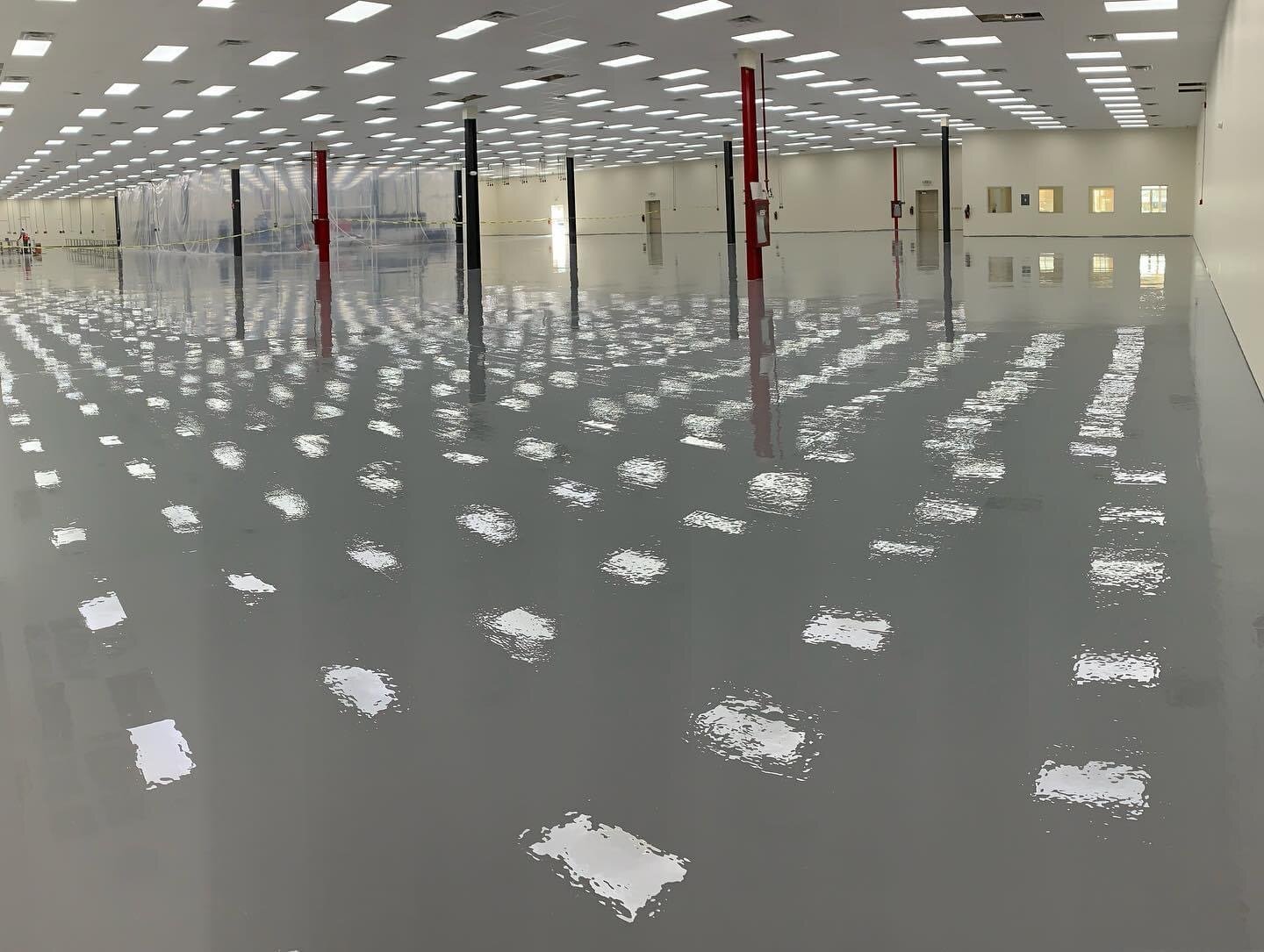
In high-traffic environments, eco-friendly epoxy systems deliver long-lasting durability without requiring building shutdowns. Using zero-VOC formulations allows schools, medical centers, grocery stores, and retail spaces to update their floors without exposing occupants to migrating chemical odors.
For industrial and retail properties, exploring epoxy flooring benefits for commercial spaces shows that high-solids systems resist heavy forklift traffic, automotive fluids, and chemical sanitizers.
In residential homes, homeowners upgrading their garages or basements rely on residential epoxy flooring solutions to ensure that toxic fumes do not seep through shared walls or HVAC ducts into bedrooms and living spaces.
Working with Low VOC Epoxy in Marine and Woodworking Projects
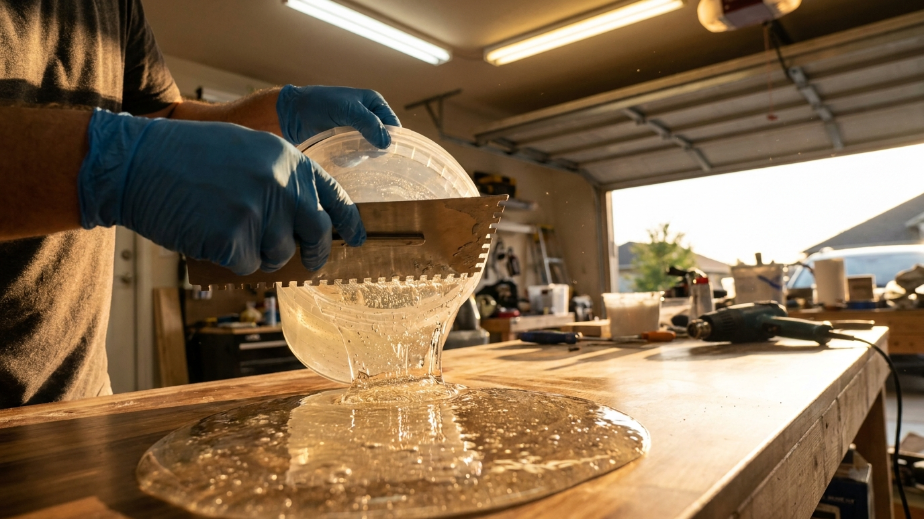
Beyond commercial flooring, low-VOC and zero-VOC resin systems are common in marine craft manufacturing, wood lamination, and artistic deep-pour casting. Modern marine systems such as 2:1 Premium Marine LV Epoxy Resin (Low Viscosity) | MAS Epoxies – Mas Epoxies use non-blushing, solvent-free chemistry to wet out fiberglass fabric, seal structural timber, and build filleting putties.
Traditional marine resins frequently used 5:1 mix ratios that produced a sticky, greasy surface layer called amine blush when exposed to atmospheric humidity. Modern low-VOC 2:1 formulations eliminate amine blush, removing the need for labor-intensive water washdowns between lamination layers while creating crystal-clear finishes for woodworking and artistic river tables.
Installation Best Practices: Preventing Blushing, Bubbles, and Cure Failures
Installing eco-friendly resin systems successfully requires strict process control. Because zero-VOC systems contain no evaporating solvents to carry away trapped moisture or air, you must follow disciplined application protocols:
- Substrate Preparation: Mechanically profile the concrete to an International Concrete Repair Institute (ICRI) Concrete Surface Profile (CSP) of 2 to 3 via diamond grinding. Vacuum all micro-dust.
- Moisture & Temperature Control: Maintain the ambient temperature between 60°F and 80°F and relative humidity below 70%. In hot climates, follow our epoxy flooring installation guide Texas to prevent rapid flash curing.
- Strict Mix Ratios: Measure resin (Part A) and hardener (Part B) accurately according to the manufacturer’s volumetric (e.g., 2:1) or weight ratio (e.g., 100:50). Never adjust the ratio to change cure speed.
- Mechanical Mixing: Blend with a spiral paddle mixer at low speed (300 RPM) for 3 minutes. Scrape the sides and bottom of the bucket to eliminate unmixed pockets, then pour into a second container and mix briefly to prevent soft spots.
- Immediate Pouring: Once mixed, empty the bucket onto the floor in ribbons immediately. Concentrated masses of zero-VOC resin generate exothermic heat, causing the material to set prematurely in the bucket.
- Post-Cure Protection: Allow 24 hours of curing before foot traffic and 7 full days before exposing the coating to automotive tires, standing water, or heavy chemical cleaners. If you are dealing with seasonal warmth, review how to maintain epoxy floors in Texas heat to protect the resin during its critical initial chemical cross-linking.
Frequently Asked Questions About Eco-Friendly Epoxy Systems
Is zero VOC epoxy completely non-toxic during application?
No. While zero-VOC epoxies eliminate solvent fumes, the uncured hardener contains reactive amine compounds. Direct skin contact can cause allergic sensitization, dermatitis, or respiratory irritation if aerosolized. Always wear nitrile gloves, protective eyewear, long sleeves, and ensure adequate fresh air exchange during installation. Once the resin cross-links and reaches 100% cure, it forms an inert, non-toxic solid polymer. For more details on safe application practices, visit our epoxy flooring FAQs.
Why do low-VOC and solvent-free epoxies cost more than standard systems?
Solvent-borne epoxies are cheaper to manufacture because inexpensive petroleum solvents make up half the volume in the can. In contrast, 100% solids low-VOC systems consist entirely of refined epoxy pre-polymers, high-grade cycloaliphatic amines, and advanced reactive diluents. Although the upfront material cost is higher, evaluating the pros and cons of epoxy flooring shows that high-solids systems provide superior long-term value: you get twice the cured film thickness per coat and a significantly longer service life.
How does temperature impact the cure time of low-VOC resin?
Epoxy cures via an exothermic chemical reaction that is sensitive to ambient and substrate temperatures. For every 18°F (10°C) drop in temperature, the curing time roughly doubles, and curing can stall below 50°F unless a specialized cold-weather fast hardener is used. Conversely, temperatures above 85°F cut working pot life in half. Always match your hardener speed (Fast, Medium, Slow) to your project’s operating environment.
Conclusion
Low-VOC and zero-VOC epoxies have moved past early industry compromises. Today’s high-solids, solvent-free formulations outperform old-school solvent-based coatings in tensile strength, impact resistance, and long-term durability—all while protecting indoor air quality.
Achieving a durable finish requires precise concrete preparation, exact mixing ratios, and experienced installation crews. At Rio Epoxy Flooring, our family-owned Austin team installs premium, low-VOC, UV-resistant floor coatings with rapid 48-hour turnarounds backed by a lifetime warranty. Contact Rio Epoxy Flooring today for a professional low-VOC floor coating installation that protects your space and stands the test of time.