

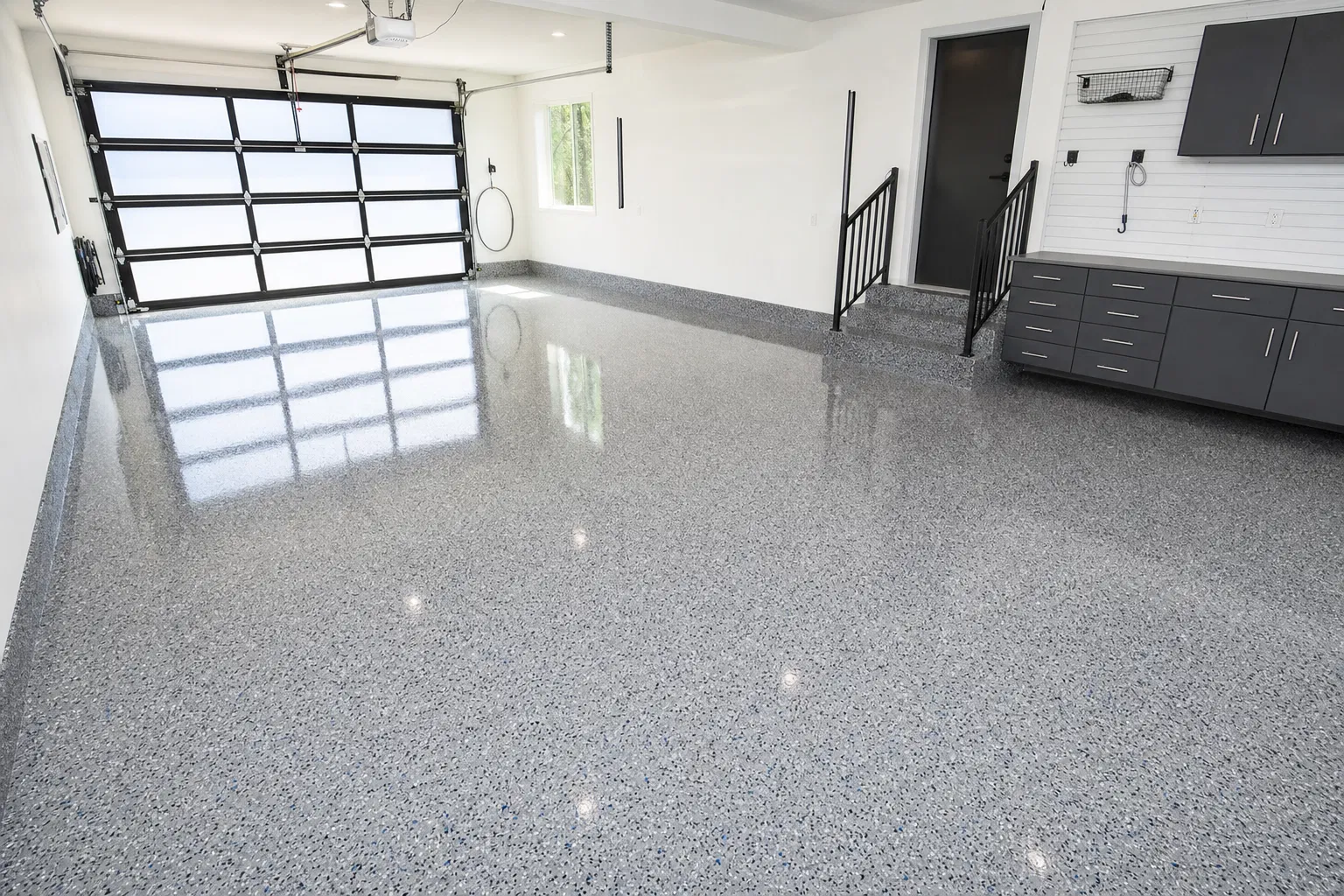
Why the Best Non Slip Garage Floor Epoxy Uses More Than a Rough Surface
The best non slip garage floor epoxy is usually a high-build, two-part 100% solids epoxy system with a textured broadcast layer or traction additive and a durable clear topcoat. This combination gives a garage better grip when shoes, tires, water, oil, or road salt make the floor slick – without creating an overly sharp surface for bare feet or pets.
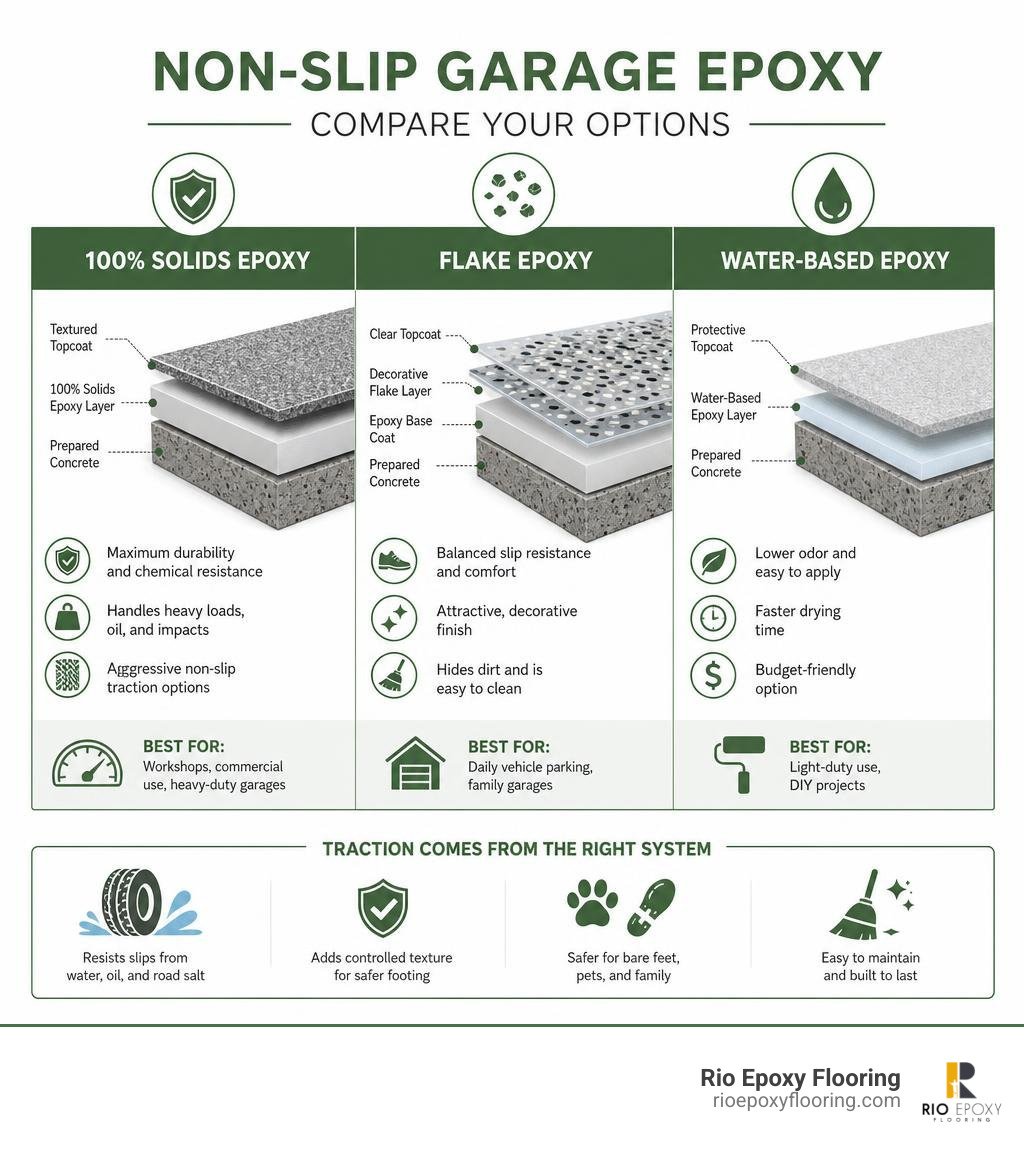
Standard epoxy can look smooth and glossy, but that finish may become slippery when wet. A skid-resistant system adds controlled texture through polymer flakes, fine silica, or another non-abrasive aggregate. The right choice depends on how the garage is used:
- Daily vehicle parking: Full-flake epoxy with a textured clear coat offers strong traction and a premium look.
- Workshop or commercial use: 100% solids epoxy with a more aggressive grip additive handles heavier wear and fluid exposure.
- Light-duty DIY projects: Water-based kits cost less and are easier to apply, but they form a thinner coating and typically do not last as long as professional-grade systems.
For Austin garages, surface prep matters as much as the coating itself. Concrete must be clean, dry, mechanically profiled, and free of oil or failing paint before epoxy goes down. Proper preparation helps the coating resist hot-tire pickup, automotive fluids, stains, and deicing salt while delivering a finish that is easier to maintain than bare concrete. Learn more about whether epoxy floors are slippery before choosing a system.
I am Roger Aguiar, an Austin-based digital marketing professional who helps service businesses explain complex home-improvement decisions in clear, useful terms. In this guide to the best non slip garage floor epoxy, I will help you compare durability, traction, coating type, and long-term value before you invest.
Choosing the Best Non Slip Garage Floor Epoxy Systems
When you evaluate different floor coating options, resin chemistry and dry film thickness dictate how well a surface holds up against heavy truck tires, oil leaks, and daily foot traffic. Standard epoxy dries into a solid, non-porous film, but without the right aggregate or texture profile, moisture and automotive fluids create a barrier that causes hydroplaning under shoes and tires.
Non-slip epoxy systems solve this by suspending an engineered grip medium inside or between resin layers. Selecting the ideal system means balancing chemical resistance, viscosity, curing mechanics, and tactile feel.
| Feature / Metric | Water-Based Epoxy Kits | 100% Solids Two-Part Epoxy | Multi-Layer Full Flake System |
|---|---|---|---|
| Resin Solids Content | 40% – 60% (Thinned with water) | 100% pure resin & hardener | 100% Solids Base + Flake + Polyaspartic/Urethane |
| Dry Film Thickness | 2 – 4 mils | 10 – 16+ mils | 25 – 35+ mils |
| Expected Lifespan | 3 – 5 years | 10 – 20+ years | 15 – 20+ years (Lifetime potential) |
| Slip-Resistance Mechanism | Mixed-in fine silica grit | Aluminum oxide or silica broadcast | Full-coverage vinyl flake matrix |
| Hot-Tire Pickup Resistance | Moderate to Low (prone to peeling) | High | Maximum |
| Chemical & Salt Resistance | Light resistance (cleansers, water) | High (oils, fuels, deicers) | Extreme (commercial-grade immunity) |
| Barefoot & Pet Friendly | Rough if over-sanded | Customizable texture | Soft-tread orange peel texture |
100% Solids Formulations: The Best Non Slip Garage Floor Epoxy for Durability
Industrial-grade 100% solids epoxy contains no water or evaporating solvent carriers. What is rolled onto the concrete stays on the concrete. When applied, it undergoes a thermosetting chemical reaction that cures into an exceptionally thick, cross-linked barrier.
Because 100% solids systems provide high resin density, they easily lock heavy non-slip aggregates—such as aluminum oxide or graded quartz—into the matrix without letting them sink uselessly to the bottom. Furthermore, opting for industrial formulas allows you to enjoy significant low VOC epoxy flooring benefits, keeping indoor air clean while delivering a resilient 10- to 20-year lifespan that easily supports heavy SUVs, floor jacks, and toolboxes.
Broadcast Flake Systems: The Best Non Slip Garage Floor Epoxy for Maximum Grip

Broadcast flake systems represent the gold standard in residential garage design. Instead of mixing sand directly into liquid resin—which can produce uneven clumps—we apply a pigmented 100% solids base coat and immediately broadcast decorative vinyl chips to rejection (meaning 100% total surface coverage).
Once the excess flakes are recovered and gently scraped, the overlapping vinyl edges establish a consistent, multi-directional texture. Reading through our flake epoxy flooring blog demonstrates how this method provides superior slip mitigation while concealing underlying concrete flaws, surface dust, and track-in debris beneath a beautiful granite-like visual aesthetic.
Water-Based DIY Kits vs Professional Skid-Resistant Coatings
Big-box store DIY kits rely on water-borne chemistry to lower costs and lengthen pot life for amateur painters. However, as the water evaporates during drying, the applied film shrinks dramatically, leaving behind a fragile layer only 2 to 3 mils thick (roughly the thickness of a sheet of standard copy paper).
When subjected to warm vehicle tires, water-based coatings frequently experience hot-tire pickup, where cooling tire tread contracts and pulls the thin paint straight off the substrate. Understanding the core garage floor paint vs epoxy differences helps homeowners avoid costly strip-and-recoat cycles caused by early adhesion failure.
How to Properly Prepare Concrete and Apply Non-Slip Epoxy
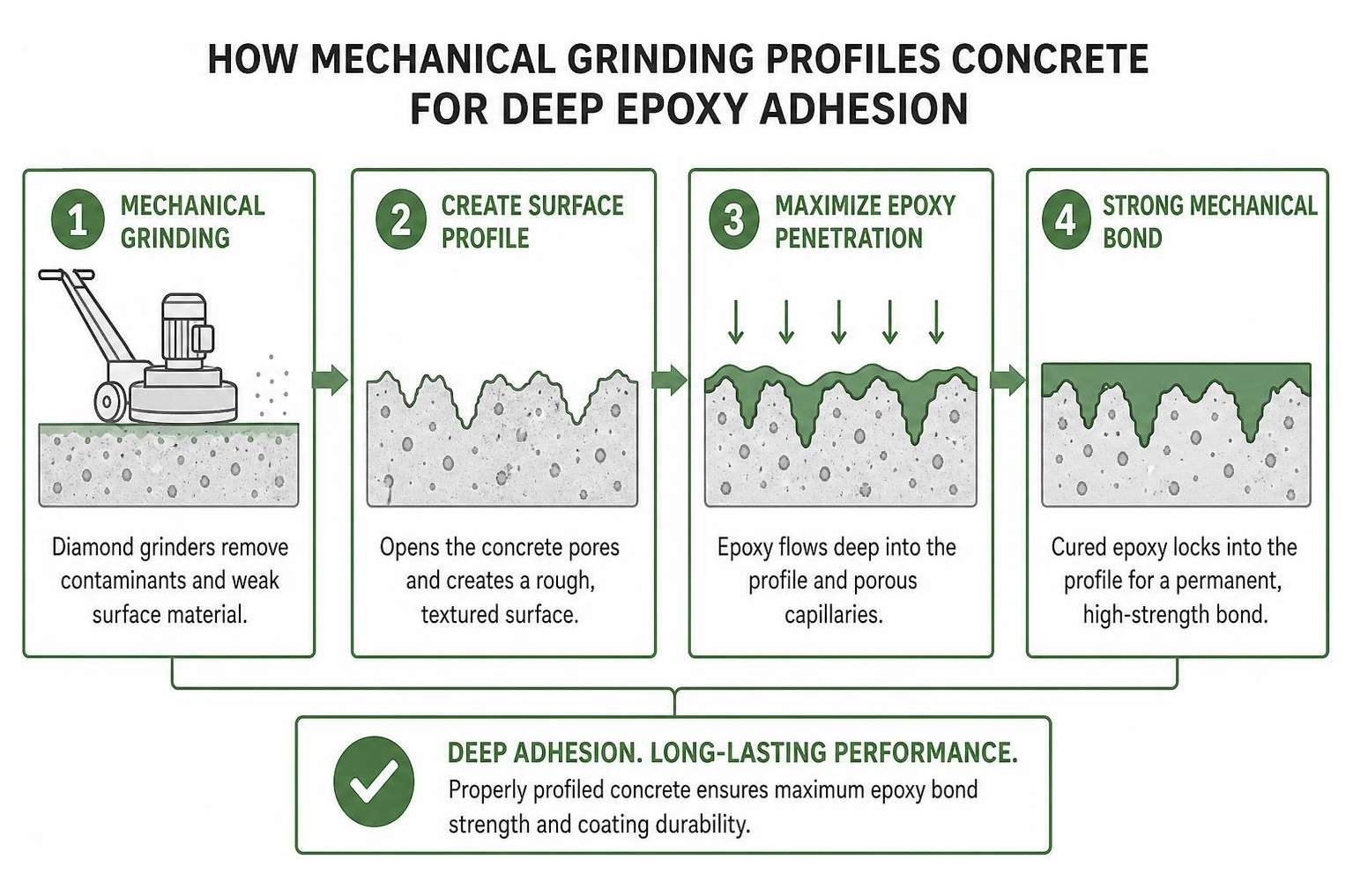
Achieving a lasting bond requires meticulous preparation. In fact, over 90% of coating failures happen because of hasty concrete prep rather than defective chemicals. Epoxy needs open, porous capillaries to physically bite into the concrete slab.
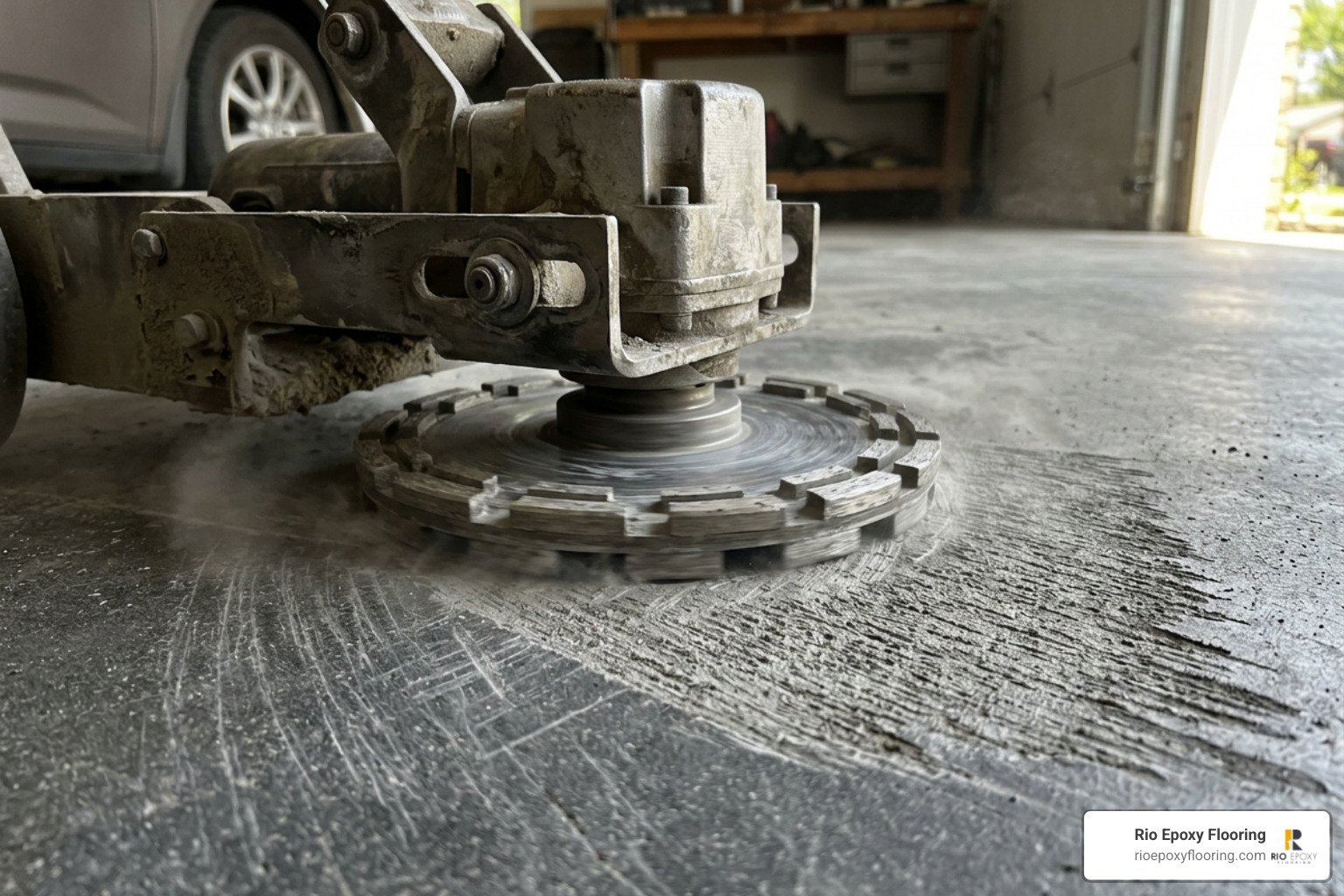
To guarantee that your coating never lifts, cracks, or bubbles, professional installers adhere to a rigorous multi-step installation workflow:
- Moisture Vapor & Oil Testing: Concrete slabs are checked with moisture meters and plastic sheet tests to ensure rising hydrostatic pressure will not blow off the coating.
- Mechanical Profiling: Heavy planetary diamond grinders remove old sealers, open up closed concrete pores, and establish a surface profile (CSP-2 or CSP-3) resembling medium-grit sandpaper.
- Substrate Decontamination & Vacuuming: Industrial HEPA extractors remove all microscopic dust particulates, and oil spots are treated with emulsifiers.
- Deep Crack & Spall Repair: Polyurea and structural epoxy gels fill control joints, hairline cracks, and pitted divots to level the floor completely.
- Prime & Base Coat Application: A moisture-tolerant primer or 100% solids base resin is rolled evenly across the entire slab.
- Non-Slip Media Integration: Polymer flakes or traction additives are evenly scattered to achieve the desired slip-resistance profile.
- Protective Clear Topcoat: A non-yellowing, chemical-resistant polyaspartic or urethane topcoat seals the texture permanently.
Reviewing an in-depth epoxy flooring installation guide Texas provides additional clarity on regional temperature and humidity considerations.
Surface Etching, Crack Repair, and Moisture Mitigation
Acid etching with muriatic acid is often suggested in DIY kits, but it can leave concrete inconsistent, overly wet, and contaminated with residual salts. Diamond grinding remains the only foolproof method to profile hard-troweled concrete mechanically.
Following grinding, we inject structural repair polymers into any cracks or settling joints. If moisture testing reveals high hydrostatic vapor pressure rising through the ground, a specialized moisture vapor barrier epoxy is applied first to halt future bubbling and delamination.
Mixing, Texturing Additives, and Application Techniques
When adding grit to topcoats, material selection is critical:
- Polymer Micronized Beads: Spherical beads (such as polypropylene) create a smooth, comfortable orange-peel grip that is gentle on bare feet.
- Aluminum Oxide: An extremely hard, angular mineral additive designed for commercial shops where extreme traction against standing grease or heavy oils is necessary.
- Silica Sand: Inexpensive and coarse, though it can create sharp points if not locked down under an adequate topcoat.
Once two-part resins are mechanically mixed with a spiral paddle, applicators must work swiftly within the product’s pot life (typically 20 to 45 minutes). The resin is laid out using perpendicular cross-rolling techniques with an industrial 3/8″ nap roller to prevent ridges and ensure an even, uniform grip across the entire garage.
Long-Term Maintenance, Chemical Resistance, and Safety Profiles
High-grade non-slip garage coatings provide complete non-porous protection against road deicing salts, brake fluid, battery acid, and leaking engine oil. Because automotive fluids cannot penetrate the sealed resin matrix, they wipe away without staining the underlying concrete slab.
Routine maintenance is straightforward when following a dedicated maintaining epoxy floors guide:
- Dust Clearing: Use a soft-bristle push broom or microfiber mop to sweep away loose road grit.
- Wet Cleaning: Mop periodically with warm water and a pH-neutral cleaner. Avoid harsh citrus degreasers, bleach, or alcohol-based solvents that can dull the clear topcoat over time.
- Fluid Removal: Use a soft, double-foam rubber squeegee to guide pooled water, snow runoff, or automotive fluids straight out toward the garage door.
Barefoot and Pet Safety Considerations
A common worry among homeowners is whether a skid-resistant floor will feel like abrasive 60-grit sandpaper against sensitive paws or bare skin. With full-flake vinyl broadcast systems and micronized polymer additive clear coats, the resulting surface features rounded, gentle micro-textures rather than jagged mineral points.
As explored in our epoxy flooring for pet owners blog, this micro-profile offers enough physical bite to keep dogs from sliding on wet paws while remaining soft, comfortable, and completely scratch-resistant during play.
Frequently Asked Questions About Non-Slip Garage Floors
How long does a non-slip epoxy coating last in a high-traffic garage?
When installed with a high-build, 100% solids epoxy base and protected by an industrial urethane or polyaspartic topcoat, a non-slip garage floor lasts between 10 and 20+ years. The traction texture within a full-flake or polymer-grit matrix does not wear away because it is bound directly into the cross-linked protective layers. In contrast, entry-level, water-based DIY paints routinely begin flaking and losing their grip within 2 to 4 years.
Does adding anti-slip grit make the garage floor hard to clean?
Not if the right grip medium and topcoat thickness are used. Traditional string mops can snag on floors coated with coarse, sharp silica sand. However, professional installations use rounded micronized beads or full-broadcast vinyl flakes sealed with a smooth topcoat. This produces an “orange peel” finish that prevents hydroplaning while allowing foam squeegees, flat microfiber mops, and soft push brooms to glide across the floor smoothly.
Can skid-resistant epoxy withstand motor oil, automotive fluids, and road salts?
Yes. Commercial-grade epoxy and polyaspartic topcoats are non-porous and chemically inert once fully cured. They create an impermeable shield that prevents aggressive solvents, hot synthetic engine oils, brake fluid, gasoline, and winter road salts from penetrating or discoloring the concrete. Fluid spills stay on the surface, where they can be wiped up without leaving stains.
Conclusion: Upgrading Your Garage with Professional Non-Slip Protection
A slick, bare concrete floor poses a constant safety hazard for your family and vehicles, especially during rainy seasons or when working with oils and tools. Upgrading your floor with a high-performance, skid-resistant coating delivers peace of mind, simplifies weekend cleaning, and adds lasting value to your home.
At Rio Epoxy Flooring, we help Texas homeowners eliminate slippery surfaces for good. We specialize in custom epoxy, polyurea, and cement-urethane floor systems featuring rapid 48-hour turnarounds, low-VOC eco-friendly materials, UV-stable topcoats, and lifetime warranty backing.
Explore our best garage floor coatings blog to learn more about our materials, or reach out to our team today to design a garage floor that delivers beauty, traction, and long-term durability.