

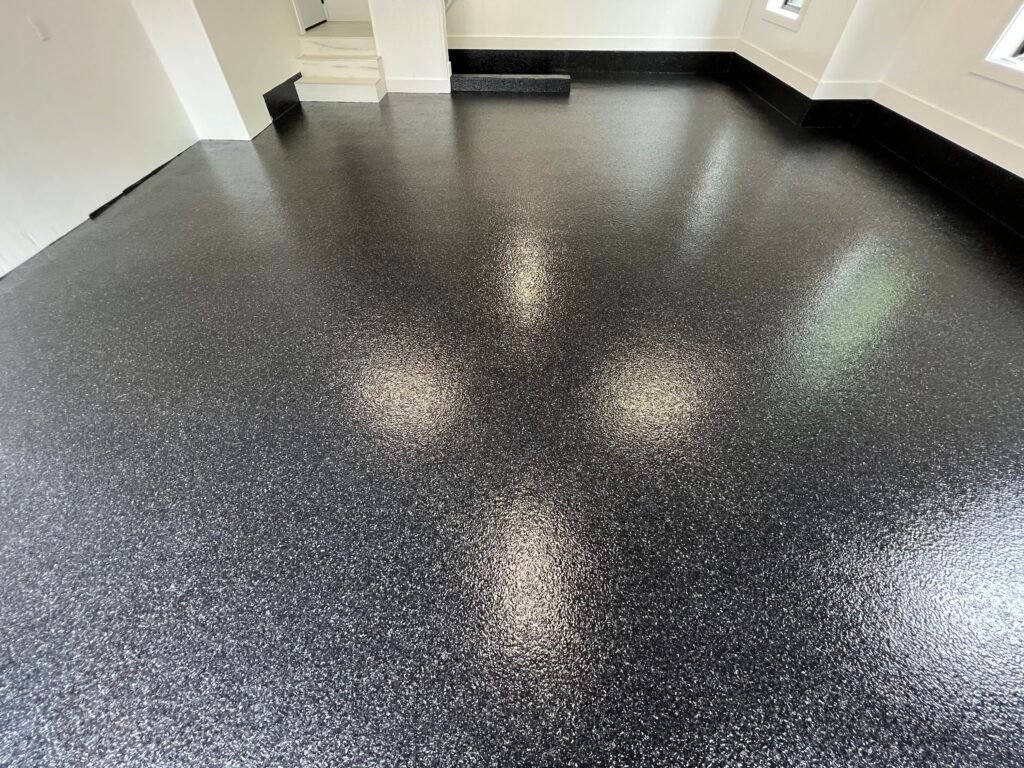
Understanding Non-Epoxy Garage Floor Finishes vs. Traditional Epoxy
The best non-epoxy garage floor finishes include 100% water-based acrylic paints, self-priming 1-part epoxy-acrylic hybrids, and advanced polycuramine systems. These alternatives offer budget-friendly, low-odor, and easy-to-apply solutions for transforming concrete slabs without the complex mixing or strict pot life of two-part resins.
When planning a garage makeover, understanding the core differences between garage floor paint vs epoxy is the first step toward getting lasting results. Traditional epoxy is a thermosetting resin created by mixing a resin base with a polyamine hardener. When these two parts combine, an exothermic chemical reaction creates a thick, cross-linked solid plastic coating that physically bonds with the concrete.
In contrast, non-epoxy floor finishes are single-component products that dry primarily through solvent or water evaporation. They form a much thinner topical film—often between 1 and 2 mils per coat—compared to professional resin systems that build up to 10 to 30 mils or more. While traditional epoxy delivers maximum chemical and impact resistance, standard paint-and-primer formulas are dramatically cheaper, simpler to brush or roll onto a slab, and straightforward to maintain.
Acrylic, Latex, and 1-Part Hybrid Paint Formulations
Non-epoxy coatings fall into several chemical categories, each tailored to different project needs:
- Water-Based Acrylic Concrete Paint: These products use 100% acrylic emulsion binders. They dry quickly, clean up with soap and water, release minimal odors, and provide excellent UV stability that prevents outdoor yellowing.
- Concrete Latex Paint: Often modified with acrylic resins, latex paints offer budget-friendly coverage. They resist dust and light moisture but offer lower durability under heavy mechanical loads.
- 1-Part Epoxy Hybrid Paints: Despite the name, products like BEHR PREMIUM Interior & Exterior Concrete & Garage Self-Priming 1-Part Epoxy Coating are actually pre-mixed acrylic formulations modified with epoxy esters. They require no catalyst mixing and behave like single-component paints while offering improved scuff resistance.
- Solvent-Based Alkyd Paints: These provide strong adhesion but contain higher levels of volatile organic compounds (VOCs) and require mineral spirits for cleanup.
When looking closely at garage floor paint vs epoxy differences, single-component paints trade ultimate tensile strength for convenience, lower application risk, and straightforward maintenance touch-ups.
Key Durability and Adhesion Differences
The lifespan of your garage floor depends directly on how the coating bonds to the concrete slab beneath it. Non-epoxy paints dry on top of the surface profile, relying on surface roughness for mechanical grip. True two-part epoxies and polyureas penetrate deep into open concrete pores, anchoring directly into the matrix.
| Feature / Metric | Water-Based Acrylic Paint | 1-Part Hybrid Paint | Traditional 2-Part Epoxy | Polycuramine Coating |
|---|---|---|---|---|
| Primary Binder | 100% Acrylic Polymer | Epoxy-Modified Acrylic | Epoxy Resin + Hardener | Polyurea / Polyurethane Hybrid |
| Dry Film Thickness | 1.0 – 2.0 mils | 1.5 – 2.5 mils | 10.0 – 20.0+ mils | 8.0 – 15.0 mils |
| Adhesion Mechanism | Surface mechanical | Surface mechanical | Deep pore penetration | Deep chemical cross-link |
| Hot Tire Resistance | Moderate | Moderate to Good | Excellent | Superior |
| Chemical Resistance | Basic household fluids | Motor oil, coolant | Industrial solvents, gas | Extreme chemical proofing |
| Moisture Tolerance | Low to Moderate | Low to Moderate | High (with vapor barrier) | High |
| Expected DIY Life | 1 – 3 Years | 2 – 4 Years | 5 – 10+ Years | 5 – 10+ Years |
Non-epoxy paints remain vulnerable to moisture vapor transmission. If ground moisture pushes upward through an unsealed slab, topical paints are prone to bubbling and flaking.
Top Categories for the Best Non Epoxy Garage Floor Paint
Finding the right finish means balancing ease of application against how you plan to use your garage. A home gym or art studio has very different performance requirements than a busy workshop housing two heavy vehicles.
Water-Based Acrylic and Latex Coatings
For eco-conscious DIYers and homes where living spaces sit directly above or beside the garage, water-based acrylic concrete paint is the most approachable option. Modern formulations produce less than 50 g/L of VOCs, keeping indoor odors to an absolute minimum.
Products such as Kompozit STRONG Concrete Paint Interior/Exterior rely on 100% acrylic resins that resist water pooling, chalking, and UV discoloration. These paints dry to the touch in as little as 30 to 60 minutes and allow recoating within 2 to 4 hours. They leave an attractive satin sheen that brightens dark spaces while keeping concrete dust locked down.
Evaluating the Best Non Epoxy Garage Floor Paint Products and Formulas
When shopping for garage coatings, evaluate coverage rates, built-in primers, and sheen options:
- Self-Priming 1-Part Formulations: Products like BEHR PREMIUM 5 gal. Pools of Blue Self-Priming 1-Part Epoxy Satin Floor Paint eliminate separate primer coats on sound concrete. Typical coverage ranges between 300 and 500 sq. ft. per gallon depending on slab porosity.
- Decorative Metallic Acrylics: Products such as the water-based Rust-Oleum Metallic Garage Floor Paint + Primer yield 125 to 250 sq. ft. per gallon while providing a subtle, shimmering topcoat that elevates ordinary concrete beyond flat gray.
- Cost Tiers: Acrylic paints average between $35 and $65 per gallon ($0.15 to $0.30 per sq. ft. per coat), making them one of the most budget-friendly ways to transform a garage floor.
Advanced Polycuramine and Fast-Cure Hybrids
If you want an alternative to standard epoxy but require industrial-grade performance, polycuramine chemistry represents the highest tier of DIY coatings. Combining polyurea, polyurethane, and epoxy technology, polycuramine cures up to 20 times harder than ordinary two-part retail epoxy.
Packaged in burst-pouch packaging that mixes internally, polycuramine creates a high-gloss, showroom-grade finish. It delivers fast return-to-service times: foot traffic is often permitted after 8 to 10 hours, and vehicles can drive onto the surface in just 24 to 36 hours.
Surface Preparation and Application for Non-Epoxy Coatings

A floor coating is only as durable as the surface underneath it. Most paint failures—especially peeling under vehicle weight—are caused by poor prep work rather than product defects.
Concrete Cleaning, Degreasing, and Acid Etching
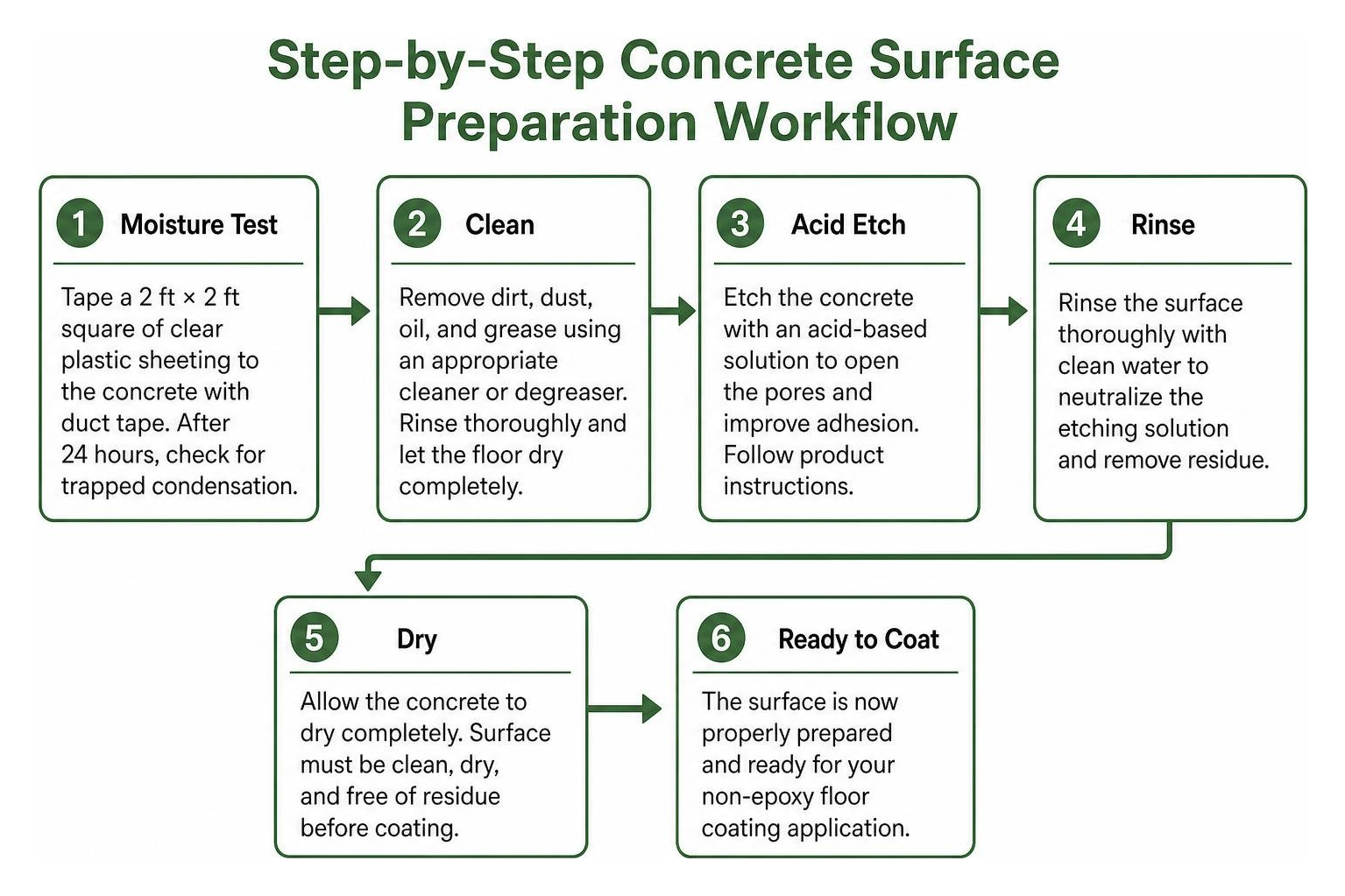
Before opening a can of paint, complete these surface preparation steps:
- Moisture Testing: Tape a 2-foot by 2-foot square of clear plastic sheeting to the bare concrete with duct tape. After 24 hours, check for trapped condensation underneath. If the concrete is dark or droplets form, the floor has high moisture vapor transmission that can cause water-based paint to delaminate.
- Heavy Degreasing: Scrub oil and grease spots using a concentrated citrus or alkaline degreaser. Rinse thoroughly; leftover chemical residues prevent paint from adhering.
- Acid Etching: Concrete must feel like medium-grit sandpaper (CSP 1–2 profile) for paint to grab hold. Apply a diluted muriatic acid or phosphoric acid etching solution across the damp slab, scrub with a stiff-bristle broom until foaming stops, and rinse thoroughly. Let the slab dry for at least 24 to 48 hours.
- Seasonal Considerations: If your floor suffered winter road salt damage or freeze-thaw spalling, review how to prepare garage floor for epoxy after winter to repair cracks and pit marks before painting.
How to Apply the Best Non Epoxy Garage Floor Paint for Lasting Results
Applying non-epoxy paint requires simple tools: a synthetic trim brush, a 3/8-inch nap lint-free roller, an extension pole, and a paint tray.
Curing Times, Maintenance, and Multi-Surface Versatility

Drying Windows, Hot Tire Pickup, and Chemical Resistance
Non-epoxy coatings dry quickly to the touch, but they require adequate curing time to develop chemical resistance.
- Dry-to-Touch: 30 to 60 minutes for fast-cure acrylics; 1 to 2 hours for 1-part hybrids.
- Light Foot Traffic: 8 to 24 hours.
- Vehicle Traffic: 48 to 72 hours for high-performance acrylics like Kompozit STRONG, and 5 to 7 full days for 1-part hybrid epoxy-acrylics.
Hot tire pickup happens when hot tires from driving park on freshly painted concrete. As the tires cool, the synthetic rubber contracts, gripping the floor. If the paint resin has not fully cross-linked or cured, this suction pulls the paint film straight off the concrete.
To help protect your floor in warmer climates, keep these maintenance practices in mind: check our advice on how to maintain epoxy floors in heat to prevent tire plasticizers from softening delicate surface binders.
Expanding to Patios, Driveways, and Basements
Because acrylic paints are naturally UV-stable and breathe better than dense epoxies, they perform well across other home concrete surfaces:
- Exterior Patios and Walkways: Acrylic finishes resist direct sunlight and will not yellow or amber over time.
- Basement Slabs: Low-VOC water-based formulas allow you to coat interior basement floors safely without strong solvent odors drifting into upper floors.
- Driveways and Pool Decks: Adding an anti-skid aggregate creates slip-resistant, weather-durable outdoor surfaces around pools and entryways.
Frequently Asked Questions About Non-Epoxy Garage Floor Finishes
How long does non-epoxy garage floor paint take to cure before driving?
Most water-based 100% acrylic paints require 48 to 72 hours before parking a car. However, 1-part epoxy-acrylic hybrid paints take longer to cure fully, requiring a full 5 to 7 days before supporting vehicle traffic safely without risk of hot tire peeling.
Is non-epoxy garage paint resistant to hot tire pickup and oil stains?
High-quality acrylics and 1-part hybrids provide solid baseline resistance to standard household motor oils, coolants, and dirt when cleaned up promptly. However, they are thinner and softer than professional two-part industrial coatings. Spilled brake fluid or hot, sticky high-performance tires can still damage or lift standard paints over time.
Can you apply non-epoxy paint over previously painted or sealed concrete?
Yes, provided the existing coating is firmly adhered to the slab. Clean and degrease the floor, remove any loose, flaking material with a scraper or wire brush, and scuff-sand the remaining glossy paint with 80- to 120-grit sandpaper to create a mechanical profile. Always test adhesion on a small 1-foot test patch before coating the entire garage.
Conclusion
Choosing non-epoxy garage floor paint gives homeowners an economical, low-odor, and straightforward DIY way to refresh tired concrete surfaces. By selecting a proven 100% acrylic or 1-part hybrid formula, properly etching the slab, and allowing adequate time for curing, you can achieve a clean, dust-free satin finish across garages, patios, and basements.
When everyday DIY paints fall short of your durability needs, Rio Epoxy Flooring provides custom commercial-grade polyurea, epoxy, and cement-urethane solutions across Austin, Texas. Our team delivers fast 48-hour installations backed by lifetime warranties. Explore our comprehensive best garage floor coatings guide to compare long-term solutions and find the right finish for your home.