

Why a Polished Concrete Floor Is Replacing Carpet in Austin Homes
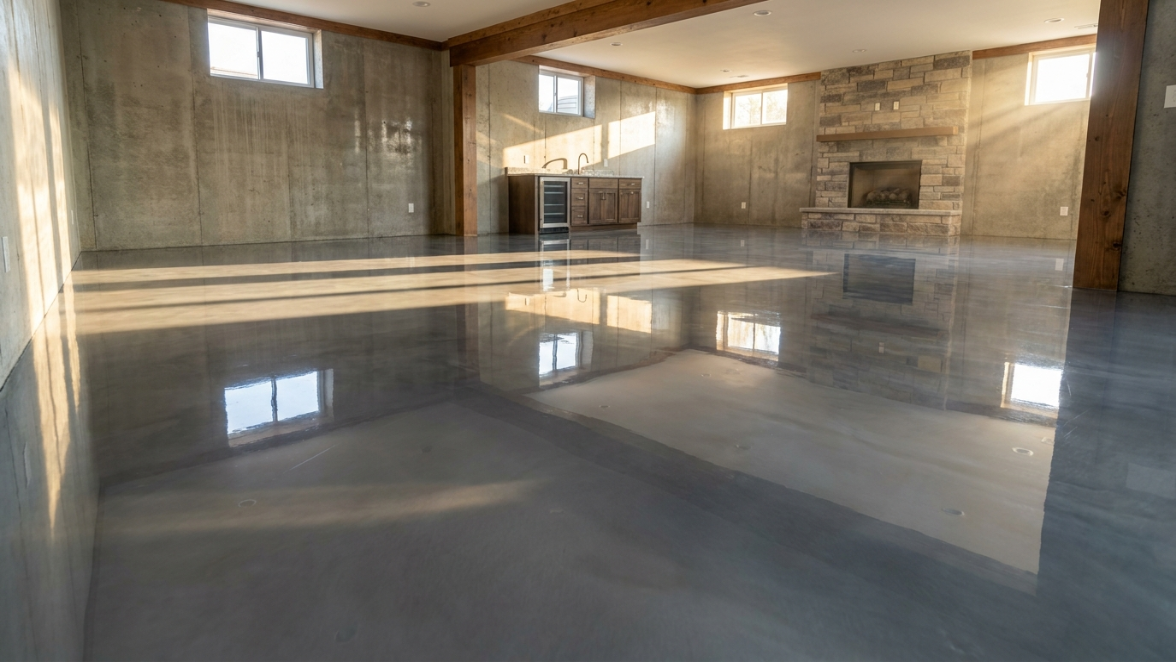
A polished concrete floor is a strong, seamless alternative to carpet for homeowners who want a premium look with less upkeep. It is mechanically ground and refined with diamond tools, then densified to harden the surface. The result can range from a soft matte finish to a high-gloss surface with visible aggregate.
For Austin homes and small businesses, it is worth considering when you want:
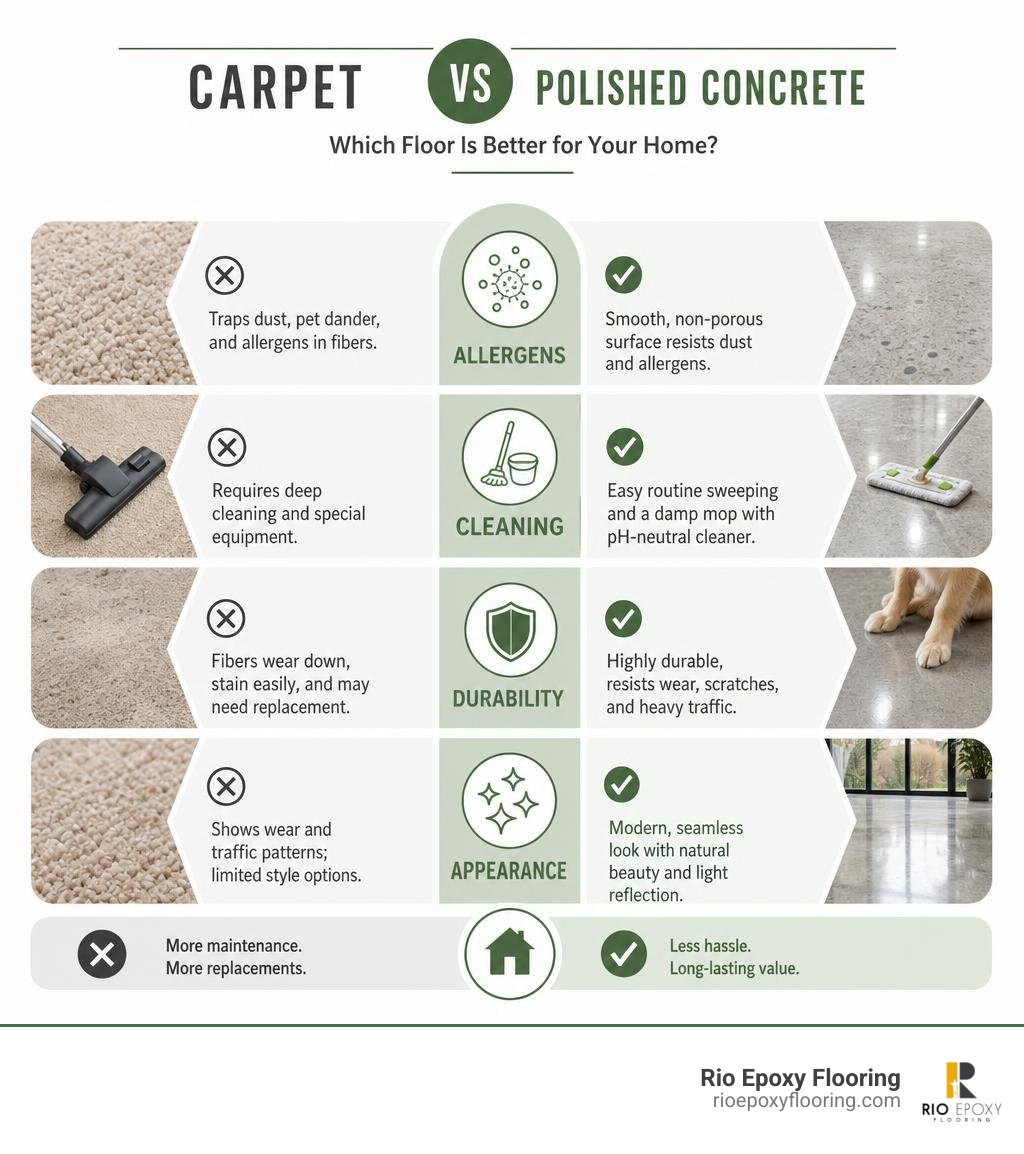
- Less dust and fewer trapped allergens than carpet fibers can hold
- Easy cleaning with routine sweeping and a pH-neutral damp mop
- Long-term wear resistance for pets, foot traffic, and busy rooms
- A modern, light-reflective look without grout lines or seams
- Compatibility with radiant underfloor heating, since concrete stores and releases heat gradually
Unlike carpet, polished concrete does not need regular deep cleaning or replacement when fibers wear down. A well-specified floor can last for decades, but the final appearance depends heavily on the existing slab, desired aggregate exposure, and whether you choose true mechanical polishing or a simpler sealed-concrete system.
I am Roger Aguiar, an Austin-based digital marketing strategist and the CEO of RG Agency, with experience helping home-service businesses explain high-value options such as a polished concrete floor in clear, practical terms. Next, let’s look at the finish choices that shape the floor’s color, texture, and sheen.
The Anatomy of a Polished Concrete Floor: Types and Finishes
Understanding polished concrete starts with recognizing that it is not simply a bucket of high-gloss clear coat poured over gray cement. Instead, it is an engineered refinement process governed by strict industry guidelines, including standards outlined by the Concrete Polishing Council of the American Society of Concrete Contractors.
When evaluating options, the final visual character depends on two primary elements: the depth of cut (which dictates how much internal stone aggregate shows through) and the level of sheen.
Reflectivity is measured using Distinctness of Image (DOI), a metric tracking the clarity of reflections bounced off the surface:
- Level 1 (Flat / Matte): Refined up to roughly 100-grit abrasives. The surface has little to no reflection, yielding an organic, understated appearance that hides minor scuffs effortlessly.
- Level 2 (Satin / Low Sheen): Ground to approximately 400 grit. It produces a soft, diffuse luster and an image clarity reading between 10% and 39%.
- Level 3 (Semi-Polished): Honed with 800-grit pads. Light fixtures and side windows reflect clearly (40% to 69% DOI), bringing brightness into residential living areas.
- Level 4 (High-Gloss): Polished with 1500 to 3000-grit resin bonds or burnishers. This delivers a brilliant, mirror-like clarity (70% to 100% DOI) that magnifies ambient lighting across open floor plans.
Cream, Salt & Pepper, and Exposed Aggregate Finishes
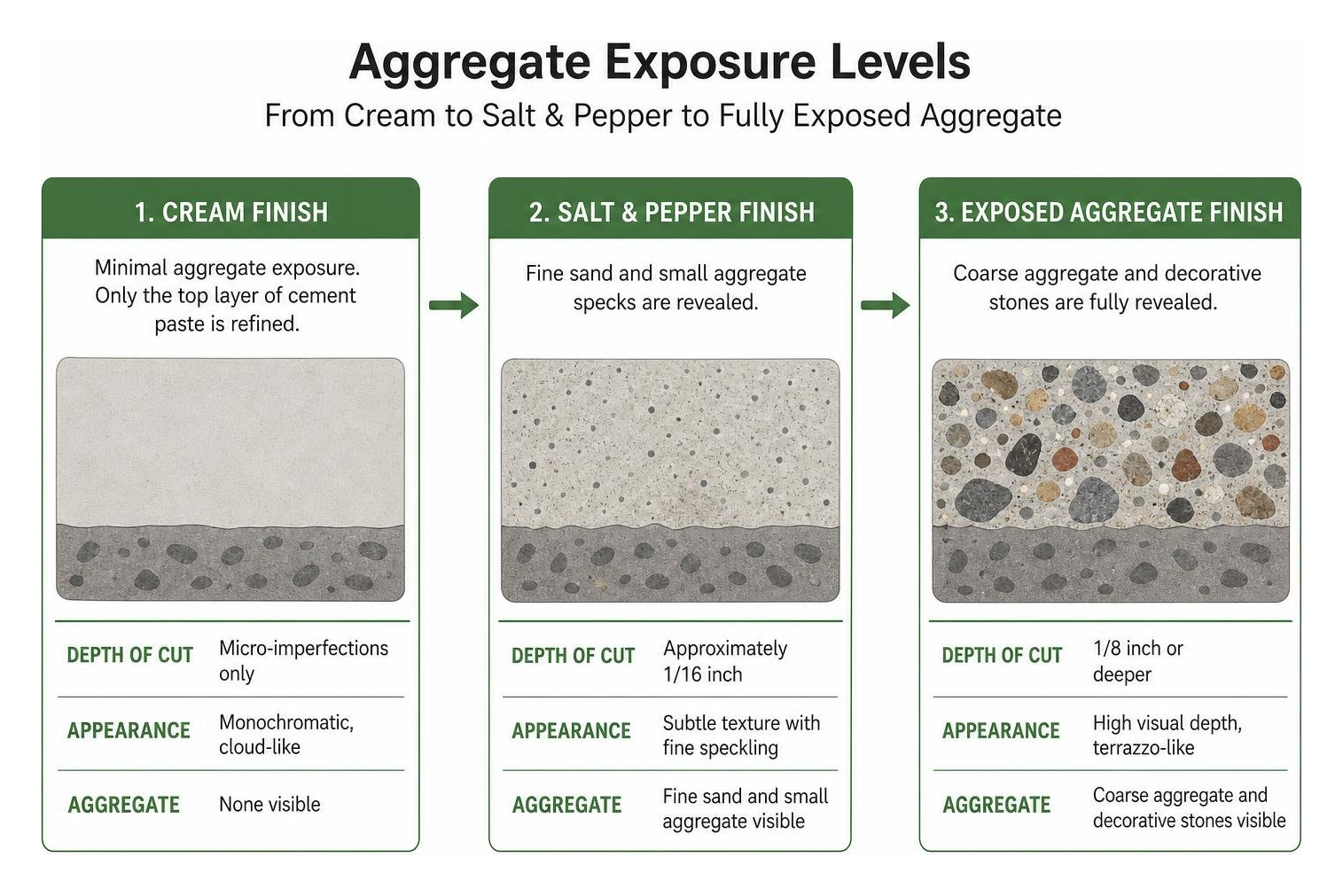
The surface aggregate exposure dictates the physical character and pattern of the floor. There are three primary finish styles:
- Cream Finish: The diamond grinding tooling removes only micro-imperfections from the topmost layer of cement paste. No aggregate stones are revealed, resulting in a monochromatic, cloud-like aesthetic. This finish requires an exceptionally flat, unblemished initial pour.
- Salt & Pepper Finish: The tooling grinds roughly 1/16 of an inch into the concrete, exposing fine sand and tiny aggregate specks. This subtle texture adds organic movement and hides dust exceptionally well.
- Exposed Aggregate Finish: By grinding 1/8 of an inch or deeper into the slab, structural coarse gravel and decorative aggregates (such as river rock, granite, or recycled colored glass) come to light. This deep cut yields high visual depth, reminiscent of classic terrazzo.
For homeowners wanting distinctive shades, penetrating concrete dyes or dry-shake color hardeners can be introduced during the grinding stages to infuse earthy browns, charcoals, or warm ambers directly into the concrete matrix.
True Polished Concrete vs. Sealed Concrete
A frequent point of confusion is the distinction between true mechanical diamond polish and a topical “grind-and-seal” system. True mechanical polishing refines the structural slab itself. Chemical densifiers react internally with free lime in the concrete to build a rock-solid, permanent crystalline structure.
In contrast, a grind-and-seal system relies on a surface film (like an acrylic wax, polyurethane, or light sealer) applied over a lightly ground floor. Topical products—such as Eagle Concrete Polish, which yields around 1,000 sq. ft. per gallon per coat with under 67 g/L VOCs—serve primarily as sacrificial protective wear layers over sealed concrete.
While topical acrylics require recoating every couple of years, mechanical diamond polishing permanently refines the concrete’s own minerals.
| Feature | True Mechanically Polished Concrete | Grind-and-Seal / Acrylic Systems |
|---|---|---|
| Refinement Method | Multi-stage diamond grinding up to 3,000 grit | Light grinding followed by topical sealer |
| Wear Surface | The hardened concrete matrix itself | Topical plastic or acrylic protective film |
| Densification | Required (Lithium/Sodium Silicates to 32–40 MPa) | Optional or surface-only |
| Longevity | Decades with basic routine maintenance | 2 to 5 years before resealing/re-waxing |
| Breathability | Fully vapor-permeable (won’t blister from moisture) | Low to moderate vapor transmission |
| Scratch Resistance | Extremely high; impervious to flaking or delamination | Subject to film scratching, peeling, and wear paths |
The Multi-Step Diamond Polishing Process
Transforming a raw, dusty concrete slab into a sleek, reflective living surface requires rigorous mechanical progression. Polishing is not an overnight DIY project; it is a heavy-duty industrial craft requiring professional planetary grinders, high-efficiency HEPA dust extraction systems to comply with OSHA silica dust regulations, and precise diamond tooling.
Slab Preparation and Compressive Strength Requirements
A successful polished finish begins with structural integrity. Concrete must possess a minimum compressive strength of 4,000 PSI (pounds per square inch). For new construction pours, the slab should cure for at least 28 days to allow complete hydration before any heavy grinding commences.
Additionally, the slab must meet strict floor flatness ratings (ideally FF 40 to FF 50). Wavy or uneven slabs cause the grinding heads to shave high spots down to deep aggregate while skipping low spots entirely, resulting in an uneven, blotchy finish. Prior to diamond refinement, relative humidity and moisture vapor emissions should be measured using ASTM F2170 in-situ probe standards to confirm the slab is ready for densifiers and guards.
Densifiers, Honing Grits, and Guard Sealers
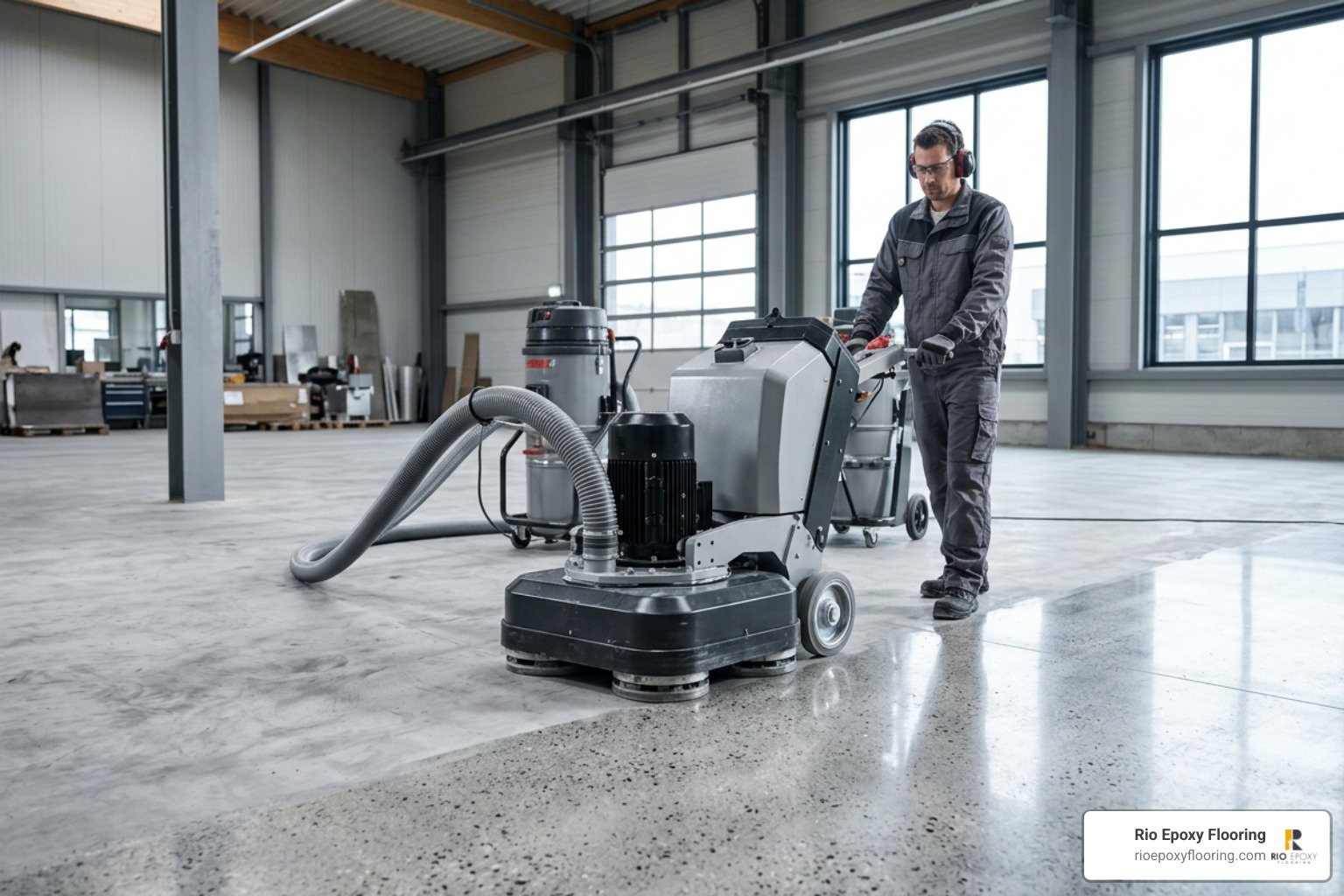
Once initial coarse metal-bond diamonds remove the uneven surface crust and open the concrete pores, technicians apply chemical densifiers—typically lithium or colloidal silicates. These hardeners penetrate deep into the capillaries, reacting with calcium hydroxide to create calcium silicate hydrate (C-S-H). This reaction increases the slab’s hardness to a target of 32 to 40 MPa (megapascals).
Following densification, operators switch to finer resin-bonded diamond abrasives:
- Honing (100 to 400 grit): Removes fine tooling scratches left by metal bonds and begins tightening the pore structure.
- Polishing (800 to 3,000 grit): Aligns the surface particles at a microscopic level, producing natural refraction and glossy reflection without any wet coatings.
- Guard Application & Burnishing: A breathable, penetrating impregnating guard is applied to protect against household oil and liquid stains. The floor is then run over with a high-speed burnisher spinning at 2,000+ RPM. The frictional heat vitrifies the guard, locking in gloss and repelling spills.
Why Homeowners Are Ditching Carpet for Sleek Slabs
For decades, wall-to-wall carpeting was standard in living rooms and bedrooms. However, modern design sensibilities and health considerations have prompted a shift toward solid architectural flooring. When comparing practical options across modern homes, many owners explore versatile Residential Epoxy Flooring Solutions alongside structural polished concrete to replace dusty textiles permanently.
Why Choose a Polished Concrete Floor Over Traditional Carpet?
Carpet acts like an environmental sink in your home, trapping pet dander, pollen, dust mites, and microscopic debris deep within its backing. Even powerful vacuuming leaves behind biological residues. Polished concrete, on the other hand, is completely hypoallergenic:
- Zero Allergen Retention: A solid, densified concrete surface provides no habitat for dust mites or mold spores, drastically improving indoor air quality.
- Pet-Proof Durability: Claws cannot snag, unravel, or scratch a level-4 polished slab. Pet accidents wipe away without soaking into underlayment foam or producing lingering odors.
- Thermal and Lighting Efficiency: The high reflectivity of polished concrete bounces natural daylight deeper into interior floor plans, reducing daytime electrical lighting requirements.
- LEED Credits and Sustainability: Polishing utilizes the existing structural foundation of the building, eliminating the need to harvest timber, manufacture synthetic fibers, or discard hundreds of pounds of synthetic carpet into landfills every decade.
When weighing hard-surface upgrades against traditional options, comparing Epoxy Flooring vs Tiles highlights similar benefits: eliminating porous grout lines and loose backing simplifies maintenance.
Radiant Underfloor Heating and Thermal Efficiency
A common misconception is that bare concrete floors are uncomfortably cold underfoot. In modern residential engineering, concrete serves as a superior thermal mass. When paired with hydronic (water-based) or electric underfloor heating systems, concrete absorbs, retains, and evenly radiates warmth across the entire living area.
Because concrete holds thermal energy far longer than wood or carpet, radiant heating operates at lower water temperatures, helping reduce overall winter energy consumption.
Long-Term Durability, Safety, and Daily Maintenance
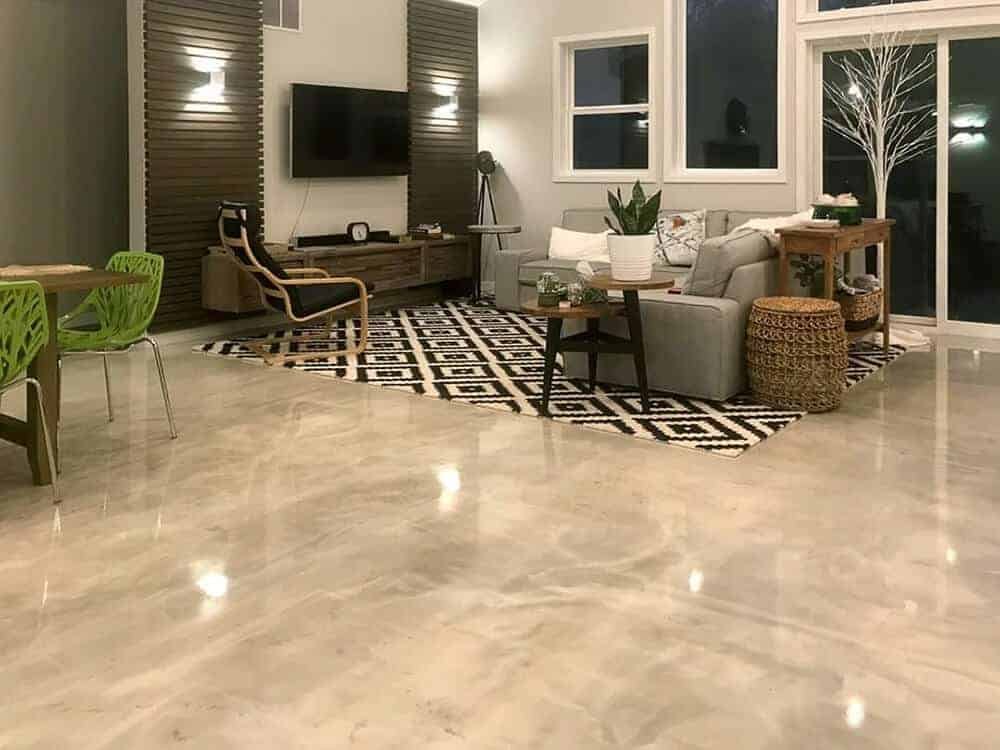
Polished concrete stands among the most durable interior architectural finishes available today. While engineered hardwoods dent under heavy furniture and carpets mat down along high-traffic corridors, mechanically polished slabs retain their structural integrity against relentless foot traffic, rolling carts, and active households.
Slip Resistance and Safety Standards
A frequent concern among homeowners seeing a mirror-like polished floor is slip potential. Counterintuitively, mechanically polished concrete is not inherently slippery when dry.
Microscopic diamond refinement creates high contact surface area, maintaining a safe Dynamic Coefficient of Friction (DCOF) that meets or exceeds OSHA and ADA slip-resistance guidelines. For homeowners evaluating safety parameters across seamless surfaces, understanding the physics behind Are Epoxy Floors Slippery? reveals that polished hard surfaces generally provide reliable dry traction.
How to Maintain and Clean a Polished Concrete Floor
Preserving the brilliance of polished concrete requires very little effort, provided you avoid the wrong chemicals:
- Daily Dust Mopping: Use a dry microfiber dust mop to collect loose grit and dirt, preventing abrasive particles from acting like sandpaper under shoes.
- Routine Damp Mopping: Clean as needed using clean water or a specialized, pH-neutral floor cleaner. Never use acidic cleaners (like vinegar, citrus solutions, or bleach), as acids instantly react with calcium carbonate, etching the surface and dulling the shine.
- Prompt Spill Cleanup: Wipe up acidic liquids (wine, orange juice, vinegar, mustard) immediately. While penetrating guards resist staining, prolonged exposure to harsh acids will leave dull spots on the polished finish.
- Periodic High-Speed Buffing: In heavy residential traffic zones, light high-speed buffing with diamond-impregnated pads will restore maximum gloss without requiring chemical stripping.
Frequently Asked Questions About Polished Concrete
Can existing concrete slabs be retrofitted for polishing?
Yes, existing concrete slabs can often be retrofitted for polishing, provided the underlying concrete is structurally sound and free from extensive sub-base settling.
During an initial inspection, technicians evaluate the slab’s hardness and repair cosmetic cracks, old tack-strip holes from former carpeting, and adhesive residues left behind by old tile or vinyl. If an existing slab is heavily pitted, uneven, or patched with non-matching materials, a self-leveling cementitious topping slab (typically 3/8″ to 1/2″ thick) can be poured over the substrate and polished to ensure a uniform appearance.
Is a polished concrete floor cold or slippery?
Polished concrete takes on the ambient temperature of its surrounding environment. In well-insulated homes, it stays comfortable, and during hot summers it helps keep living spaces cool underfoot.
Regarding safety, polished concrete maintains an excellent dynamic coefficient of friction when clean and dry. Like any hard flooring—such as marble, glazed porcelain tile, or hardwood—it can become slippery when wet, which is why entry mats are recommended near exterior doorways to catch rain and moisture.
How does polished concrete compare to seamless resin finishes?
While true polished concrete refines the natural mineral slab, seamless resin systems (such as epoxy and polyurea) build a continuous, impermeable synthetic barrier over the concrete. Resins are 100% non-porous, providing complete resistance against automotive fluids, battery acids, and standing moisture.
For high-demand environments like garages, workshops, commercial kitchens, and utility spaces where chemical exposure is frequent, exploring our comprehensive Epoxy Flooring Guide helps homeowners identify whether a polished slab or an engineered resin system best suits their functional needs.
Conclusion
Saying goodbye to tired carpet and choosing a refined concrete floor elevates an interior with industrial warmth, unmatched resilience, and effortless cleaning. By transforming an existing concrete slab into a high-performance architectural focal point, you eliminate dust-trapping fibers, brighten living spaces with natural light reflection, and invest in a surface built to last for decades.
Whether you are designing a new build from the ground up or upgrading an existing home, our team at Rio Epoxy Flooring is ready to help you explore the ideal hard-surface solutions for your property. Reach out today to schedule a consultation and bring long-lasting beauty to your home.