

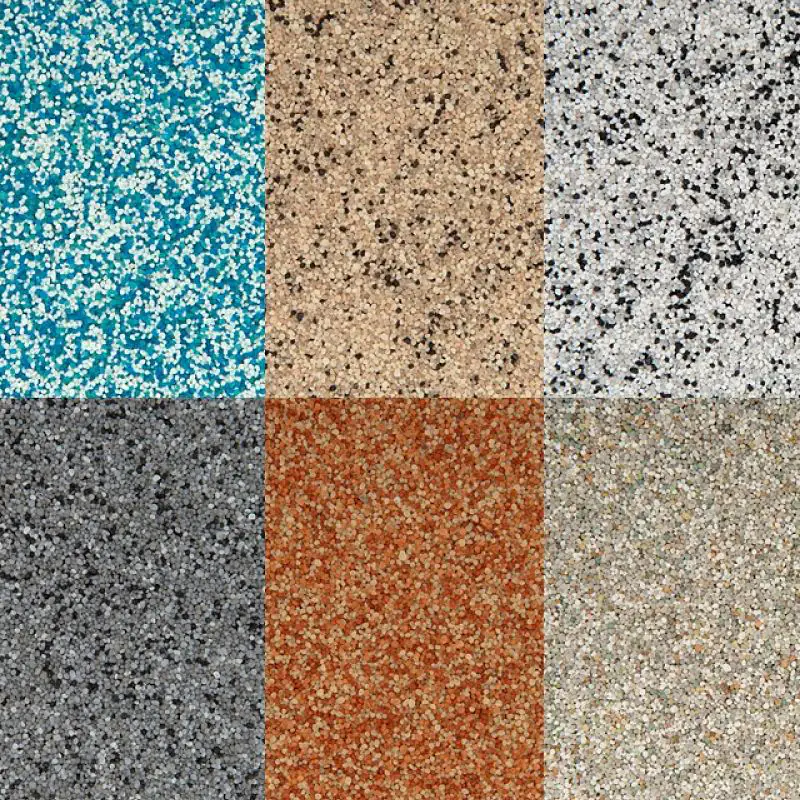
How a Garage Floor Coating for Granite Look Is Engineered Layer by Layer
A garage floor coating for granite look achieves the appearance and texture of natural stone through a multi-layer resinous system. It combines a tinted high-solids primer base coat, a dense broadcast of multi-colored vinyl flakes, and a durable clear polyaspartic topcoat. This budget-friendly alternative delivers the authentic visual depth, seamless coverage, and strength of genuine granite without the immense weight or cost of stone slabs. At Rio Epoxy Flooring, we engineer our floors from the slab up to guarantee structural bonding and lasting beauty.
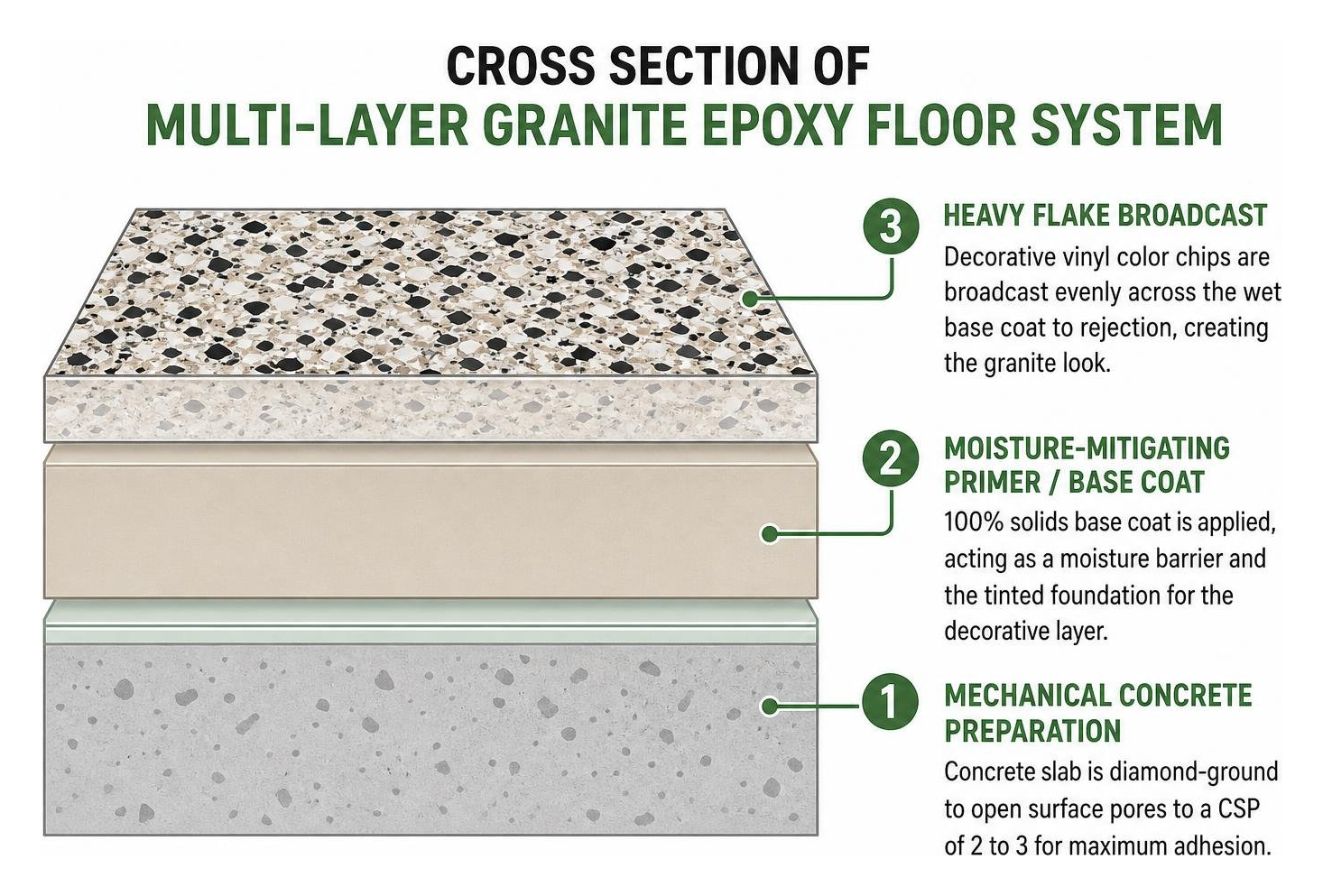
The engineering sequence involves precise chemical stages:
- Mechanical Concrete Preparation: The concrete slab is diamond-ground to open the surface pores to an International Concrete Repair Institute (ICRI) Concrete Surface Profile (CSP) of 2 to 3. This mechanical profile allows the primer and epoxy to sink deep into the concrete rather than simply sitting on top.
- Moisture-Mitigating Primer / Base Coat: A 100% solids base coat is applied. Our heavy-duty systems achieve up to a 28-mil system thickness, acting as an impenetrable moisture barrier and the tinted foundation for the decorative layer. To explore comprehensive resin options, our Epoxy Garage Floor Coating systems detail how industrial-grade polymers protect your structural concrete.
- Heavy Flake Broadcast: While the high-solids base coat remains wet, decorative vinyl color chips are broadcast evenly across the surface to rejection. This forms the dense, speckled granite pattern.
- Scraping and Reclaiming: Once the base coat cures, the floor is thoroughly scraped with flat steel blades in multiple directions. This removes standing edges and smooths the vinyl chips into a uniform stone plane.
- Multi-Coat Polyaspartic Clear Glaze: A high-durability clear topcoat encapsulates the flakes, locking in the design, resisting UV degradation, and sealing out moisture.
Selecting the Right Flake Size in a Garage Floor Coating for Granite Look
The secret to mimicking natural igneous rock lies in flake geometry and broadcasting density. Vinyl color chips are engineered in distinct calibrations, each producing a different visual texture:
- 1/4-Inch Standard Chips: The industry benchmark for classic granite surfaces. These larger chips create bold color contrast and distinct mineral patterns similar to polished terrestrial granite countertops.
- 1/8-Inch Micro Flakes: Smaller chips provide a much tighter, denser visual pattern. Micro flakes replicate fine-grained stone like salt-and-pepper granite or speckled basalt, creating visual smoothness across large footprints.
- Blended Quartz Systems: Combining colored quartz granules creates a dimensional, rougher stone profile that maximizes traction while delivering an authentic natural-mineral aesthetic.
Coverage density is equally critical. Economy DIY kits often settle for a light sprinkle (70–75% coverage), which exposes large patches of the base coat and looks synthetic. A true granite finish requires a 90–95% heavy broadcast up to a full rejection broadcast. Dense coverage provides the seamless visual depth of real stone. For more design options, check out our Flake Epoxy Flooring Blog to see how various chip blends transform interior spaces.
Multi-Coat Polyaspartic Clear Sealing
The clear protective layer determines how the floor performs under real-world abuse. While traditional epoxy topcoats can amber and yellow under direct sunlight, clear polyaspartic technology remains completely UV-stable.
Polyaspartic coatings provide outstanding abrasion resistance, boasting an ultra-low 4 mg Taber abrasion rating (tested using a CS-17 wheel with a 1,000 g load over 1,000 cycles). This commercial-grade rating means dropped hand tools, rolling floor jacks, and gritty work boots will not dull or scratch the high-gloss sheen. Furthermore, polyaspartic coatings resist hot-tire pickup—a common issue where hot radial tires bond to budget coatings and pull them clean off the concrete when the vehicle moves.
Granite-Look Flake Finishes vs Alternative Garage Coatings
Homeowners often weigh granite-look flake systems against solid-color and metallic epoxy finishes. Each option has distinct functional and visual traits:
| Feature | Granite-Look Flake System | Solid-Color Epoxy | Metallic Epoxy Coating |
|---|---|---|---|
| Aesthetic Style | Natural speckled stone | Clean, industrial showroom | Dramatic 3D swirling marble |
| Hiding Imperfections | Exceptional (masks cracks/divots) | Poor (highlights slab flaws) | Moderate to Low |
| Scratch Visibility | Very Low (textured pattern hides marks) | High (shows fine swirl lines) | High (gloss shows scuffs) |
| Slip Resistance | Naturally high (orange-peel texture) | Low when wet (requires additives) | Smooth, very slick when wet |
| Maintenance Level | Minimal (mop, sweep, hose down) | Frequent (dust shows quickly) | High (requires regular buffing) |
| Typical Lifespan | 15–20+ Years | 5–10 Years | 10–15 Years |
For broader information on long-term surface treatments, review our overview on Garage Flooring Epoxy to choose the right system for your workspace.
Comparing Solid, Metallic, and Garage Floor Coating for Granite Look Options
Solid-color floors deliver a crisp, minimalist look, but their uniform color acts like a spotlight on dust, road grime, tire rubber, and concrete hairline cracks. If a dropped tool chips a solid finish, the blemish stands out immediately.
Metallic epoxy systems, by contrast, are showstoppers. Utilizing pearlescent metallic pigments suspended in clear resin, these floors create the look of poured lava, flowing rivers, or molten metal. You can explore creative concepts in our Top 10 Metallic Epoxy Floor Ideas guide. However, because metallic finishes cure to a flat, glass-smooth plane, they show fine micro-scratches over time and can become slick when wet with rain or automotive fluids.
The granite flake finish hits the sweet spot of aesthetics, safety, and practicality. The multi-colored chips break up reflected light, effectively camouflaging surface dust, track marks, and minor slab variations. Because the embedded chips create a subtle, tactile orange-peel profile under the clear coats, the floor provides built-in mechanical grip. If you are concerned about wet traction in rainy seasons, read our guide on whether Are Epoxy Floors Slippery to understand how texture choices keep your garage safe.
Top Performance Benefits and Climate Resilience
A floor coating in Central Texas or harsh northern climates must handle intense temperature swings. Concrete expands and contracts as seasons shift. Rigid, low-grade coatings can crack, delaminate, or bubble under this thermal stress.
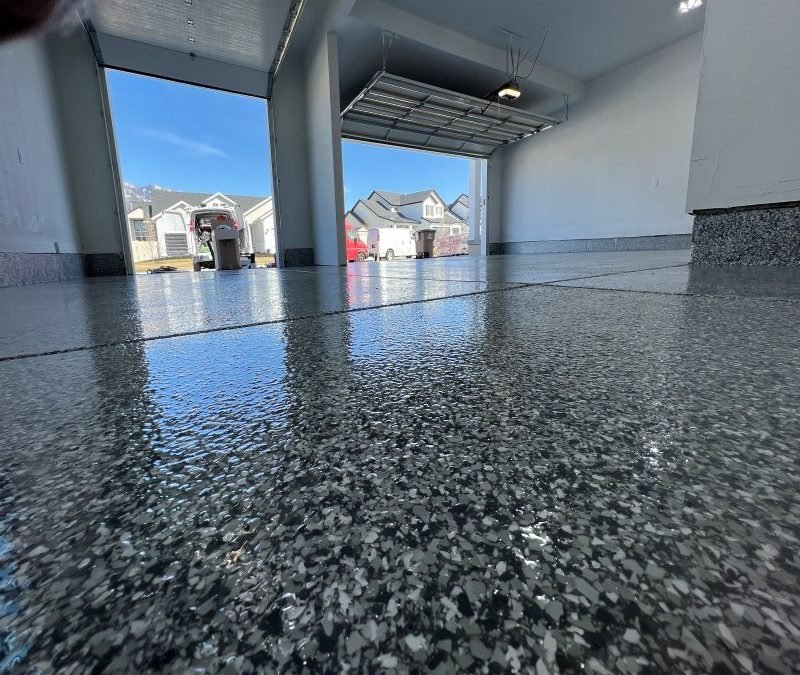
High-build granite systems using flexible polyaspartic topcoats flex with the concrete during severe thermal cycles. This prevents micro-fracturing and peeling when temperatures swing from summer heat waves to winter freezes. The dense resin structure also acts as a barrier against corrosive chemical threats:
- Road Salts & Deicers: Melts and road brine track into garages and eat bare concrete, causing pitting and scaling. A sealed granite system stops salt corrosion on contact.
- Automotive Fluids: Motor oil, brake fluid, battery acid, and transmission fluids wipe up effortlessly without staining or softening the coating.
- Impact and Dropped Tools: The vinyl flake matrix distributes impact force across the resilient floor build, preventing gouges from dropped wrenches or heavy storage bins.
For an in-depth look at chemical bonding dynamics, see our analysis on Epoxy vs Polyurea Garage Floors Barton Creek for insights on balancing flexible polymers with concrete moisture.
DIY Kits vs Professional High-Build Systems
It is tempting to grab a retail DIY epoxy kit off the shelf, but retail boxed sets differ dramatically from commercial-grade installations:
- Epoxy Thickness and Solids: Water-based DIY kits are typically only 40–50% solids, meaning half the liquid volume evaporates as it dries, leaving behind a thin 2- to 4-mil film. Professional 100% solids epoxy and military-grade polyaspartics do not evaporate; they cure into a thick, 20- to 28-mil structural shield.
- Flake Volume: Standard retail kits supply 1 to 3 pounds of flakes per 500 square feet, yielding a light, sporadic speckle. Commercial-grade systems use roughly 18 lbs of chips per 550 sq ft to achieve 90–95% heavy coverage.
- Application Tooling: High-build coatings require calibrated magic squeegees to gauge wet-film mil thickness across the concrete, paired with spiked shoes for broadcasting chips without leaving footprints.
- Surface Prep: DIY acid etching only cleans the top surface without properly profiling the concrete matrix. Professional planetary diamond grinding strips away weak laitance and creates the mechanical profile necessary for a lifetime bond.
Frequently Asked Questions About Granite Garage Floors
Is granite garage flooring real stone or an epoxy coating?
Granite garage flooring is not mined slab stone; it is a specialized resinous floor system. It pairs a colored epoxy or polyurea base coat with colored vinyl acrylic flakes broadcast across the floor, finished with clear protective topcoats. The overlapping multi-tone flakes create the visual depth, texture, and look of natural polished granite without the immense weight, seam lines, or cost of stone.
How long does a heavy-coverage granite flake floor last?
When installed over properly diamond-ground concrete, a heavy-coverage granite flake floor lasts 15 to 20 years or more. Because the color chips run throughout the resin layer, the aesthetic pattern does not walk off over time. If high-traffic wear paths eventually dull the gloss after 15 years, a light surface buffing and a single fresh topcoat will restore the showroom shine without having to replace the entire system.
Can granite flake coatings handle extreme freeze-thaw and summer heat?
Yes. Professional systems use polyaspartic topcoats that stay flexible and UV-stable across severe temperature shifts. The coating expands and contracts alongside the underlying concrete slab during rapid weather changes. This elasticity prevents cracking, peeling, or hot-tire pickup during extreme summer heat, while locking out moisture to eliminate winter freeze-thaw spalling.
Conclusion
Upgrading your garage with a granite flake floor system combines the timeless look of polished stone with the rugged performance of industrial polymers. By choosing heavy 90–95% flake broadcasts, selecting the right chip size, and sealing the floor with high-durability polyaspartic topcoats, you create a space that resists chemicals, hides everyday dirt, and prevents hot-tire pickup.
At Rio Epoxy Flooring, our family-owned team brings commercial-grade diamond grinding, eco-friendly low-VOC materials, and rapid 48-hour turnarounds to every installation, backed by our lifetime warranty. To find the ideal coating for your home or workshop, explore our guide to the best garage floor coatings and start planning your garage transformation today.