

Find a Trusted Epoxy Floor Company Near Me
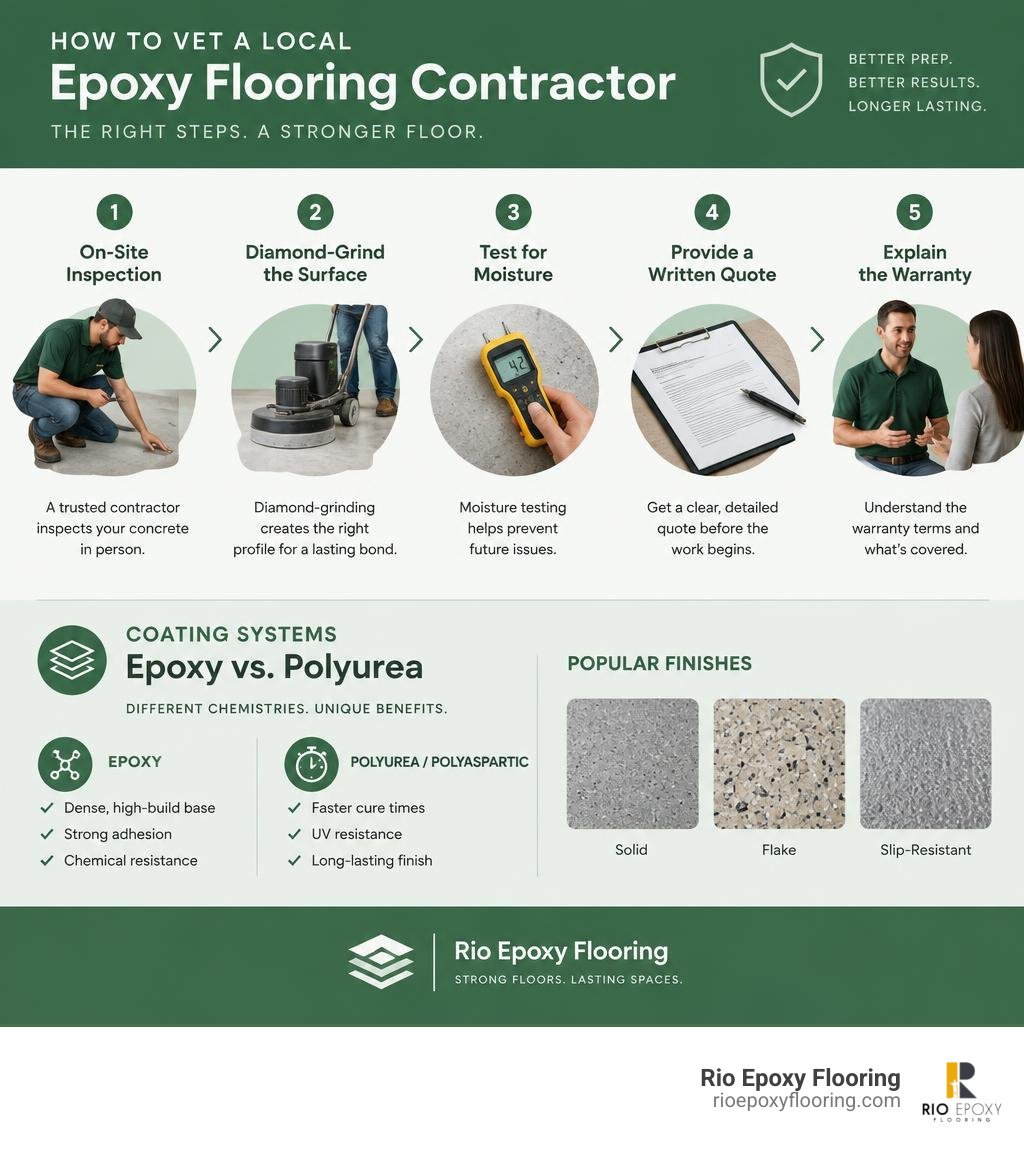
To find a reliable epoxy floor company near me, look for a local contractor that inspects your concrete in person, diamond-grinds the surface, tests for moisture when needed, provides a written quote, and explains its warranty before work begins. These steps matter more than the lowest price because poor prep is a leading cause of peeling, bubbling, and early coating failure.
A good installer should also help you choose the right system for your space. Epoxy offers strong adhesion and chemical resistance, while polyurea or polyaspartic topcoats can cure faster and resist UV yellowing. For Austin garages, shops, and small commercial spaces, ask about hot-tire resistance, slip-resistant finishes, low-VOC options, and how soon you can walk or drive on the floor.
The sections below make it easier to compare coatings, understand fair pricing, and vet nearby installers with confidence.
I am Roger Aguiar, an Austin-based digital marketing professional with more than seven years of experience helping local service businesses connect with the right customers. I understand what homeowners and small business managers need when searching for an epoxy floor company near me: clear information, credible proof, and a contractor they can trust.
1. Coating Systems: Epoxy vs. Polyurea and Available Finishes
When you begin searching for the right coating for your concrete, understanding the chemistry behind the products makes a world of difference. Traditional epoxy is a thermosetting polymer formed by reacting a resin with a hardener. It creates an exceptionally dense, high-build base that bonds deeply into concrete pores.
However, modern floor coatings often combine systems. In our standard installations, we frequently utilize a heavy-duty epoxy basecoat for maximum mechanical adhesion to the concrete, paired with an advanced polyurea or polyaspartic topcoat. Polyaspartic chemistry offers up to three times faster curing speeds than traditional epoxy alone, remains UV-stable without yellowing under intense sun exposure, and delivers superior elongation to handle subtle slab movement.
Beyond speed and UV stability, these multi-layer systems excel against hot tire pickup. When car tires roll off hot pavement onto a DIY or inferior coating, the heat softens the resin, causing it to lift from the concrete as the tire cools. Our commercial-grade formulations prevent this delamination entirely. Furthermore, once cured, our low-VOC formulas are 100% non-toxic, pet-friendly, and child-safe.
| Coating Attribute | 100% Solids Epoxy | Polyurea / Polyaspartic | Hybrid Multi-Layer System |
|---|---|---|---|
| Primary Role | High-build base layer & bonding | Fast-cure, UV-stable topcoat | Deep adhesion + rugged top protection |
| UV Stability | May yellow in direct sunlight | 100% UV-stable (no ambering) | Excellent (poly topcoat shields base) |
| Cure Time to Foot Traffic | 24–48 hours | 4–8 hours | 24 hours |
| Cure Time to Vehicles | 72 hours | 24–48 hours | 24–48 hours |
| Hot Tire Resistance | Moderate to high | Exceptional | Exceptional |
| Chemical Resistance | High against oils & fluids | High against harsh solvents & salts | Maximum multi-threat defense |
When you invest in a professional epoxy garage floor coating, you gain a resilient surface that withstands dropped tools, motor oil, hydraulic fluids, and everyday residential demands.
Flake, Metallic, Solid, and Quartz Finishes
Every space has distinct aesthetic and functional needs. We provide four primary finish styles:
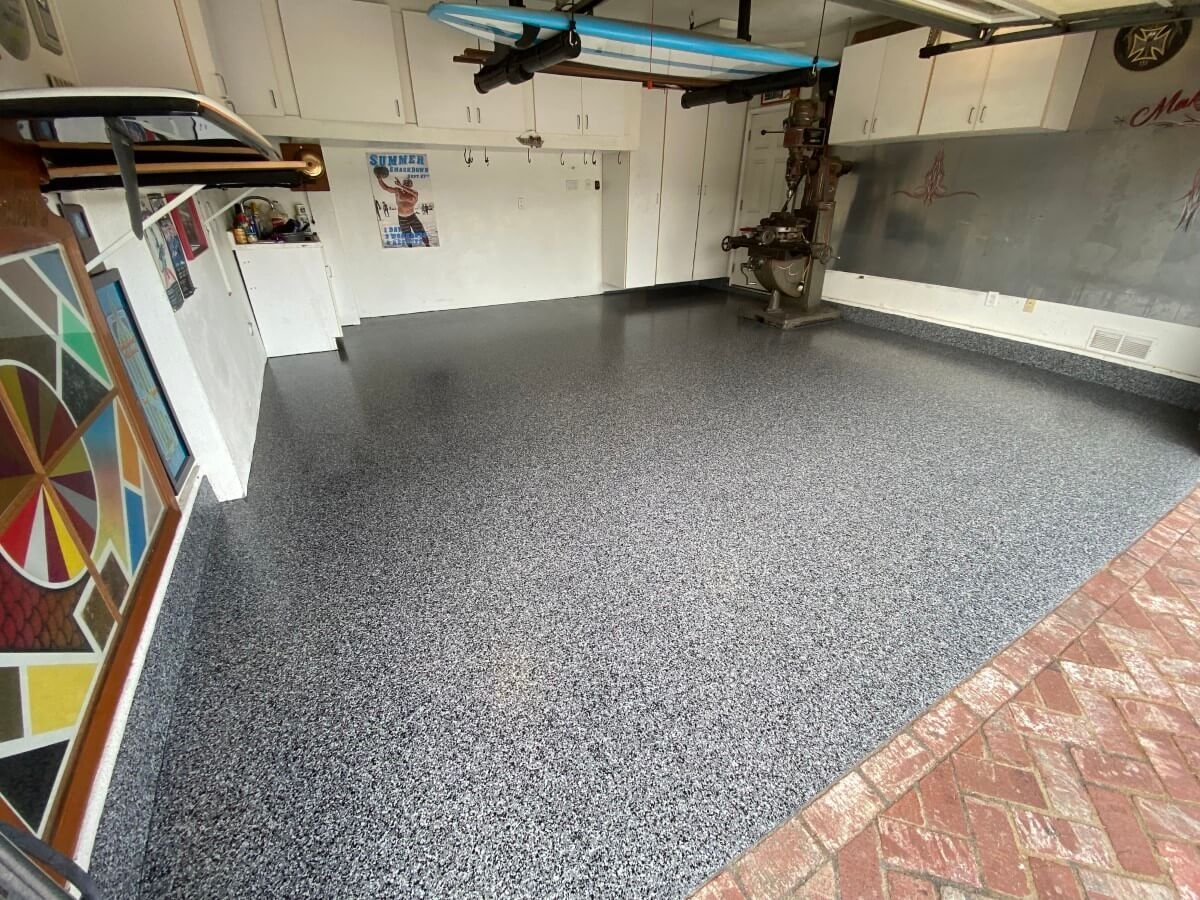
- Decorative Vinyl Flake: Our most popular garage and workshop option. Vinyl chips are broadcast to rejection into the wet basecoat, creating a multi-colored granite appearance that hides dirt, improves traction, and masks minor concrete imperfections.
- 3D Metallic Finishes: Utilizing shimmering metallic pigments manipulated during application, these floors produce dynamic, flowing patterns reminiscent of marble, lava flows, or deep oceans. Perfect for retail spaces, modern home interiors, and boutique showrooms.
- Solid Color Systems: Clean, crisp, and high-gloss. Solid industrial colors (such as slate gray, beige, or safety red) provide maximum light reflectivity and a uniform look.
- Quartz Broadcast: Embedded colored quartz granules create an ultra-durable, highly textured floor offering peak slip resistance for wet rooms, commercial kitchens, and pool surrounds.

Residential vs. Commercial Grade Applications
Residential floors typically require a durable 15- to 30-mil thickness to handle foot traffic, lawn equipment, and passenger vehicles. Commercial and industrial installations, however, demand high-build systems measuring up to 60 mils or more.
Industrial warehouse and manufacturing coatings must tolerate heavy forklift traffic, extreme thermal shock, and aggressive sanitization. We formulate industrial systems to comply with strict OSHA, USDA, and FDA sanitary guidelines, delivering seamless, non-porous surfaces that prevent bacterial harboring. Working with a reliable epoxy flooring contractor ensures your business receives the exact chemical resistance and load-bearing profile required by commercial inspectors.
2. Professional Prep: Why Diamond Grinding Outperforms Acid Etching
The single most common reason floor coatings fail is improper surface preparation. Many DIY kits recommend acid etching with muriatic acid. Unfortunately, acid etching only opens the very top micro-pores, does not remove old sealers or deep oil stains, and introduces gallons of moisture directly into the concrete.
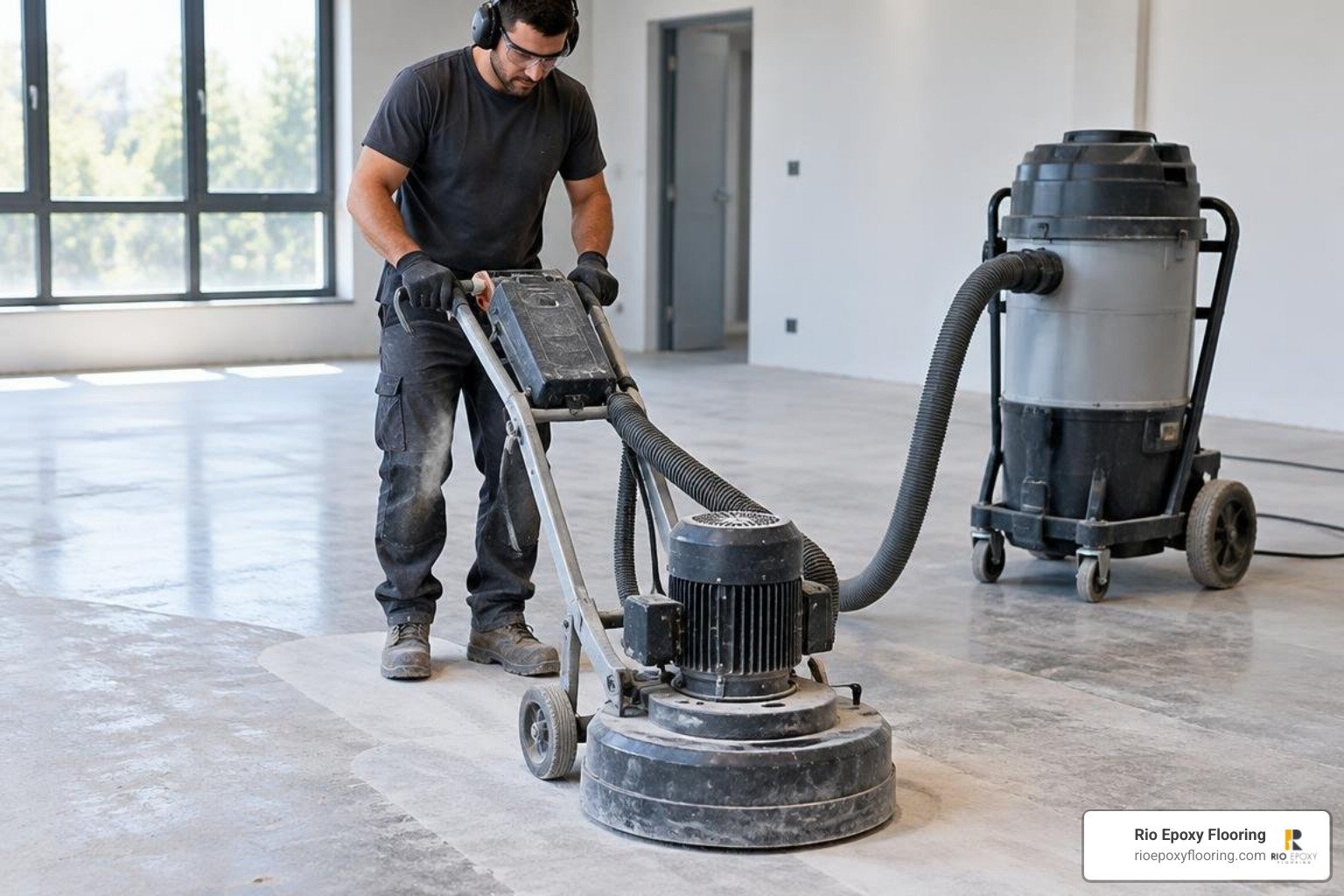
Professional contractors use heavy planetary diamond grinding machines connected to industrial HEPA dust extractors. Diamond grinding mechanically profiles the slab to an ideal Concrete Surface Profile (CSP 2 to CSP 3), stripping away weak laitance, opening the aggregate, and creating microscopic grooves that allow the epoxy to mechanically lock into the concrete matrix.
Moisture Mitigation in Humid Climates
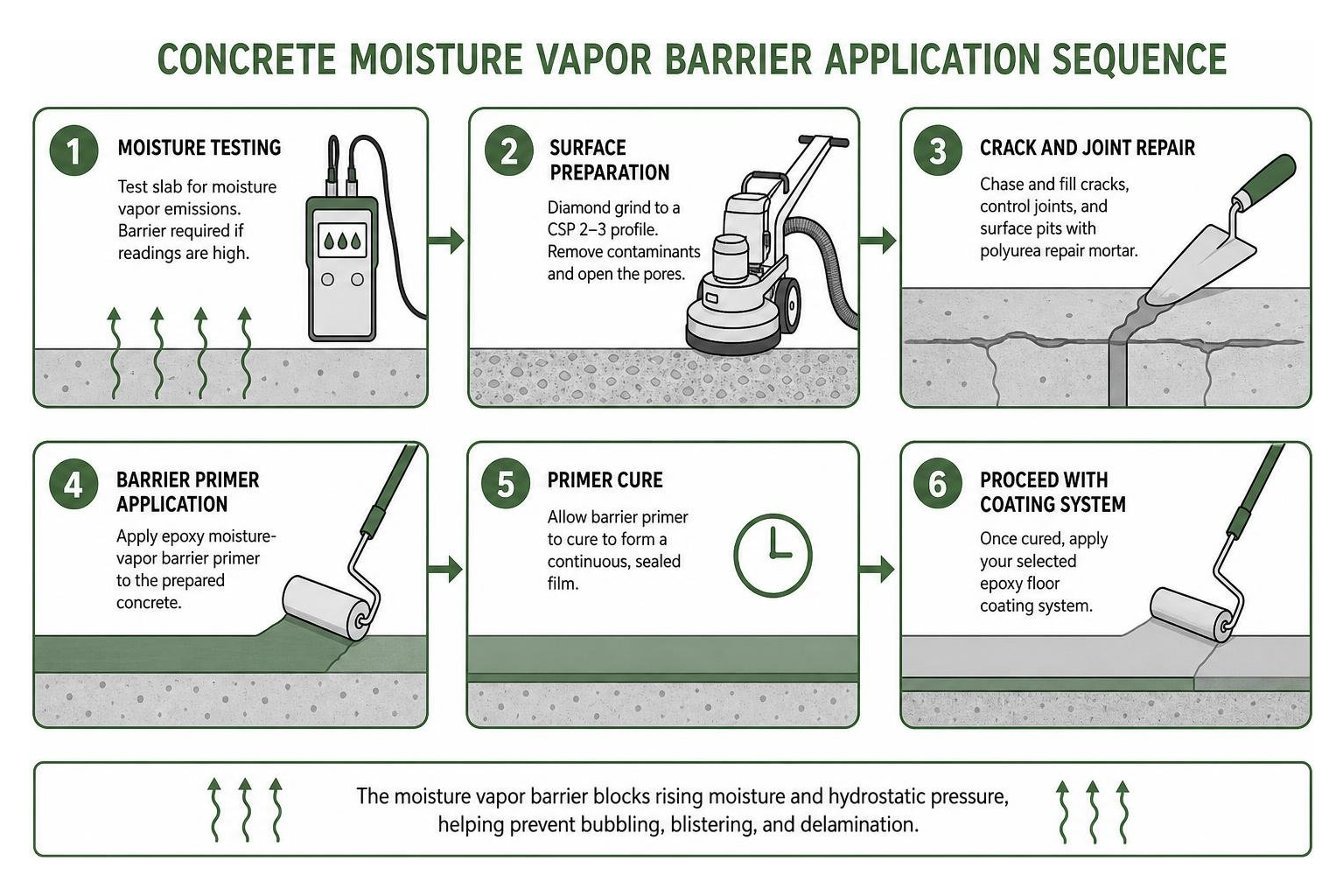
In humid coastal climates like Florida or shifting moisture zones across New Jersey and the South, concrete slabs act like sponges. Water vapor travels upward through the earth and concrete via capillary action (moisture vapor transmission). If moisture accumulates beneath a non-breathable coating without a barrier, the hydrostatic pressure causes bubbling, blistering, and delamination.
We conduct moisture vapor emission testing on every slab prior to coating. When moisture readings exceed standard safety thresholds, we apply a dedicated epoxy moisture-vapor barrier primer that withstands up to 20 lbs of hydrostatic pressure per 1,000 square feet, ensuring your floor never lifts.
Restoring Damaged, Pitted, or Cracked Slabs
Can a 20- or 30-year-old pitted slab be coated? Absolutely. Before any coating touches the floor, we chase every hairline crack, dynamic control joint, and surface pit using diamond blades. We then fill and level these defects using high-strength, flexible polyurea structural repair mortars. Once cured and ground flush, the repaired cracks become stronger than the surrounding concrete, creating a seamless, flat canvas for the decorative coating.
3. Real Costs and Installation Timelines
Transparency in pricing prevents surprises. While nationwide averages vary, professional epoxy installations generally scale based on square footage, concrete condition, and selected finish.
Across standard markets:
- Standard Decorative Flake: Costs approximately $3 to $7 per square foot. A typical 2-car garage (400–500 sq ft) ranges between $1,500 and $3,500.
- Premium Metallic Epoxy: Typically runs $8 to $15 per square foot ($3,500 to $6,000+ for standard garages) due to specialized artistic labor and multi-stage builds.
- Commercial & Heavy-Duty Polyaspartic Systems: Range from $4 to $14 per square foot depending on total thickness, moisture barrier requirements, and chemical-resistance ratings.
If you are budgeting your renovation, you can quickly request a free epoxy flooring estimate Austin TX to get a customized, fixed-price quote based on your exact square footage.
Pricing Breakdown for Residential and Commercial Floors
Commercial projects benefit from economies of scale on large, open footprints, though specialized requirements like secondary containment, anti-static (ESD) additives, or cementitious urethane overlays adjust the baseline. Whether you are coating a residential garage or a multi-bay workshop, our teams provide detailed project scopes across all service regions, including comprehensive installations for epoxy flooring in Dallas TX.
Installation and Curing Schedules
We understand that you cannot afford to have your home or business disrupted for weeks. That is why we offer streamlined 48-hour turnarounds on most residential garage and shop installations:
- Day 1 (Prep & Basecoat): Diamond grinding, crack chasing and repair, slab vacuuming, moisture barrier application, and 100% broadcast flake or basecoat layer.
- Day 2 (Reclaim & Topcoat): Scraping excess flakes, vacuuming, and applying high-solids polyaspartic or UV-stable topcoats.
- Hour 24: Safe for light foot traffic and pet activity.
- Hours 48–72: Full return to service for heavy toolboxes, patio furniture, and passenger vehicles.
4. How to Choose the Best Epoxy Floor Company Near Me
Finding the right contractor involves more than simply picking the first name on a map. To safeguard your investment, verify that the installer holds proper trade licenses, carries general liability and workers’ compensation insurance, and provides written warranty terms.
When vetting local professionals, choose a team recognized as the best epoxy flooring installer in your region—one with a proven portfolio, real local reviews, and non-franchise accountability.
Evaluating an Epoxy Floor Company Near Me for Quality and Warranties
Be wary of vague warranty promises. A reputable company provides a written warranty covering delamination, hot tire pickup, and peeling. Ask whether their warranty protects against moisture-related failures and UV discoloration. Working directly with proven epoxy flooring experts Austin ensures your floor is installed using manufacturer-certified materials backed by lifetime residential protection.
Essential Questions to Ask an Epoxy Floor Company Near Me Before Hiring
Before signing any contract, ask these critical questions:
- Do you diamond-grind the concrete or use acid etching? (Insist on diamond grinding).
- What moisture testing do you conduct before laying the basecoat?
- Are your products low-VOC and eco-friendly?
- Do you comply with HOA work guidelines and keep equipment contained?
- What is the exact curing schedule before I can park my car on the surface?
Review our full list of regional coverage on our areas served epoxy flooring page to see how our team handles neighborhood HOA standards and local installation logistics.
Frequently Asked Questions About Epoxy Floor Coatings
Are professional epoxy floors safe for children and pets once cured?
Yes. During installation, our eco-friendly, low-VOC formulations produce minimal odor. Once fully cross-linked and cured (typically within 24 hours), the coating is completely inert, non-toxic, and emission-free. The seamless surface prevents dirt, pet dander, and allergens from collecting in concrete pores. For additional questions regarding environmental safety, visit our comprehensive epoxy flooring FAQs hub.
How do I properly clean and maintain an epoxy floor?
Maintaining your floor is remarkably simple:
- Daily / Weekly: Sweep with a soft-bristle broom or dust mop to remove loose dirt and grit.
- Deep Cleaning: Mop with warm water and a pH-neutral cleaner (avoid harsh citrus acids, bleach, or vinegar, which can dull high-gloss finishes over time).
- Spills: Wipe automotive fluids, grease, or chemicals with a paper towel or microfiber cloth—the non-porous surface prevents staining.
Will epoxy withstand road salt, hot tires, and freeze-thaw cycles?
Yes. High-performance epoxy and polyaspartic systems are specifically engineered to endure thermal expansion and contraction during harsh seasonal freeze-thaw cycles. The impervious topcoat acts as a barrier against corrosive winter road salts, de-icing chemicals, and hot tire friction.
Conclusion
Upgrading your concrete should be an exciting, stress-free investment that adds enduring value and curb appeal to your property. At Rio Epoxy Flooring, we combine industrial-grade diamond grinding, high-performance polyurea and epoxy systems, and rapid 48-hour turnarounds with the personalized care of a family-owned business. Our eco-friendly, low-VOC coatings are backed by a lifetime residential warranty, giving you complete peace of mind.
To learn more about coating systems, maintenance tips, and design choices, explore our complete epoxy flooring guide and take the first step toward transforming your concrete today!