

Popular Garage Epoxy Colors and Design Styles
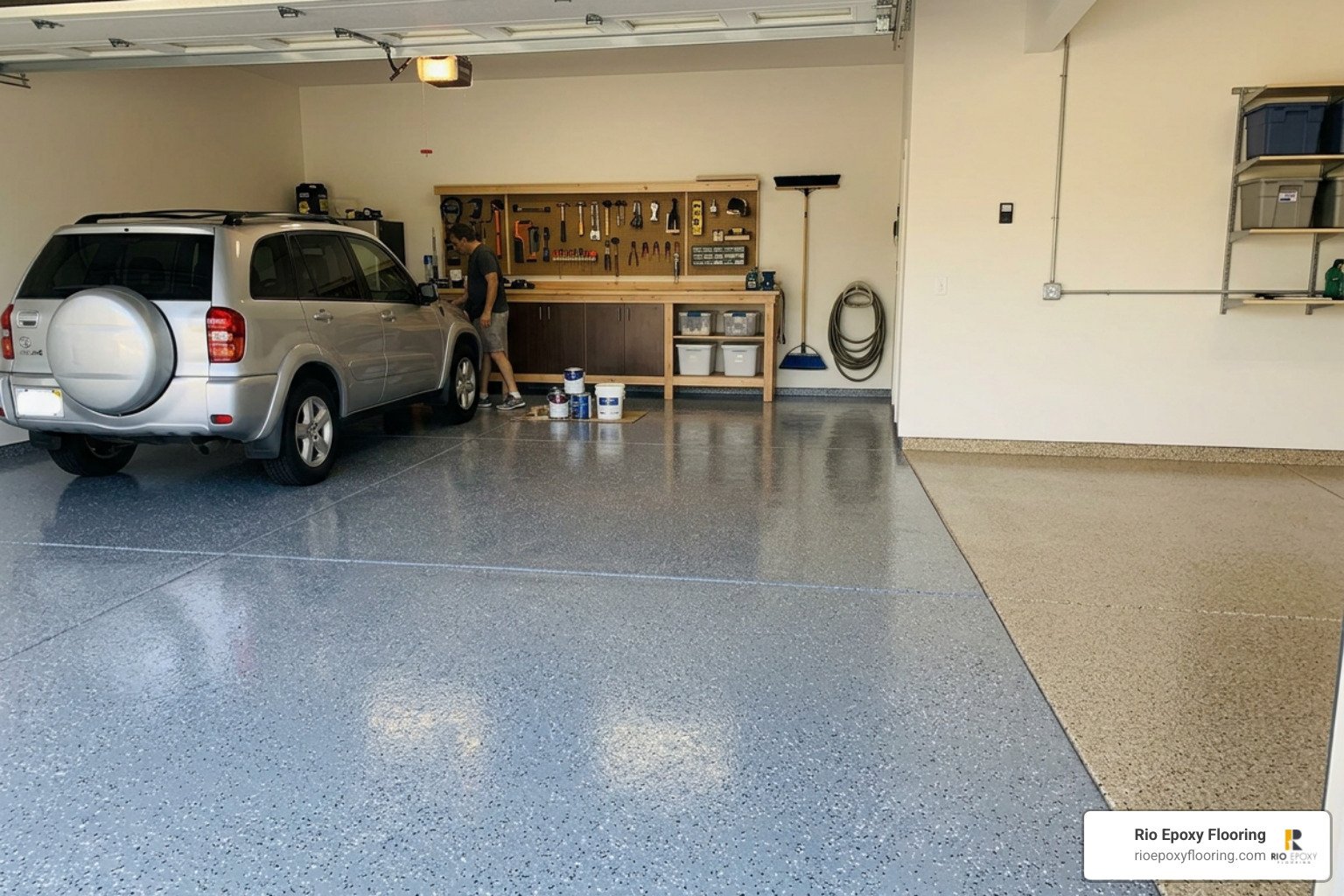
The most popular garage epoxy colors range from practical neutral gray and slate—which brighten spaces and naturally conceal daily dust—to warm earth tones like beige and tan, and modern graphite or charcoal bases paired with decorative multi-color vinyl flake blends. Choosing the right shade balances aesthetic appeal with everyday maintenance.
Bare concrete is notoriously porous, soaking up oil, transmission fluid, and moisture while throwing off fine dust every time you walk across it. Applying a high-grade epoxy garage floor coating transforms that chalky slab into a non-porous, oil stain-free, and light-reflective surface.
Today’s coating systems are far more diverse than the standard battleship gray of the past. Homeowners can select from over 100 solid base shades and more than 40 decorative flake combinations to tailor their space.
When mapping out your design, consider these popular core palettes:
- Neutral Gray & Slate: The gold standard for modern utility. These cool-toned foundations reflect ambient overhead lighting to brighten dark corners while naturally concealing dust tracked in from daily commutes.
- Warm Earth Tones & Beige: Excellent for homes with stone exteriors or Mediterranean architecture. Tan, mocha, and cream tones deliver a welcoming, workshop-ready vibe that hides fine outdoor silt.
- Deep Graphite & Charcoal: Sleek, dramatic, and sophisticated. Darker foundations make high-end tool cabinets and bright vehicle paint jobs pop with gallery-level contrast.
Solid Bases vs. Flake Broadcast Blends
A major design decision is deciding between a solid high-gloss color or an integrated flake broadcast system.
Solid color floors offer a clean, minimalist aesthetic reminiscent of commercial showrooms. However, because a solid floor is a single uniform color, it tends to show every speck of dust, pet hair, and stray water droplet immediately.
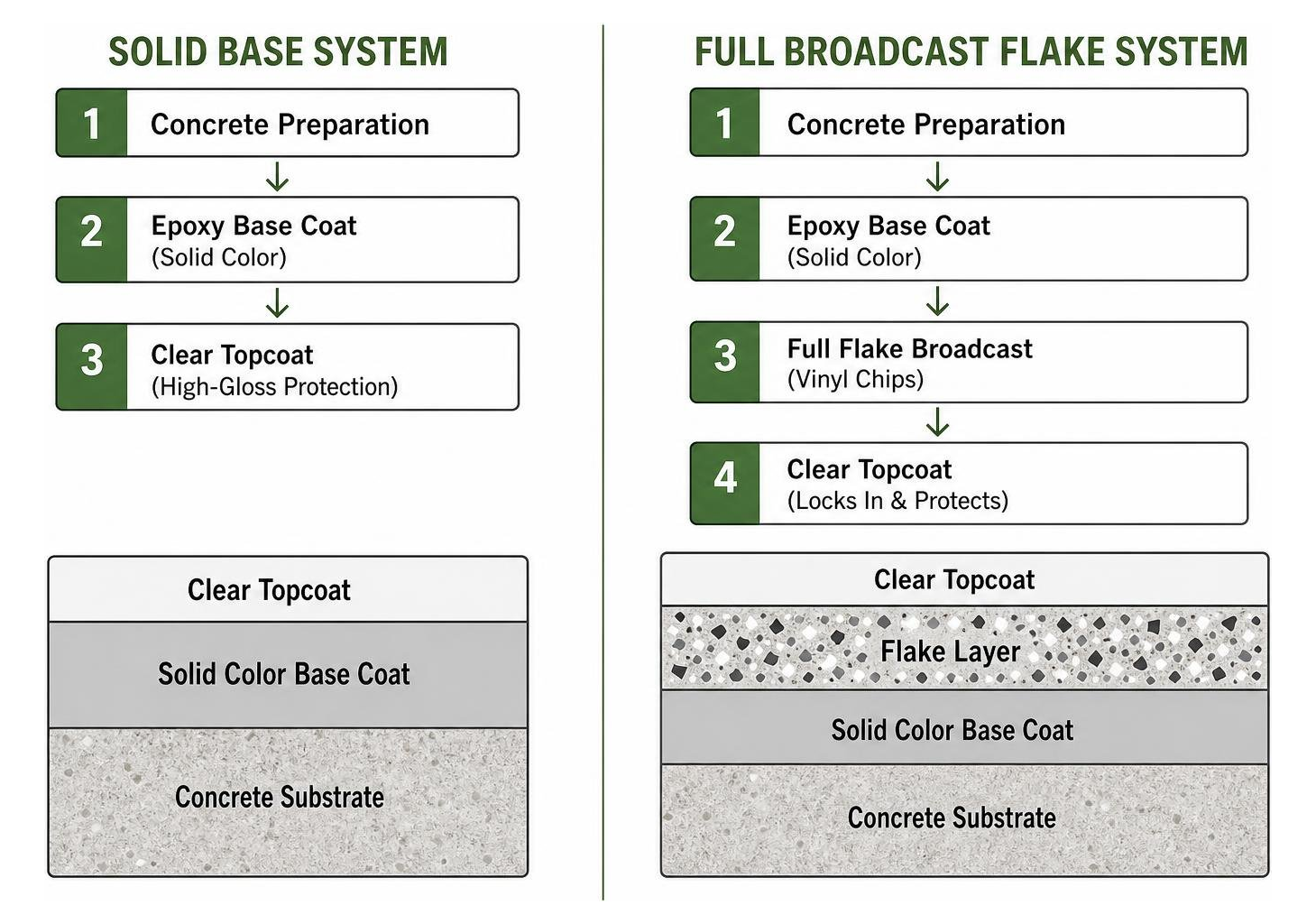
In contrast, flake epoxy flooring utilizes colored vinyl chips broadcast across the wet base coat. Flake systems provide three distinct functional advantages:
- Visual Depth & Camouflage: The multi-tonal flecks fool the eye, completely concealing surface micro-fissures, patched pits, and everyday road grime between cleanings.
- Impact Distribution: The layered chips add physical mil-thickness to the coating, improving impact resistance against dropped wrenches and heavy equipment.
- Enhanced Texture: Broadcasting chips creates a subtle profile across the floor rather than a glass-smooth surface.
You can opt for a partial broadcast (where base color peeks through scattered flakes) or a full broadcast to rejection (where chips completely saturate the floor, creating an unbroken mosaic matrix).
Sports Team Insignia and Custom Garage Epoxy Colors
Garages are increasingly doubling as personal workshops, home gyms, and game-day fan caves. The Insignia Collection allows you to bring your favorite athletic teams directly into your flooring design using custom-blended vinyl chips.
Whether you want the iconic green and gold of Lambeau palettes, deep navy and silver, or bold burnt orange and white combinations, custom blends allow total personalization. These multi-hued resin flakes are distributed evenly across the floor and sealed under a crystal-clear topcoat, giving you a custom showroom finish that never fades or discolors.
Modern and Masculine Garage Epoxy Colors
For a contemporary, industrial-chic workspace, deep neutral combinations continue to dominate 2026 design trends. Homeowners aiming for a bold aesthetic often lean into:
- Gunmetal & Carbon: A dark gray base layered with black, silver, and bright white micro-flakes for an aggressive, precision-engineered look.
- Black Marble & Metallic Accents: Pairing dark bases with subtle metallic swirls or contrasting white and gray chips delivers high-end visual drama.
- Monochromatic Slate: Combining three varying shades of gray flakes creates a seamless, stone-like appearance that complements stainless steel cabinetry and black aluminum trim.
Flake Sizes, Textures, and Visual Depth Explained
The physical size of the broadcast chip dramatically alters how the finished floor looks and performs underfoot. Flakes are manufactured in distinct diameter ranges, each delivering a different decorative effect.
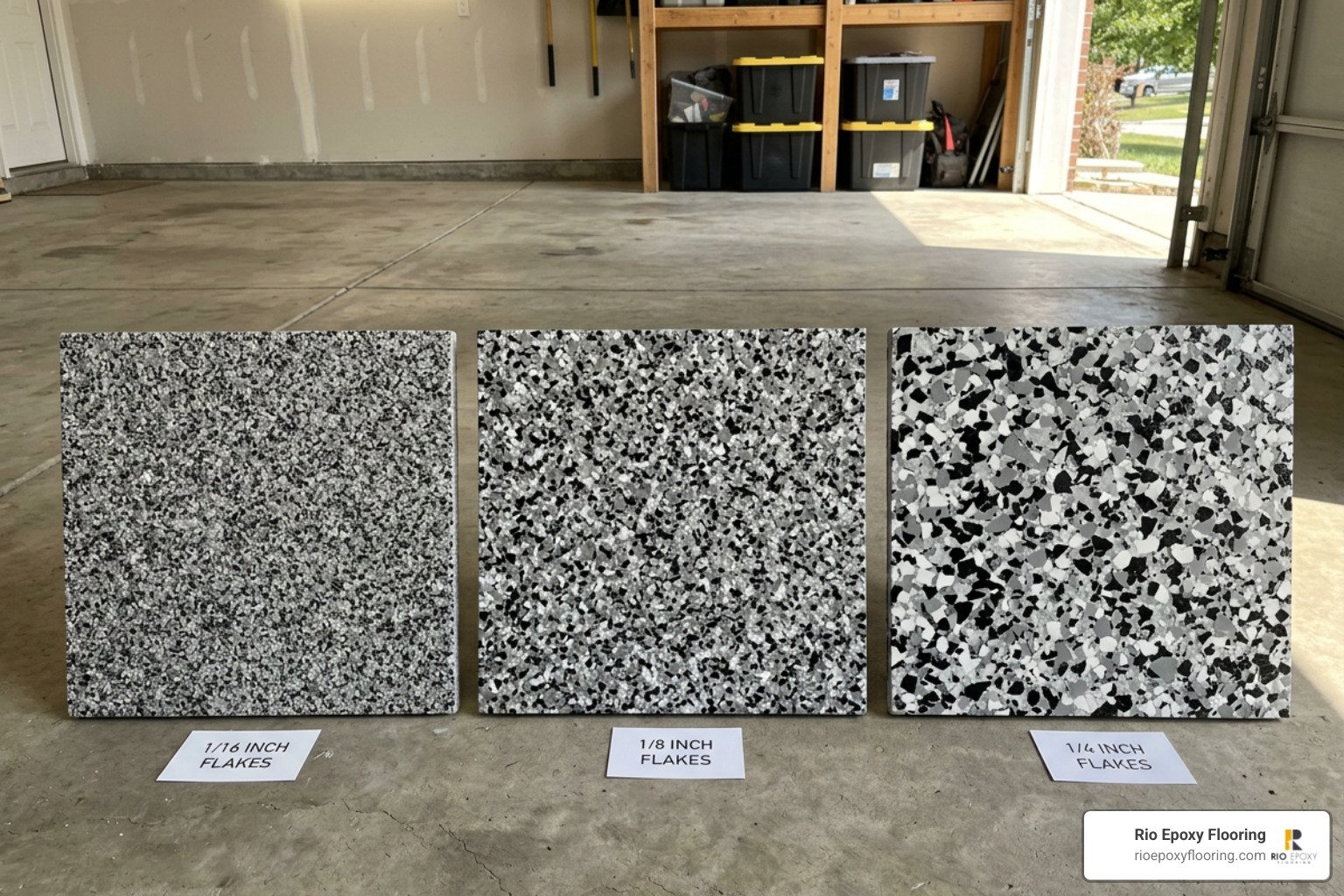
- Micro Flakes (1/16″): These tiny chips produce a dense, uniform texture that closely mimics natural cut granite or solid quarried stone. Micro flakes are ideal for modern spaces where subtle detail is preferred over high-contrast patterns.
- Standard Flakes (1/8″): A balanced middle ground that creates intricate color layering. This size provides excellent surface coverage and blends multiple colors smoothly without overwhelming the room.
- Large Flakes (1/4″): The most popular choice for residential garages. Large flakes create a bold, classic terrazzo look with pronounced visual contrast, making them exceptionally forgiving when it comes to hiding dust, tire debris, and concrete imperfections.
Orange Peel Texture and Slip Resistance
A primary concern for many homeowners is floor safety: are epoxy floors slippery?
While a smooth, high-gloss solid epoxy floor can become slick when wet, full broadcast flake systems naturally solve this issue. When vinyl chips are broadcast across the floor and locked in with a protective topcoat, they settle into a gentle, slip-resistant “orange peel” texture.
This lightly textured profile breaks up surface tension and provides reliable mechanical grip for shoes and vehicle tires, even when tracking in rain or melting ice. For specialized wet areas, ramps, or commercial prep zones, clear aluminum oxide or polymer traction additives can also be suspended within the topcoat to boost grip without obscuring the vibrant color flakes underneath.
Epoxy vs. Polyurea Coating Performance and Durability
Choosing the right color palette is only half the equation; the chemistry of your coating system determines how long those colors remain vibrant. While traditional epoxy remains a dependable standard for many indoor applications, modern hybrid systems that combine epoxy base coats with polyaspartic and polyurea garage floor coatings provide unmatched durability against extreme temperature swings and hot vehicle tires.
The main performance differences between these systems include:
| Feature / Property | Standard 100% Solids Epoxy System | Multi-Layer Polyurea / Polyaspartic System |
|---|---|---|
| Cure Time to Foot Traffic | 24 to 48 Hours | 4 to 8 Hours (Rapid Return to Service) |
| Hot Tire Pickup Resistance | Moderate to High (Can soften under extreme heat) | Superior (Immune to hot tire chemical migration) |
| UV Stability & Yellowing | Prone to ambering when exposed to direct sunlight | 100% UV-stable; will not yellow or fade |
| Flexibility & Elongation | Rigid (Can crack with slab thermal movement) | High Flexibility (Bridges minor concrete movement) |
| Chemical Resistance | Excellent (Motor oil, gas, mild acids) | Maximum (Resists brake fluid, harsh solvents, salts) |
| Installation Turnaround | 2 to 3 Days | Fast 48-Hour Installation |
At Rio Epoxy Flooring, our low-VOC, UV-resistant hybrid systems give you the best of both worlds: deep concrete penetration for a permanent bond, paired with a resilient, flexible topcoat that protects your custom colors from direct sunlight and heavy daily use.
Applications Beyond the Garage and Practical Maintenance
While decorative flake systems were popularized in residential garages, their seamless, non-porous build makes them equally valuable in other moisture-prone spaces.
- Basements & Utility Rooms: Transforming damp, dark storage areas into clean living spaces is simple with basement epoxy flooring. Because the system seals the slab, it prevents moisture migration and stops mold, mildew, and dust mites from taking hold.
- Commercial Kitchens & Food Service: Food safety requires seamless, non-absorbent surfaces. Using commercial kitchen floor coatings eliminates grout lines where grease, bacteria, and harsh sanitizers can accumulate.
- Workshops & Pet Areas: Flake floors resist pet accidents, claw scratches, and dropped metal tools, offering a durable surface that can be hosed down or disinfected in minutes.
Routine Care and Longevity Best Practices
Maintaining a custom flake floor requires minimal effort because dirt and liquids cannot penetrate the protective clear coat. Simple, consistent care will keep the surface looking new:
- Sweep Regularly: Use a soft-bristle broom or commercial dust mop once a week to remove loose grit, sand, and leaves that could cause micro-abrasions over time.
- Damp Mop with pH-Neutral Cleaners: Avoid harsh citrus cleaners, bleach, or concentrated vinegar, as strong acids can dull clear topcoats over many years. Instead, mop with warm water and a few ounces of pH-neutral floor cleaner or simple dish soap.
- Wipe Spills Promptly: While the floor easily resists oil, gasoline, and battery acid, wiping up spills promptly keeps your slip resistance optimal and eliminates sticky residues.
- Protect from Heavy Point Loads: If using heavy rolling floor jacks or jack stands, place small plywood pads beneath them to distribute point weight and protect against sharp metal gouges.
Following a straightforward maintaining epoxy floors routine ensures your floor retains its brilliant shine and physical integrity for decades.
Installation Costs and Choosing the Right Finish
Investing in a professionally installed decorative flake floor provides immediate lifestyle improvements and lasting property value. When evaluating epoxy garage floor installation costs, the total price is determined by several core factors:
- Surface Preparation: A coating is only as durable as the profile beneath it. Professional diamond mechanical grinding or shot-blasting opens the concrete pores and removes old sealers or oils.
- Moisture Mitigation & Concrete Repair: Slabs with high moisture vapor emission or extensive cracking require specialized moisture-barrier primers and elastomeric polyurea crack fillers before color application.
- Flake Broadcast Density: A full broadcast to rejection requires significantly more vinyl flake material and a thicker topcoat build than a light, partial flake scatter.
- Topcoat Chemistry: Upgrading to advanced, rapid-curing, UV-stable polyaspartic clear coats ensures your colors won’t yellow near garage doors where sunlight hits the slab.
A high-performance floor system delivers an exceptional return on investment by eliminating ongoing concrete dust, ending concrete spalling, and creating an attractive, functional extension of your home.
Frequently Asked Questions About Garage Floor Coatings
What are the best garage epoxy colors to hide dirt and tire marks?
Medium gray, slate, and warm tan bases paired with a multi-toned 1/4-inch flake blend (combining black, gray, white, and brown) are the most effective at concealing daily dirt, road salt, and dark tire tracking between cleanings.
How do different flake sizes impact the final look and feel of the floor?
Smaller 1/16-inch micro-flakes deliver a tightly packed, uniform look resembling natural quarried granite. Larger 1/4-inch flakes create higher color contrast that mimics classic commercial terrazzo, providing a slightly more pronounced orange-peel texture that aids slip resistance.
Can garage epoxy flake systems withstand hot vehicle tires and chemical spills?
Yes. Professional-grade flake systems sealed with industrial polyurea or high-solids clear coats are engineered to resist hot tire pickup (where cooling tires pull up inferior floor paint), as well as motor oil, brake fluid, gasoline, and road de-icing salts.
Conclusion
The colors and materials you choose for your garage floor bridge the gap between everyday utility and refined design. Whether you want a neutral slate finish that conceals daily dust, a custom sports-team-inspired palette, or an industrial gunmetal showroom, modern flake systems provide permanent durability, slip resistance, and effortless cleanup.
Ready to explore color samples and design your dream garage? Discover 10 stunning epoxy floor colors to see how our low-VOC, UV-stable coating systems can completely revitalize your concrete floor.