

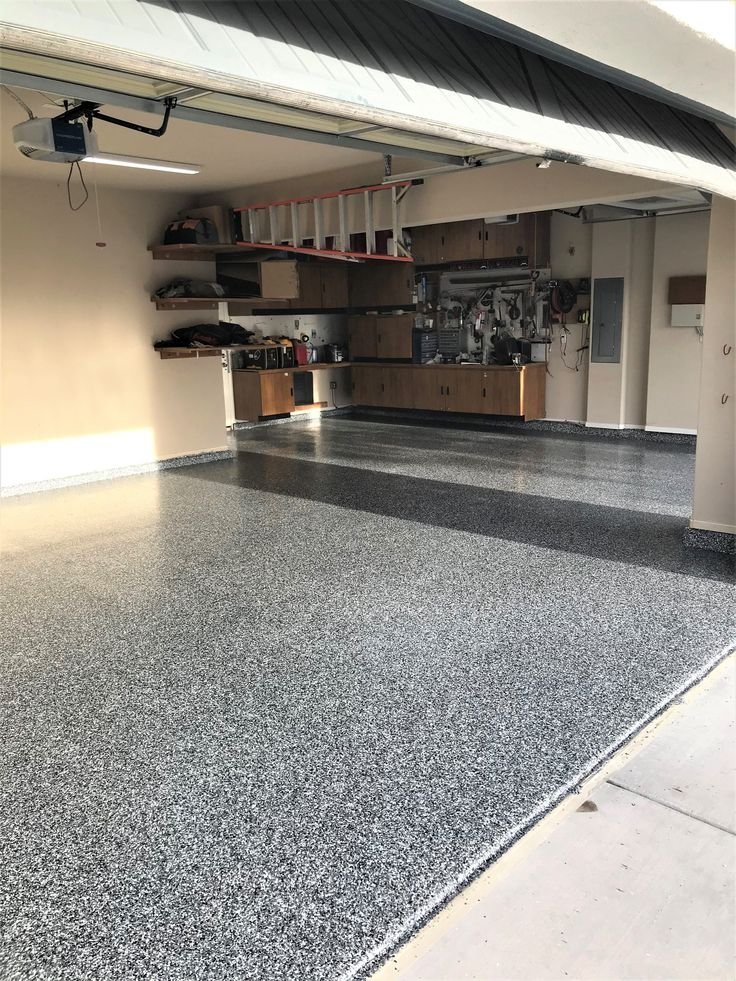
A Garage Floor Coating for Allergens Starts With a Sealed Surface
A garage floor coating for allergens can make the space easier to keep clean by sealing porous concrete beneath a smooth, non-porous surface. Choose a professional epoxy or polyurea system with proper concrete preparation, moisture control where needed, and a low-VOC or high-solids formula. Then remove tracked-in pollen, dust, pet dander, and other particles with routine dry mopping or a microfiber mop before they are carried farther into the home.
Uncoated concrete has tiny pores, cracks, and dusty surface areas that can hold debris and moisture. A seamless coating does not make allergens disappear, but it keeps them on the surface instead of allowing them to settle into the slab. That means less scrubbing, fewer places for moisture-related mold and mildew to develop, and a cleaner garage-to-home transition.
For Austin homes, this matters during high-pollen periods and whenever pets, cars, shoes, and garage projects bring contaminants inside. A durable sealed floor is one practical part of an indoor-air-quality plan alongside regular cleaning, ventilation, and appropriate HVAC filtration.
I am Roger Aguiar, an Austin-based digital marketing professional who helps small and mid-sized businesses explain practical home-improvement solutions clearly. In this guide, I will break down how a garage floor coating for allergens can support cleaner maintenance, lower dust buildup, and a more usable garage.

The Hidden Hazard: Why Unsealed Concrete Traps Household Allergens
Many homeowners treat their garage as an airlock—a buffer zone between the outdoor elements and the living room. However, standard, unsealed concrete behaves more like an allergen sponge than a protective barrier.
Concrete is naturally porous, filled with microscopic capillaries and fissures created as water evaporated during the initial curing process. Over time, friction from foot traffic and vehicle tires causes mechanical breakdown on the top layer. This produces a fine, powdery residue known as concrete dusting (or efflorescence when moisture carries mineral salts to the surface).
This constant chalky dust does not just sit idly on the ground; it bonds with outdoor contaminants brought inside daily:
- Seasonal Pollen: Tree, grass, and weed pollen hitchhike on vehicle grilles, tires, and shoes.
- Dust Mites and Debris: Microscopic pests thrive in damp, fibrous dust accumulations along baseboards and unsealed joints.
- Pet Dander & Shedding: Fur, dried saliva, and skin flakes settle into floor crevices, presenting continuous problems for households exploring epoxy flooring for pet owners.
- Chemical Residues: Road salts, motor oils, and brake dust degrade bare concrete further, aggravating existing airway sensitivities.
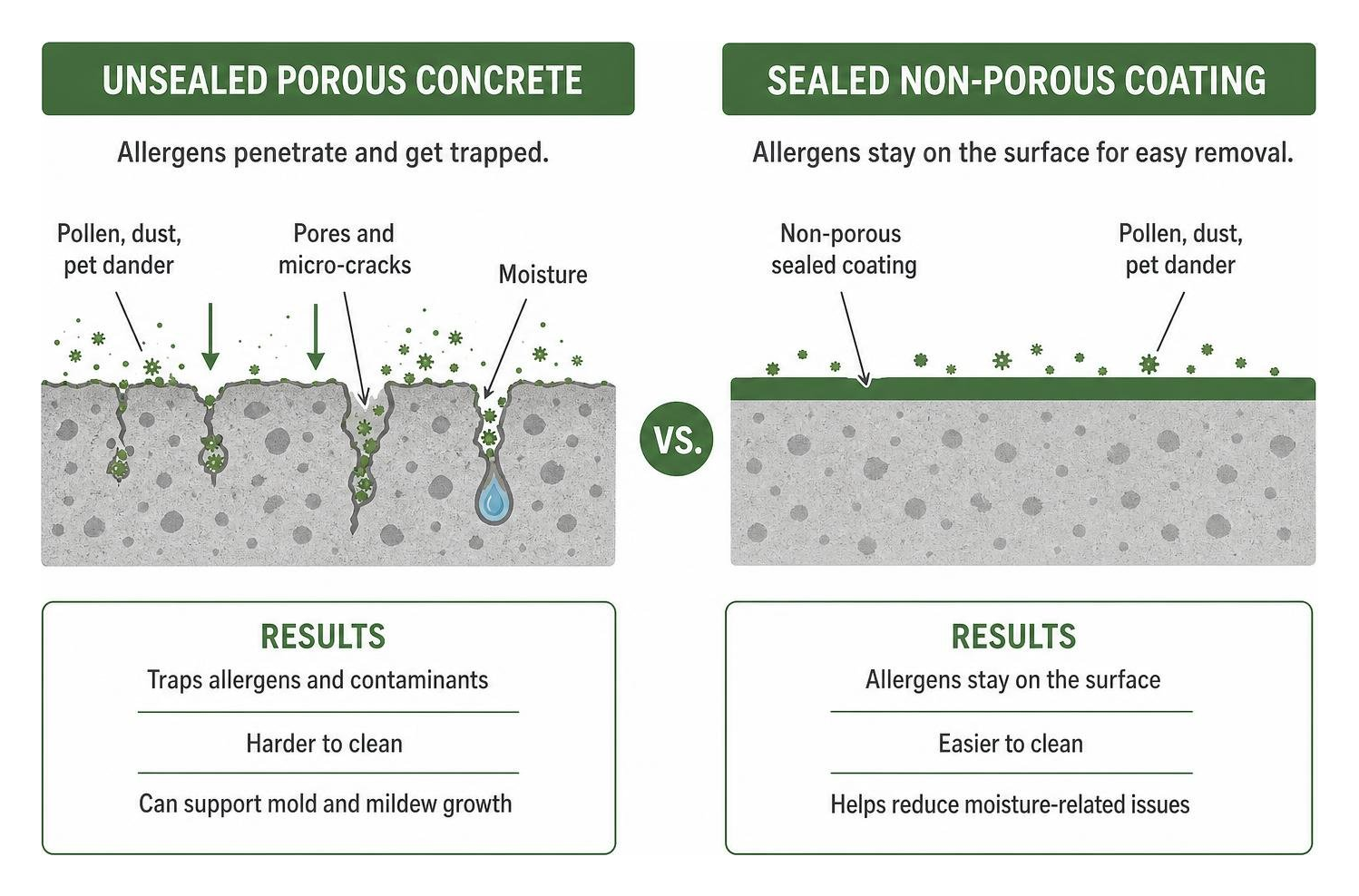
How Porous Concrete Harbors Pollen and Biological Spores
Unlike flat, impermeable finishes, bare concrete features deep micro-pockets that shelter organic particulates from standard sweeping. When spring or fall pollen spikes hit, millions of grains enter the garage every time the overhead door opens.
Once buried in the floor’s pores, standard broom bristles glide right over them, leaving the biological matter undisturbed. Add ambient humidity or hydrostatic moisture pushing up through the slab, and you create the ideal breeding ground for mold spores and mildew. These biological allergens multiply out of sight, releasing volatile organic compounds (microbial VOCs) and spore clusters directly into your garage’s enclosed air volume.
Airflow and Allergen Resuspension into the Living Space
A contaminated garage floor does not keep its irritants contained. Every time you walk across the room, carry in groceries, or pull the car in, the physical disturbance resuspends settled particulates back into the air.
Because modern homes often feature HVAC ductwork running through or adjacent to garages, negative pressure draws these airborne particles straight under the interior threshold and into your central living spaces. For family members with asthma, chronic sinus issues, or respiratory conditions, this continuous resuspension cycle undermines the benefits of indoor HEPA filters and air purifiers.
Why Garage Floor Coating for Allergens Outperforms Unsealed Concrete
Installing a seamless polymer floor turns a rough, particulate-trapping sponge into an impenetrable, easy-to-sanitize surface. Instead of falling into microscopic crevices, allergens rest on top of a smooth topcoat where a simple pass of a dry mop captures them completely.
When exploring residential epoxy flooring solutions, the primary air-quality benefit lies in total slab encapsulation. By sealing concrete dusting at the source, you permanently eliminate a significant source of fine mineral particulate in your home.
| Metric / Characteristic | Bare, Unsealed Concrete | Traditional Tile & Grout | Multi-Layer Epoxy / Polyurea System |
|---|---|---|---|
| Surface Permeability | High (Highly Porous) | Medium (Grout lines absorb moisture) | Zero (Completely non-porous) |
| Allergen Retention | Traps pollen, dander, & dust deep in pores | Grout lines harbor mold spores & dust | None (Allergens rest on surface) |
| Concrete Dusting | Continuous mineral dusting | Low (but grout chips over time) | Eliminated (Concrete is fully encapsulated) |
| Mold & Mildew Resistance | Low (Absorbs moisture vapor) | Moderate (Vulnerable at grout joints) | High (Antimicrobial, waterproof barrier) |
| Cleaning Effort Required | Heavy scrubbing / pressure washing | Intensive grout cleaning | Effortless sweeping or microfiber mop |
Selecting the Right Garage Floor Coating for Allergens and Dust Control
Not all floor coverings provide identical allergen protection. Traditional DIY floor paints often dry to a thin, brittle film of 2 to 4 mils that quickly flakes, creating new dust. In contrast, heavy-duty commercial systems create a thick, monolithic shield.
When planning an installation with garage flooring epoxy or polyaspartic technologies, consider the chemical properties of each formulation:
- 100% Solids High-Build Epoxy: Unlike water-based paints that shrink by 50% or more as solvents evaporate, high-solids epoxies cure through a dense chemical reaction. Formulations reaching 90% to 100% solids yield a thick, high-build basecoat (often 10–12+ mils dry film thickness) that self-levels over rough concrete, permanently bridging hairline cracks and eliminating hiding spots for allergens.
- Polyurea and Polyaspartic Systems: Known for rapid curing, high elasticity, and extreme UV resistance. These systems form tight cross-linked molecular chains that resist chemicals, hot tire pickup, and yellowing, making them exceptional topcoats in high-sunlight or fluctuating-temperature garages.
- Cementitious Urethanes: Ideal for slabs facing extreme moisture vapor emissions, acting as an unyielding moisture mitigation layer beneath decorative topcoats.
Mold and Moisture Resistance: Stopping Biological Triggers
Moisture vapor continuously travels upward from the soil through concrete slabs via capillary action. In unsealed garages, this vapor fuels hidden colonies of mold and mildew beneath storage boxes, mats, and workbenches.
A professional floor coating incorporates a moisture vapor barrier that seals off hydrostatic pressure. By cutting off the moisture supply, biological allergens cannot gain a foothold. The resulting surface is waterproof and naturally resistant to fungal growth, ensuring dampness wipes away before producing musty odors or mold spores.
Low-VOC Formulations and Safe Installation Practices
For families dealing with chemical sensitivities, asthma, or active allergies, the products used during installation are just as important as the finished floor. Historically, solvent-borne coatings released heavy concentrations of volatile organic compounds (VOCs) that lingered in the home’s air for days.
Today, advanced chemical engineering allows for ultra-low-VOC and zero-VOC formulations. Understanding the low VOC epoxy flooring benefits helps ensure your path to cleaner air does not cause temporary respiratory irritation during application.

High-grade coatings cure through an exothermic cross-linking process rather than solvent evaporation. Once fully cured, the material becomes chemically inert—it does not off-gas, degrade, or release synthetic compounds into your living spaces.
Professional Multi-Layer Systems vs. DIY Garage Floor Paint
It can be tempting to pick up a consumer-grade single-stage garage floor paint kit at a local hardware store. However, thin paint coatings often fail quickly when exposed to hot vehicle tires and daily wear:
- Inadequate Mechanical Profiling: DIY kits often rely on weak acid washes that fail to open the concrete’s pores properly, leading to premature peeling.
- Hot Tire Delamination: Lower-grade acrylic latex paints soften under the heat of parked tires, ripping away from the concrete and generating paint chips and dust.
- Porous Wear Patterns: Thin films wear down rapidly in traffic paths, re-exposing bare concrete pores to seasonal pollen and pet dander.
Professional installers use industrial diamond grinding equipment attached to HEPA-filtered vacuum extractors to achieve an optimal concrete surface profile (CSP 2 to 3). This mechanical preparation allows high-solids basecoats to penetrate deep into the concrete, fusing mechanically with the slab so the allergen barrier will not chip, peel, or delaminate.
Installation Timeline, Curing, and When Full Protection Begins
Transforming your garage floor is a straightforward process designed to minimize household disruption. Here is a typical timeline when installing an advanced multi-layer system:
Within 24 hours of topcoat application, the floor is safe for light foot traffic, immediately halting concrete dusting. After 48 to 72 hours, an epoxy garage floor coating system reaches full mechanical and chemical resistance, allowing you to park vehicles, wash the surface, and enjoy comprehensive allergen protection.
Maintaining an Allergy-Free Garage Floor Long-Term
The greatest benefit of a sealed floor is how simple it is to sanitize. Because the surface is continuous and non-porous, allergens cannot cling to the floor.

To maintain clean indoor air and maximize coating longevity:
- Weekly Dry Mopping: Use a wide, 24- to 36-inch microfiber dust mop to sweep up loose dirt, dander, and pollen. Microfiber naturally holds an electrostatic charge that traps microscopic dust instead of kicking it up into the air like a standard broom.
- Damp Mopping with pH-Neutral Cleaners: When tracked-in mud or residue accumulates, mop with warm water and a splash of pH-neutral floor cleaner. Avoid harsh acid-based cleaners, bleach, or abrasive scouring pads, which can dull the clear topcoat over time.
- Spot Cleaning Vehicle Fluids: Wipe up oil drips, coolant, or road grime with a paper towel or microfiber cloth; the non-porous topcoat stops chemicals from soaking in.
For detailed seasonal tips on keeping your finish in peak condition, explore our complete guide on how to maintain epoxy floors.
Optimizing Your Garage Floor Coating for Allergens with Proper Upkeep
Pairing your sealed floor with simple habits creates a strong defense against outdoor allergens:
- Place Heavy-Duty Walk-Off Mats: Use washable synthetic mats at both the exterior overhead entrance and the interior doorway to catch coarse debris before it reaches the floor.
- Blow or Mop Out Pollen During Peak Seasons: During heavy pollen spikes, quickly blow out dry pollen with a leaf blower or damp-mop the surface weekly to prevent build-up.
- Integrate a Garage Air Filtration Unit: If you frequently use your garage as a home gym, workshop, or hobby area, running an auxiliary HEPA air filtration unit alongside your sealed floor keeps airborne particulates near zero.
Frequently Asked Questions About Garage Floor Coatings and Indoor Air Quality
Do garage floor coatings really improve air quality for asthma and allergy sufferers?
Yes. Bare concrete produces continuous mineral dust while absorbing pollen, dander, and moisture. Sealing the concrete with a solid epoxy or polyurea system eliminates concrete dusting and creates an impermeable barrier. This stops mold growth and prevents allergens from becoming airborne when walked on, keeping common respiratory triggers out of your home.
How quickly does a sealed garage floor cure to full allergen resistance?
Most modern polyurea and epoxy installations allow light foot traffic within 24 hours of topcoat application, giving you an immediate dust-free surface. Full chemical cure—which delivers maximum scratch resistance, stain protection, and complete VOC dissipation—typically takes between 48 and 72 hours depending on ambient temperature and humidity.
Can an allergen-resistant coating be applied over existing stained or cracked concrete?
Yes. Professional installation includes mechanical diamond grinding, chemical degreasing, and structural crack filling before any coating is applied. This repairs existing imperfections and encapsulates oil or pollen stains beneath the high-solids basecoat, leaving a clean, seamless finish across the entire floor.
Conclusion: Protect Your Home’s Air with Sealed Flooring
Indoor air quality begins at your home’s main entry points. Leaving your garage floor as bare, unsealed concrete invites dust, moisture, and outdoor allergens to accumulate right outside your living space.
By investing in a seamless, high-solids coating system, you eliminate slab dusting, block mold and mildew growth, and make seasonal cleaning simple. A quick pass with a microfiber mop is all it takes to keep your garage fresh, clean, and allergen-free year-round.
At Rio Epoxy Flooring, we help Austin-area homeowners turn dusty garages into clean, functional spaces with our custom epoxy, polyurea, and cement-urethane systems. Our low-VOC, UV-resistant installations are backed by rapid 48-hour turnarounds and a lifetime warranty.
Ready to improve your home’s air quality from the ground up? Explore our recommendations for the best garage floor coatings or contact our team today to schedule your consultation!